
《梁祝》

Search documents
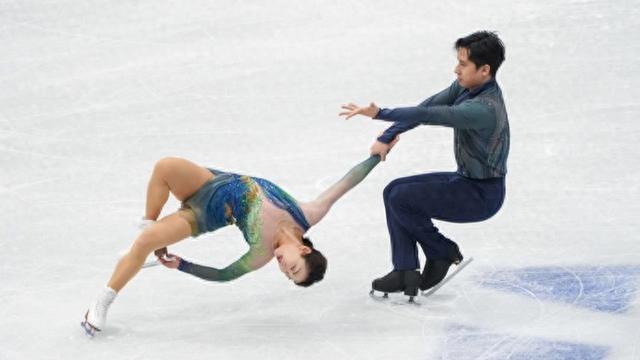
米兰的冰面吹起中国风
Xin Lang Cai Jing· 2026-02-16 06:47
Group 1 - The article highlights the pride of Chinese figure skaters Sui Wenjing and Han Cong in showcasing Chinese culture at the Winter Olympics, particularly through the performance of the piece "Butterfly Lovers" [5][7] - The piece "Butterfly Lovers" has been featured multiple times in Winter Olympic history, with its first appearance by Chinese skater Chen Lu in 1988, who won a bronze medal, marking a significant achievement for Chinese figure skating [5][9] - The article emphasizes the growing recognition of Chinese cultural elements in international sports, suggesting that Chinese aesthetics are becoming an "international language" that resonates with audiences globally [7][9] Group 2 - Sui Wenjing and Han Cong plan to depict the cultural heritage of China through their performance of "Only This Green," which narrates the story of the "Thousand Li of Rivers and Mountains" painting, indicating a deep cultural dialogue through their art [9] - The article notes that while scores in competitions may change, the flow of culture and its impact tend to have a lasting presence, highlighting the significance of cultural exchange in the context of the Winter Olympics [9]

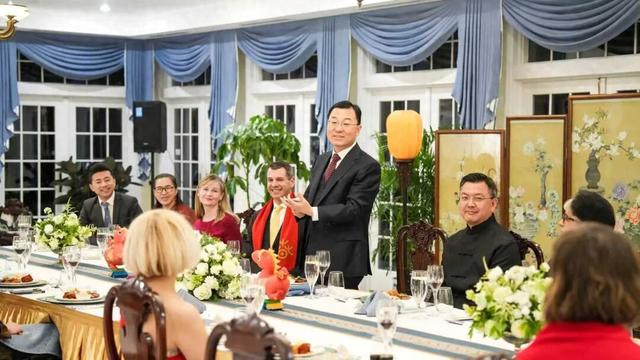
中国驻美国大使馆举办“音乐之夜”晚宴
Xin Lang Cai Jing· 2026-02-01 03:52
Core Viewpoint - The event hosted by the Chinese Embassy in the U.S. emphasizes the role of music as a universal language that fosters cultural exchange and strengthens U.S.-China relations [3]. Group 1: Cultural Exchange - Music is highlighted as a common language that conveys aspirations for peace, hope, and beauty, with references to both Chinese and American musical pieces [3]. - The vibrant Chinese music market is seen as a driving force for cultural exchange, with an increase in American tourists visiting China for cultural experiences [3]. - The Baltimore Symphony Orchestra has successfully held Lunar New Year concerts for three consecutive years, with a notable visit to China last year [3]. Group 2: Future Cooperation - The current phase of U.S.-China relations is described as a critical period for exploring new ways to coexist, with calls for more positive contributions from organizations like the Baltimore Symphony Orchestra [3]. - The event featured performances of well-known pieces, fostering discussions about memorable stories in U.S.-China cultural exchanges and future cooperation [3].
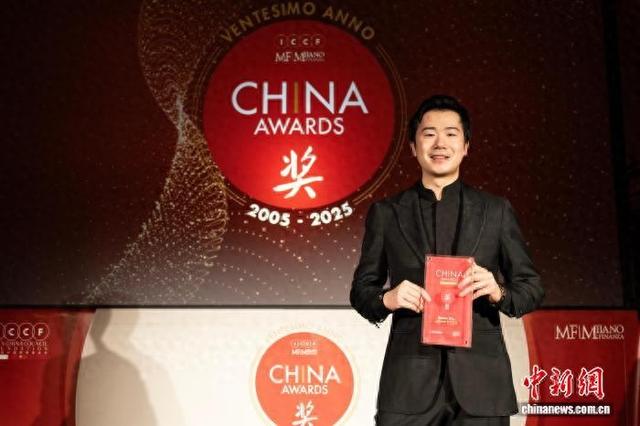
德国华裔小提琴家朱熙萌:用音乐架起中外文化交流桥梁
Xin Lang Cai Jing· 2025-12-30 09:46
Core Viewpoint - The article highlights the efforts of Chinese-German violinist Zhu Ximeng in bridging cultural exchanges between China and Italy through music, emphasizing the universal emotional experience of music regardless of language or cultural background [1][3]. Group 1: Achievements and Recognition - Zhu Ximeng received the Special Golden Lion Award from the Italian Chinese Association during the 20th "China Award" ceremony, recognizing his contributions to promoting relations between Italy and China through culture [1][3]. - In October 2023, Zhu won first prize at the 57th Paganini International Violin Competition in Genoa, along with the Best Paganini Concerto Performance Award, marking a significant milestone in his career [3]. Group 2: Cultural Impact and Outreach - Zhu has been actively promoting classical music in China, having toured multiple cities including Guangdong, Beijing, Chongqing, and Sichuan four times in 2023, reflecting the growing audience for classical music in China [5]. - He often performs Chinese pieces such as "Jasmine Flower" and "Butterfly Lovers" during encores, introducing the cultural background of these works to European audiences, who respond positively to their beauty and emotional depth [3][5]. Group 3: Personal Background and Support - Born in 2001 in Tübingen, Germany, to Chinese parents, Zhu developed an interest in the violin at a young age, supported by his parents' commitment to his musical education, including a significant relocation to Berlin for better opportunities [3][5]. - Zhu expresses gratitude towards his parents for their unwavering support and non-pressuring approach to his music education, which has been a crucial factor in his success [5].
香港弦乐团在罗马举行意大利巡演首场音乐会
Xin Hua She· 2025-11-14 05:48
Core Viewpoint - The Hong Kong String Orchestra recently held a concert titled "From Madame Butterfly to Liang Zhu" in Rome, marking the beginning of its tour in Italy, which attracted around 600 attendees from both Chinese and Italian political, business, and cultural sectors [1][3]. Group 1: Concert Details - The concert took place at the Sinopoli Music Hall in Rome and coincided with the 55th anniversary of diplomatic relations between China and Italy [1]. - The performance featured a mix of works, including "Echoes of Hong Kong Film Classics" and "Chinese Folk Song Suite" in the first half, followed by selections from Puccini's opera "Madame Butterfly" and the violin concerto "Liang Zhu" in the second half [1][3]. - The string version of "Liang Zhu" made its debut in Italy, resonating strongly with the audience [1]. Group 2: Audience Reception - The concert concluded with multiple encores, including Morricone's "Cinema Paradiso" theme, "My Sun," and "I Love You, China," creating a lively atmosphere [3]. - Some Italian audience members spontaneously sang along to "My Sun," further strengthening the cultural ties between China and Italy [3]. - Italian artists and media praised the performance, with a violinist from the Santa Cecilia Conservatory commenting on the orchestra's clean and nuanced playing [3]. Group 3: Cultural Exchange - Prior to the concert, the orchestra visited the Chinese Embassy in Italy for artistic exchanges with embassy staff, Chinese students, and representatives of the Chinese community [5]. - The orchestra plans to continue its tour in Florence on November 13, aiming to showcase the charm of Chinese culture through music and enhance cultural exchanges for the 55th anniversary of diplomatic relations [5].

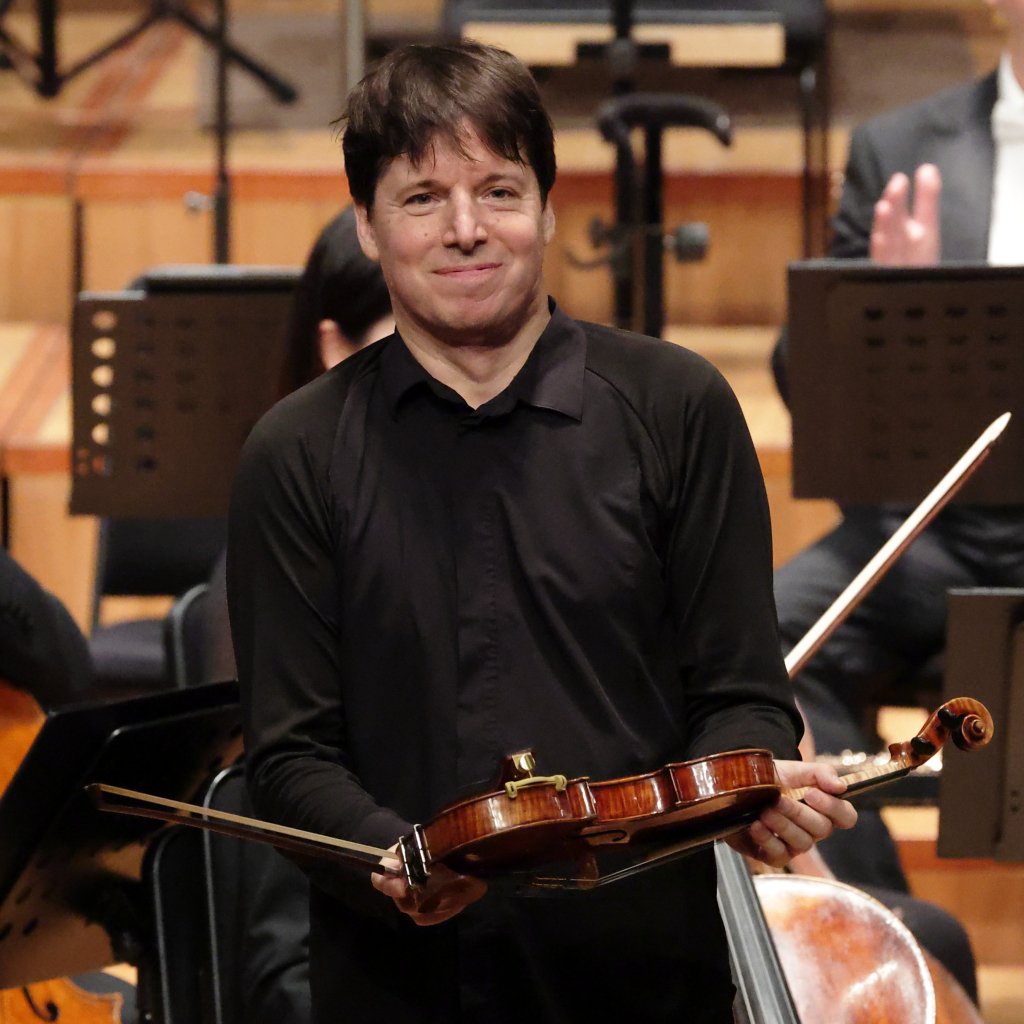
专访|贝尔:小提琴家也是乐团指挥,也一直很想当作曲家
Xin Lang Cai Jing· 2025-11-10 01:07
Core Insights - Violinist Joshua Bell has been active in the music scene for nearly 40 years, showcasing versatility across classical, modern, film, and popular music genres [1] - Bell's upcoming performances in Shanghai as part of the 24th China Shanghai International Arts Festival will feature two distinct classical music concerts with conductor Alan Gilbert and the NDR Elbphilharmonic Orchestra [1] - He emphasizes the importance of personal expression in music interpretation, arguing against standardization and advocating for individuality [1] Performance Insights - The tour's final stop in Shanghai is particularly meaningful for Bell, as it allows for a unique experience of growth and refinement in performances across different cities [3] - Bell expresses a deep appreciation for Brahms' violin concerto, noting its complexity and the nuanced approach required for its interpretation [5][6] - He has a personal connection to the works of Saint-Saëns, highlighting the challenges and beauty in performing pieces specifically composed for legendary soloists [7][8] Collaboration and Interpretation - Bell values the collaborative process in chamber music, where friendly debates with fellow musicians enhance the interpretative experience [10] - His dual role as a soloist and conductor allows him to deepen his understanding of the music, fostering a more profound connection with the orchestra [11][12] Cultural Exchange - Bell's exploration of the piece "Liang Zhu" reflects his commitment to cultural exchange, as he collaborates with Chinese instruments while maintaining his unique interpretative style [13][14] - He acknowledges the subjective nature of music interpretation, advocating for diverse renditions of the same piece [14] Observations on Competitions and Trends - Bell shares mixed feelings about music competitions, noting that they often fail to capture the essence of individual musicality [15] - He observes a trend towards standardization in contemporary performances, contrasting it with the more personalized styles of past generations [20]
港真舞界|踮脚尖的纽约客,在维港跳出了人生新节拍
Ren Min Wang· 2025-11-03 08:16
Core Insights - The article highlights the transformative experience of a ballet dancer, Albert Gordon, who found a new artistic beginning in Hong Kong after moving from London and the US [3]. Group 1: Artistic Development - Albert Gordon experienced a significant turning point in his career while performing with the Hong Kong Ballet, particularly in the production "The Great Gatsby," which enhanced his skills through its emphasis on partner work and performance [3]. - His role in the classic ballet "Don Quixote" marked a milestone as it was one of the dream roles for ballet dancers, showcasing his growth in the art form [3]. Group 2: Cultural Integration - The dancer expressed admiration for Hong Kong's rich culinary culture, noting the variety of dining options available, which contributed to his overall enjoyment of life in the city [3]. - The vibrant artistic atmosphere in Hong Kong allowed him to engage with performers from around the world, broadening his understanding of various art forms, including Chinese and Asian arts [3]. Group 3: Audience Reception - The reception of Western ballet in Hong Kong has been enthusiastic, with audiences showing genuine appreciation for performances, which enhances the experience for artists [3]. - Participation in the global premiere of "The Butterfly Lovers," which blends Chinese culture with ballet and modern dance, was highlighted as a significant honor for the dancer [3]. Group 4: Personal Connection - After five years in Hong Kong, Albert Gordon has fully integrated into the city, expressing a deep love for its people and culture, which has provided him with a platform to showcase his talents [3].
浙江杭州:费城交响乐团在良渚古城遗址演绎《梁祝》
Zhong Guo Xin Wen Wang· 2025-10-16 01:33
Core Points - The Philadelphia Orchestra performed a rearranged version of the famous Chinese piece "Butterfly Lovers" (《梁祝》) at the Liangzhu Ancient City Ruins Park in Hangzhou on October 14 [2][6][10] Group 1 - Members of the Philadelphia Orchestra participated in the performance, including violinist Marc Rovetti, violist Marvin Moon, and cellist Alex Veltman [4][6][10] - The performance took place in various locations within the Liangzhu Ancient City Ruins Park, including the pool area and the small Mo Jiao Mountain [6][8][10] - The event was part of the third Liangzhu Forum series activities, highlighting cultural exchange [2][6]

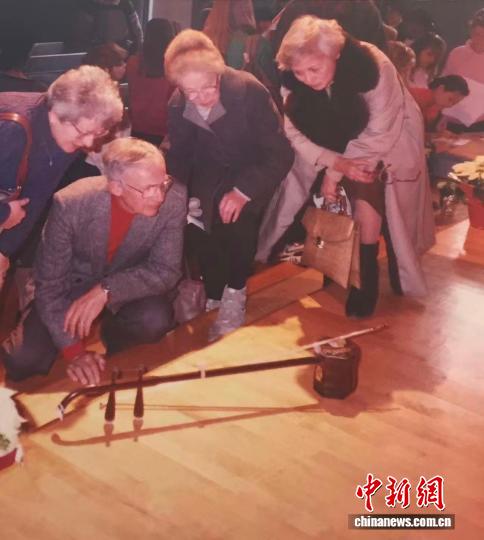
美国华人陈洁冰:让二胡“即兴”起来
Zhong Guo Xin Wen Wang· 2025-10-10 01:21
Core Viewpoint - The article highlights the journey of Chinese-American erhu musician Chen Jiebing, emphasizing her efforts to popularize the erhu in the United States through collaboration and improvisation, while also sharing her personal experiences and challenges in adapting to a different musical culture [1][2][3][4][5]. Group 1: Background and Early Career - Chen Jiebing was born in Shanghai in the 1960s and began learning the erhu at the age of five, later studying at the Shanghai Conservatory of Music [1]. - She became the first performer of the erhu concerto "Butterfly Lovers" and gained recognition for her ability to express complex melodies using the erhu [1][2]. Group 2: Transition to the United States - In 1989, Chen moved to the United States to study music theory, facing cultural and market challenges in promoting the erhu [2]. - She found success by collaborating with the Buffalo Symphony Orchestra and explaining the erhu's significance in relatable terms to American audiences [2]. Group 3: Musical Exploration and Improvisation - Over ten years, Chen explored various musical styles and collaborated with different musicians, leading to the formation of the "Cross-Cultural Journey" band [3]. - She faced challenges with improvisation, a key element in jazz, and adapted her performance style to engage more with the audience [3][4]. Group 4: Recognition and Teaching - In 1996, Chen's album with American and Indian musicians was nominated for a Grammy Award, showcasing her unique improvisational style [4]. - The erhu is increasingly recognized in the U.S., with Chen frequently invited to perform with symphony orchestras and teach interested audiences about the instrument [4][5].
东西问·北京文化论坛丨章嘉禾:当代戏剧传播关键在“移情”
Zhong Guo Xin Wen Wang· 2025-09-25 11:14
Core Viewpoint - The key to contemporary drama dissemination lies in "empathy," emphasizing the importance of emotional connection in theatrical performances and cross-cultural understanding [3][9]. Group 1: Differences Between Eastern and Western Drama - Eastern and Western dramas exhibit significant differences in values and performance systems, rooted in philosophical foundations: the West emphasizes "individual conflict and social critique," while the East focuses on "overall harmony and expressive representation" [5][6]. - The "mask theory" training method proposed for East Asian actors suggests that Eastern performers tend to maintain a level of concealment in their expressions, while Western performances are characterized by emotional openness [5][6]. Group 2: Cultural Exchange and Collaboration - There is a deep cultural foundation shared between Chinese and Korean dramas, yet they also display notable differences in teaching methods and thematic expressions [6][11]. - Recommendations for enhancing collaboration between China and Korea in drama and arts education include strengthening cultural exchanges between universities and participating in international drama festivals [11][14]. Group 3: The Role of Technology in Drama - The digital age presents more opportunities than challenges for the drama field, as students increasingly view drama as a means of emotional expression despite the prevalence of digital screens [13][14]. - Concerns about artificial intelligence replacing human actors have been addressed, with a consensus that the core of drama remains the emotional expression of "human" experiences [14].

通讯丨“我们是音乐的使者”——记中国国家大剧院管弦乐团在英国首演
Xin Hua Wang· 2025-08-09 01:43
Core Viewpoint - The China National Grand Theatre Orchestra successfully performed in Edinburgh, marking its first European tour in 15 years, showcasing Chinese culture and music to international audiences [1][2][3] Group 1: Performance Highlights - The orchestra's concert on August 6 attracted approximately 2,000 attendees, featuring works by Chinese composer Chen Qigang and international classics such as Ravel's "Piano Concerto in G" [1] - The second half of the concert included Saint-Saëns' "Symphony No. 3" with organ, receiving enthusiastic applause from the audience [2] - The orchestra's performance of Bizet's "Carmen" overture heightened the excitement in the venue [2] Group 2: Cultural Exchange and Impact - The orchestra aims to bring Chinese art and culture to Europe, allowing local audiences to experience "the warm and passionate Chinese sentiment" [1] - The Vice President of the National Grand Theatre expressed pride in showcasing the achievements of contemporary Chinese symphonic music on a prominent European stage [2] - The orchestra's European tour is supported by the Bank of China and the Chinese People's Association for Friendship with Foreign Countries, continuing until August 15, with additional performances planned in Spain and Germany [3] Group 3: Future Engagements - The orchestra plans to strengthen cultural exchanges and collaborations with international art institutions, promoting mutual understanding between different civilizations [3] - The Deputy Mayor of Edinburgh welcomed the orchestra's presence and invited them for future performances, indicating a positive reception and potential for ongoing cultural dialogue [2]