
戏曲人才培养

Search documents
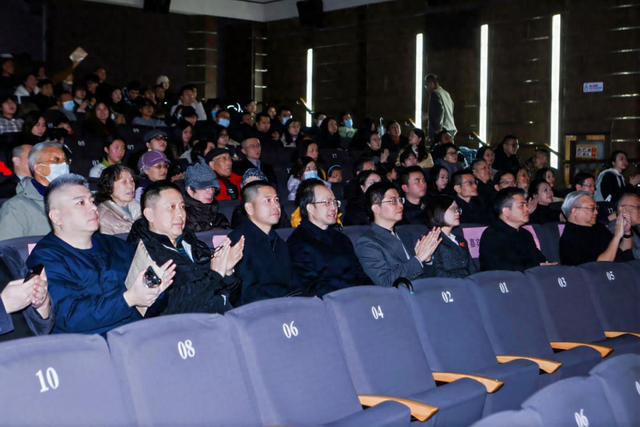
泉州戏曲作曲能力提升班结业仪式暨成果汇报音乐会在上海圆满举行
Xin Lang Cai Jing· 2026-01-28 04:18
Core Viewpoint - The graduation ceremony and成果汇报音乐会 of the Quanzhou Opera Composition Improvement Class were successfully held in Shanghai, aiming to promote the high-quality development of Quanzhou opera art and its innovative transmission [1][10]. Group 1: Event Overview - The event was organized by the Quanzhou Municipal Bureau of Culture, Radio, Television and Tourism and hosted by Quanzhou Art School, marking a significant cultural exchange between Quanzhou and Shanghai [1][3]. - The ceremony featured notable attendees, including officials from both Quanzhou and Shanghai institutions, highlighting the importance of the event in fostering cultural collaboration [1][3]. Group 2: Training Program Details - The improvement class, which began in October of the previous year, focused on the characteristics and development needs of Minnan local opera, integrating modern composition techniques through a comprehensive training model that includes theory, practice, creation, and presentation [3][5]. - The program aimed to transform educational outcomes into industry productivity, providing a platform for talent development in Quanzhou opera composition [3][5]. Group 3: Significance and Future Directions - The event was recognized as a significant step in enhancing the skills and perspectives of Quanzhou opera composers, contributing to the preservation and transmission of intangible cultural heritage [3][8]. - Future efforts will focus on deepening artistic exchanges between Fujian and Shanghai, exploring dual-driven paths for talent cultivation and outcome transformation in traditional opera [5][8].

中国戏曲学院2026年本科招生简章发布
Xin Lang Cai Jing· 2026-01-17 15:38
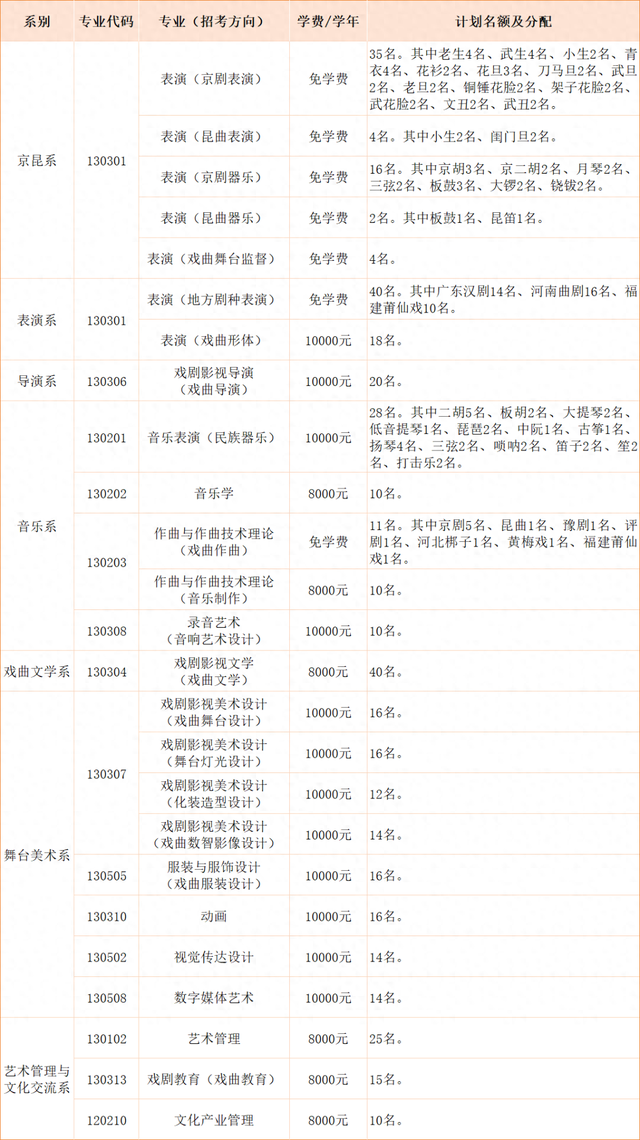
Admission Plan - The institution plans to enroll 416 undergraduate students nationwide in 2026, with specific programs having different durations: five years for Composition and Composition Theory (Opera Composition) and four years for other programs [1][2] - The detailed enrollment plan includes various departments and programs, with specific tuition fees and number of slots allocated for each program [1][2] Department Summaries Jingkun Department - The Jingkun Department focuses on training talents in Jingju (Peking Opera) and Kunqu Opera performance and instrumental skills, with a strong emphasis on professional skills and knowledge [9][10] - The department has a robust faculty, including experts and renowned artists, and has produced many successful graduates who contribute to the development of Chinese opera [10] Performance Department - The Performance Department primarily trains talents in local opera performance, instrumental skills, and dance, covering various national and local opera genres [11][12] - The department has established numerous teaching and practice bases across 22 provinces, ensuring a comprehensive educational reach [11][12] Directing Department - The Directing Department aims to cultivate high-quality directors skilled in traditional and modern opera, with a strong faculty and international collaboration [13][14] - The department has produced many directors who are active in various cultural and artistic fields, contributing significantly to the development of opera directing [14] Music Department - The Music Department offers programs in Composition, Music Performance, Musicology, and Recording Arts, focusing on both traditional and contemporary music skills [15][16] - The department has a strong faculty and has produced numerous influential figures in the field of opera music [16] Drama Literature Department - The Drama Literature Department focuses on training professionals in opera writing and theory, with a strong emphasis on cultural heritage and innovation [17] - The department has a rich history of producing graduates who have become key figures in the industry [17] Stage Art Department - The Stage Art Department is a leading institution for training stage art professionals, offering programs in various design fields related to opera [18][19] - The department has a strong reputation and has contributed significantly to national cultural events [19] Arts Management and Cultural Exchange Department - This department is dedicated to training professionals in the international dissemination of traditional Chinese culture, particularly opera [20][21] - The department collaborates with various institutions to provide practical training opportunities for students [21][22] Examination and Admission Process - Candidates must participate in national cultural examinations and specific professional examinations for arts programs, with detailed requirements varying by province [23][24] - Admission is based on a combination of cultural exam scores and professional exam results, with specific criteria for different programs [25][26][28]
习近平总书记关切事丨国戏新声
Xin Hua She· 2025-11-20 06:12
Core Viewpoint - The article emphasizes the importance of traditional Chinese opera as a cultural treasure and highlights the efforts of the China National Academy of Chinese Theatre Arts in nurturing talent and promoting the art form in contemporary society [2][4][10]. Group 1: Education and Talent Development - The China National Academy of Chinese Theatre Arts has been focusing on building a high-quality professional teaching team and has implemented the "Wanquan Talent" project, hiring 29 honorary professors and 72 guest professors [6]. - The academy has established a comprehensive talent training system covering various aspects of Chinese opera, including performance, directing, music, and management, with a focus on cultivating well-rounded artists [7]. - The school has successfully produced numerous award-winning students, with 97 individuals receiving the "Meihua Award" and 33 receiving the "Wenhua Award" [7]. Group 2: Cultural Promotion and Community Engagement - The academy actively engages in community outreach, performing classic plays like "The Red Lantern" to celebrate significant historical events and to inspire audiences [9][10]. - The "Guo Xi Feng Hua" exhibition season has been a platform for over 100 performances, showcasing various forms of Chinese opera and emphasizing the importance of serving the people through art [10][13]. Group 3: Innovation and Modernization - The integration of high technology into opera education is a key focus, with the establishment of an AI research center and the development of digital teaching resources to enhance learning and performance quality [15][17]. - The academy encourages innovative approaches to traditional works, adapting them to contemporary themes and aesthetics to attract modern audiences [17][18].
昆山百戏盛典“标杆”已成 月末全国107个剧目将联袂登台
Su Zhou Ri Bao· 2025-08-21 00:31
Core Insights - The 2025 National Traditional Opera Festival (Kunshan) will take place from August 29 to September 20, featuring 107 performances from 53 theater troupes across 31 opera genres, attracting over 3,000 performers [1] - Since its inception in 2018, the festival has showcased 348 opera genres and involved 494 participating units, with a total of 606 performances and over 18,000 performers, establishing itself as a national benchmark platform for traditional opera [1] Group 1 - This year's festival will include 36 award-winning performers from prestigious awards such as the "Wenhua Performance Award," "Meihua Award," and "Baiyulan Award" [2] - The festival will focus on the weak link in opera inheritance by selecting 20 martial opera actors for 10 performances, aiming to promote leading talents in contemporary opera [2] - An opening ceremony will be held on September 8, where excellent cases of opera creation from 2020 to 2024 will be announced, guiding troupes to diversify their creative paths and reduce costs [2] Group 2 - The festival will feature five main activities and five extended activities, including a national opera actor performance, an excellent repertoire showcase, and a special activity for the protection and inheritance of endangered opera genres [1] - Extended activities will include promotional exchanges, a themed exhibition at the Kunshan Opera Museum, and digital promotion of traditional opera [1]