艺术教育

Search documents
16个专业被裁了
投资界· 2026-03-18 08:28
Core Viewpoint - The article discusses the significant changes in art education in China, particularly the impact of AI on traditional art programs and the evolving landscape of art-related majors in universities [2][5][12]. Group 1: Changes in Art Education - China Media University has eliminated 16 undergraduate majors, including photography and translation, indicating a shift in educational focus [2][5]. - The number of art-related majors has decreased, with several universities like Jilin University and East China Normal University also halting admissions for various art programs [5][6]. - The Ministry of Education has introduced new art majors that emphasize the integration of art and technology, such as digital drama and intelligent image art, reflecting a trend towards combining artistic skills with technological advancements [6][13]. Group 2: Student Experiences and Reactions - Students have begun to adapt to the use of AI in their creative processes, with many now using AI tools to generate reference images for their artwork [7][8]. - There is a growing anxiety among students and parents regarding the job market for traditional art degrees, as AI's capabilities in art creation raise concerns about employment opportunities [9][10]. - The perception of art education as a "shortcut" to university has diminished, with increasing cultural and academic requirements for art students [23][24]. Group 3: Industry Trends and Future Directions - The demand for art professionals is shifting, with a notable increase in interest for courses that teach AI and digital design, while traditional art classes see declining enrollment [10][27]. - The article highlights the potential for new job opportunities in AI-related fields, such as AI film production, as the industry evolves [30]. - The integration of AI in creative fields is prompting a reevaluation of what constitutes artistic value, with some experts suggesting that AI may push artists to focus on more human-centric expressions [28][29].


“黑白配”美育菜单上新
Xin Lang Cai Jing· 2026-02-27 07:07
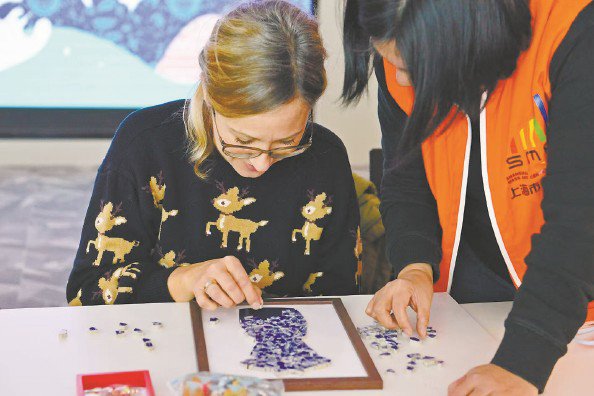
Core Insights - The article highlights the expansion of art education programs in Shanghai, particularly through the collaboration of three major brands: Shanghai Citizen Art Night School, Shanghai Citizen Day School, and Shanghai Weekend Aesthetic Classroom, aiming to enhance the aesthetic lives of citizens [2][4]. Group 1: Night School Expansion - The Night School plans to open 650 locations, including 1 main school, 45 branches, and 604 teaching points, offering a total of 2,495 courses, with a 13% increase in new locations and a 33% increase in new courses [4]. - The Night School remains the leading brand, with significant increases in course offerings and locations across various districts, including 13 new points and 107 new courses in Xuhui District [5]. Group 2: Day School Upgrades - The Day School, a daytime version of the Night School, has expanded from 69 to 186 teaching points and increased course offerings from 201 to 790, with 75% of the new courses focusing on vocational skills, aesthetic living, and health [6]. - New teaching points include unique locations such as a large sports venue and an art village, indicating a trend towards integrating art education into diverse environments [6]. Group 3: Weekend Aesthetic Classroom - The Weekend Aesthetic Classroom for families will offer 230 courses across 78 teaching points in 16 districts, focusing on a four-dimensional curriculum that includes art, technology, sports, and comprehensive literacy [6]. - The program emphasizes traditional culture and digital technology, aiming to foster family bonding through joint artistic activities [6].
“大学望境——中国美术学院建设世界一流大学二十周年特展”开幕
Zhong Guo Qing Nian Bao· 2026-02-24 13:35
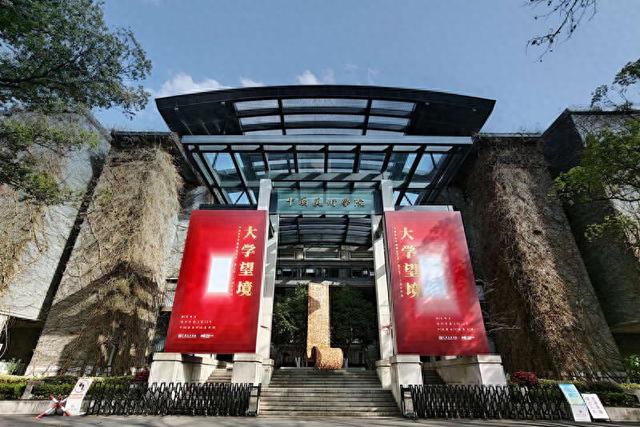
Core Viewpoint - The "University Vision - 20th Anniversary Special Exhibition of China Academy of Art's Construction of a World-Class University" opened in Hangzhou, showcasing the academy's progress and achievements over the past two decades [1][3]. Group 1: Exhibition Overview - The exhibition is divided into six sections: "People's Heart, Philosophy and Craftsmanship, Art and Science Integration, Wall-less Academy, Beauty in Harmony, and Global Exchange" [1][3]. - It features 20 development cases that highlight the academy's achievements in educational practices during the new era [3]. Group 2: Exhibition Content - The first floor includes sections such as "Heaven and Earth Paint the Heart," "Inherit and Write the Heart," and "Craftsmanship," focusing on the creative transformation and innovative development of traditional Chinese culture [3]. - The second floor showcases "Chasing Dreams for a Century," "Sculpting the East," "Weaving the Four Directions," and "Visual Communication," reflecting the academy's contributions to major national cultural projects [3]. - The second floor round hall presents various practices including "Local Architecture," "Cultural and Creative Intelligence," and "Oriental Fashion," demonstrating the school's design discipline advantages [3]. - The third floor emphasizes "Artistic Intelligence," "Visual National Studies," and "Broad Foundation," exploring the Chinese model of art education from a global perspective [3]. Group 3: Future Directions - The president of the China Academy of Art, Yu Xuhong, stated that the school will use the 20th anniversary as a new starting point, aiming for the upcoming centenary and focusing on the mission of building a world-class university [7][8]. - The academy is committed to contributing to the construction of a strong educational and cultural nation, emphasizing the integration of art and science to enhance productivity and writing the history of world art [8]. Group 4: Exhibition Details - The exhibition will be open to the public for free until May 23 [8].
2026年中国艺术教育行业政策、产业链、市场规模及细分结构、重点企业及发展趋势分析:行业稳健发展,市场规模有望突破2000亿元[图]
Chan Ye Xin Xi Wang· 2026-02-17 23:37
Core Viewpoint - The art education market in China is experiencing significant growth driven by rising household incomes, increased cultural identity, and the implementation of policies promoting extracurricular education, particularly among children and adolescents [1][3][4]. Group 1: Market Overview - The art education market in China is projected to reach a scale of 189.3 billion yuan by 2025, with the children's and adolescents' segment expected to grow to 167.3 billion yuan, accounting for 88.38% of the total market [1][4]. - By 2026, the overall art education market is anticipated to grow to 200.1 billion yuan, with the children's and adolescents' segment reaching 177.5 billion yuan, representing 88.71% of the market [1][4]. Group 2: Industry Definition and Classification - Art education encompasses various forms including dance, drama, music, visual arts, literature, film, animation, photography, and digital media, focusing on both skill development and enhancing students' critical thinking, aesthetic appreciation, creativity, and communication abilities [2][3]. - The services in the art education sector are categorized into offline institutions, online platforms, and OMO (Online-Merge-Offline) services [2]. Group 3: Industry Development Status - The demand for extracurricular art education has surged due to the dual reduction policy, which has increased the focus on quality education for children and adolescents, while adults seek personal development and stress relief through art [1][3]. Group 4: Industry Chain - The upstream of the art education industry includes internet infrastructure, cloud services, software development, and hardware, along with resources like teacher training and educational content [6]. - The midstream consists of art education services, while the downstream focuses on students, primarily children and adolescents aged 4 to 14, high school students aged 15 to 17, and adults aged 18 and above [6]. Group 5: Industry Policies - Recent policies aimed at promoting the accessibility and quality of art education have been introduced, reflecting the government's increasing emphasis on this sector [8]. Group 6: Competitive Landscape - The art education market in China is highly fragmented with numerous participants, predominantly led by franchise institutions, and few companies operating large-scale self-owned training centers [10]. - Key players in the market include institutions like Bubble Art, Little Deer Art, and David Art Education, among others [10][11]. Group 7: Industry Trends - The art education sector is undergoing profound changes driven by policy regulations, technological innovations, and diversified market demands, leading to a trend towards specialization, personalization, and integration [13].

苏州评弹学校学子亮相央视春晚节目
Xin Lang Cai Jing· 2026-02-16 17:15
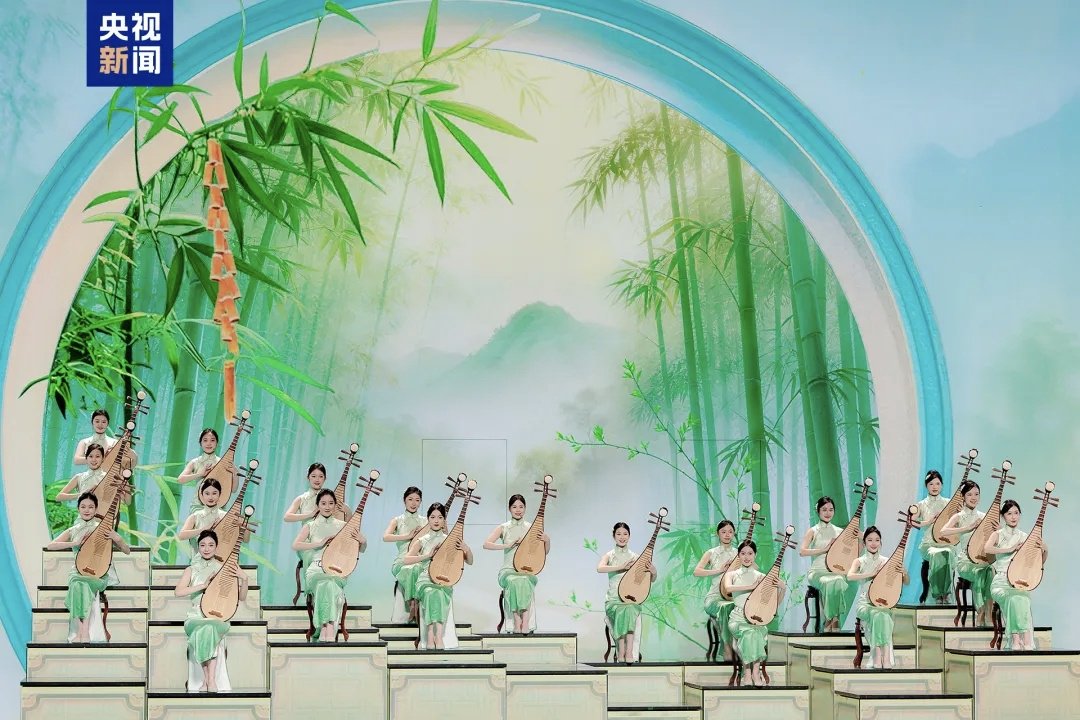
Group 1 - The performance by 19 students from Suzhou Pingtan School at the CCTV Spring Festival Gala showcased the beauty of Suzhou Pingtan through the song "Xiao Jia Nian Nian," reflecting the happiness and aspirations of life in both small and large families [1][3] - The preparation for the performance involved a rigorous selection process, with 20 students chosen for their strong professional skills and stage presence, and the school coordinated their academic schedules to ensure participation [3] - The students demonstrated exceptional professionalism during over a month of rehearsals in Beijing, maintaining a positive attitude despite the demanding schedule and late-night practices [3] Group 2 - Suzhou Pingtan School has a historical connection with the CCTV Spring Festival Gala dating back to the 1980s, with notable performances by its alumni and students over the years, contributing to the promotion of Suzhou Pingtan to a wider audience [4] - The school has participated in various significant cultural events beyond the Spring Festival Gala, receiving multiple awards for its contributions to traditional arts and cultural exchanges [4] - Established in 1962, Suzhou Pingtan School is recognized as a key institution for the training of Pingtan artists, with nearly 2,000 graduates, representing 98% of the performing talent in the industry [5] Group 3 - The school emphasizes a philosophy of excellence in education, aiming to cultivate high-quality talent in traditional arts, and is recognized as a national-level key vocational school [5] - The leadership of Suzhou Pingtan School is committed to preserving traditional culture while innovating for the future, ensuring the continued relevance and vibrancy of Suzhou Pingtan in modern society [5]
中戏明星导师事件三大追问,媒体评: 艺术教育不能沦为权钱交易场
Xin Lang Cai Jing· 2026-02-13 09:02
Group 1 - The core issue revolves around the recent corruption scandal at the Central Academy of Drama (CADA), where three prominent art instructors have been investigated, raising concerns about the integrity of art education in China [1] - CADA is recognized as a leading institution in Chinese drama and film education, and the involvement of high-profile figures in the scandal has attracted significant public attention [1] - The scandal highlights potential systemic corruption within the institution, questioning whether the misuse of power has compromised the fairness and purity of art education [1] Group 2 - The three instructors, Hao Rong, Chen Gang, and Wang Xin, have had significant influence in the industry, having taught many well-known actors, which adds to the shock of their involvement in the scandal [1] - The relationship between students aspiring for careers in the entertainment industry and their mentors is critical, with the potential for unethical practices to undermine the educational process [1] - The article emphasizes the subjective nature of art education evaluation and the risks associated with the traditional mentorship system, which can lead to moral failures and illegal activities if not properly regulated [1]
未知机构:经济座谈会新9位明明中信证券首席经济学家对-20260120
未知机构· 2026-01-20 02:35
Summary of Key Points from the Conference Call Industry and Company Overview - **Securities Industry**: Represented by Mingming, Chief Economist of CITIC Securities, focusing on the non-bank financial sector, particularly brokerage firms [1] - **Financial Education and Research**: Represented by He Jia, Vice Dean and Professor at Nankai University, emphasizing the support of academic research for the multi-financial and fintech sectors [2][3] - **Artificial Intelligence (AI)**: Represented by Yan Junjie, Founder of Minimax, covering software development, IT services, and media applications related to AI [4] - **Electric Power Industry**: Represented by Zhang Zhigang, Chairman of State Grid Corporation, focusing on electricity production and transmission [5] - **Higher Education and Research**: Represented by Gong Qihuang, President of Peking University, highlighting the role of education in nurturing talent and providing cutting-edge research for technology industries [6][7] - **Information and Communication Technology (ICT)**: Represented by Yu Xiaohui, President of the China Academy of Information and Communications Technology, covering communication, computing, and electronics, particularly in 5G, IoT, and smart manufacturing [8] - **Medical Services and Biopharmaceuticals**: Represented by Wang Yongjun, Director of Beijing Tiantan Hospital, focusing on medical services, medical devices, and biomedicine, especially in neurology [9] - **Cultural Media and Performing Arts**: Represented by Zhou Liya, a choreographer and dancer, focusing on the cultural and media sectors, including film and cultural dissemination [10] - **Sports Industry**: Represented by Shi Yuqi, a badminton player, covering sports goods, services, and event operations [11] Core Insights and Arguments - Academic research is crucial for providing theoretical frameworks and talent support to various industries, particularly in finance and technology [2][4][7] - The electric power sector is essential for national infrastructure and energy security, with ongoing developments in production and distribution [5] - The integration of AI into various sectors is expected to drive innovation and efficiency, particularly in software and media applications [4] - The ICT sector is rapidly evolving, with significant advancements in communication technologies like 5G and IoT, which are pivotal for industrial transformation [8] - The healthcare sector, especially in neurology, is seeing advancements in medical services and biopharmaceuticals, indicating growth potential in medical technology [9] Additional Important Content - The emphasis on nurturing talent in technology and research is a recurring theme, indicating a strategic focus on education as a driver for industry growth [6][7] - The diverse representation of industries in the conference highlights the interconnectedness of sectors such as finance, technology, healthcare, and education, suggesting collaborative opportunities for innovation and development [2][4][6][8]
天津音乐学院在新疆设立艺术实践基地
Xin Lang Cai Jing· 2026-01-18 21:30
Core Viewpoint - The collaboration between Tianjin Conservatory of Music and Xinjiang Art Theatre aims to enhance art education and talent development through the establishment of the "Tianjin Conservatory of Music Art Practice Base" and "Remote Music Classroom" [1] Group 1: Collaboration Initiatives - The establishment of the "Tianjin Conservatory of Music Art Practice Base" and "Remote Music Classroom" signifies a new path for artistic education cooperation between Tianjin and Xinjiang [1] - The partnership will leverage the professional and disciplinary strengths of Tianjin Conservatory of Music to engage in practical cooperation in talent cultivation, artistic creation, and academic research with Xinjiang Art Theatre [1] Group 2: Educational Objectives - The collaboration aims to deeply integrate professional teaching with stage practice, creating artistic works that reflect regional characteristics and contemporary relevance [1] - A short-term cooperation plan and a long-term strategy have been developed to cultivate a group of well-rounded artistic professionals rooted in the border areas, emphasizing both moral integrity and artistic excellence [1]
唱念做打 逐梦川剧本科专业
Xin Lang Cai Jing· 2026-01-17 22:51
Group 1 - The core event is the first provincial joint examination for the traditional Sichuan opera (Chuanju) program, taking place in Chengdu, with 398 candidates from Sichuan, Chongqing, and Guizhou participating over seven days [1][2] - The examination features a new selection mechanism that allows candidates to showcase their talents in a comprehensive manner, completing all subjects in one sitting [1] - The examination aims to enhance the systematic study of Chuanju, providing a platform for students to enter higher education and contribute to the art's development [2][3] Group 2 - The joint examination offers a significant advantage of "one exam for multiple uses," allowing candidates to use their scores across participating universities without needing to take multiple entrance exams [2] - The evaluation process combines cultural literacy and professional ability, requiring candidates to meet both academic and performance standards for admission [2] - The establishment of the Chuanju undergraduate program at Chengdu Arts Vocational University fills a gap in Sichuan's higher education for this traditional art form, supported by local regulations for its protection and transmission [2]
中国戏曲学院2026年本科招生简章发布
Xin Lang Cai Jing· 2026-01-17 15:38
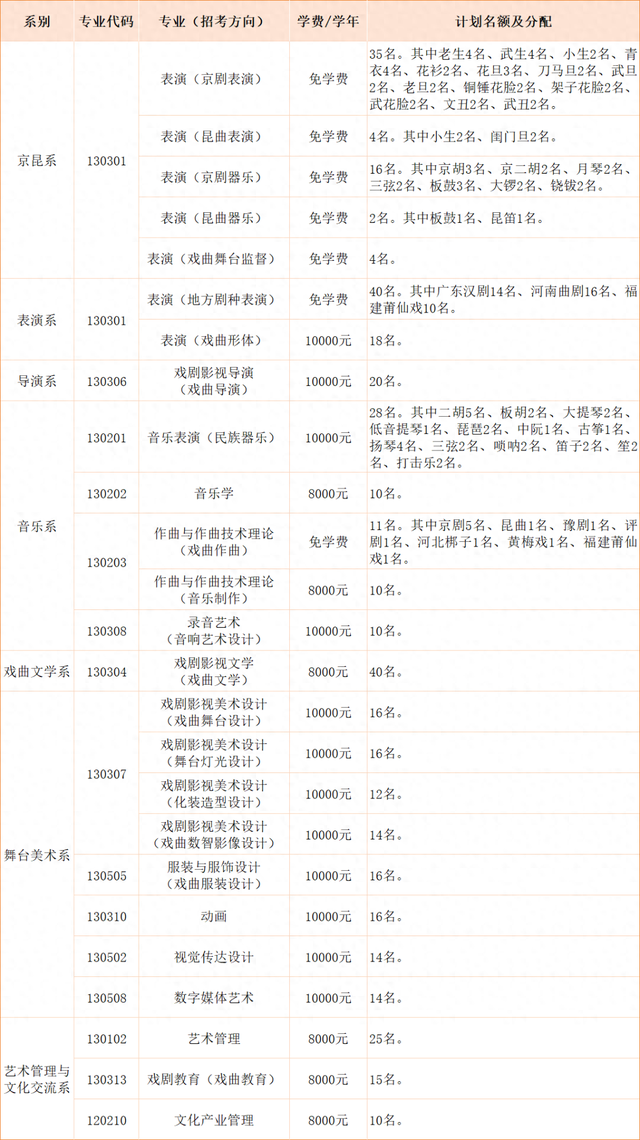
Admission Plan - The institution plans to enroll 416 undergraduate students nationwide in 2026, with specific programs having different durations: five years for Composition and Composition Theory (Opera Composition) and four years for other programs [1][2] - The detailed enrollment plan includes various departments and programs, with specific tuition fees and number of slots allocated for each program [1][2] Department Summaries Jingkun Department - The Jingkun Department focuses on training talents in Jingju (Peking Opera) and Kunqu Opera performance and instrumental skills, with a strong emphasis on professional skills and knowledge [9][10] - The department has a robust faculty, including experts and renowned artists, and has produced many successful graduates who contribute to the development of Chinese opera [10] Performance Department - The Performance Department primarily trains talents in local opera performance, instrumental skills, and dance, covering various national and local opera genres [11][12] - The department has established numerous teaching and practice bases across 22 provinces, ensuring a comprehensive educational reach [11][12] Directing Department - The Directing Department aims to cultivate high-quality directors skilled in traditional and modern opera, with a strong faculty and international collaboration [13][14] - The department has produced many directors who are active in various cultural and artistic fields, contributing significantly to the development of opera directing [14] Music Department - The Music Department offers programs in Composition, Music Performance, Musicology, and Recording Arts, focusing on both traditional and contemporary music skills [15][16] - The department has a strong faculty and has produced numerous influential figures in the field of opera music [16] Drama Literature Department - The Drama Literature Department focuses on training professionals in opera writing and theory, with a strong emphasis on cultural heritage and innovation [17] - The department has a rich history of producing graduates who have become key figures in the industry [17] Stage Art Department - The Stage Art Department is a leading institution for training stage art professionals, offering programs in various design fields related to opera [18][19] - The department has a strong reputation and has contributed significantly to national cultural events [19] Arts Management and Cultural Exchange Department - This department is dedicated to training professionals in the international dissemination of traditional Chinese culture, particularly opera [20][21] - The department collaborates with various institutions to provide practical training opportunities for students [21][22] Examination and Admission Process - Candidates must participate in national cultural examinations and specific professional examinations for arts programs, with detailed requirements varying by province [23][24] - Admission is based on a combination of cultural exam scores and professional exam results, with specific criteria for different programs [25][26][28]