
战略金属供应扰动

Search documents
津巴布韦禁止锂矿出口!锂矿概念大涨,尔康制药20CM涨停,战略金属供应扰动愈发频繁
Jin Rong Jie· 2026-02-26 01:53
Industry Overview - The lithium mining sector is experiencing a significant surge, driven by expectations of a contraction in global lithium supply and a recent stabilization in lithium prices, leading to heightened performance recovery expectations in the industry [2][3] - Zimbabwe, the largest lithium exporter in Africa, has announced a suspension of lithium concentrate and raw ore exports, which is expected to tighten short-term supply and potentially drive lithium prices significantly higher [3] Company Highlights - Erkang Pharmaceutical's subsidiary, Erkang Mining, established in Nigeria, is engaged in lithium exploration and mining, positioning the company to benefit from rising lithium prices [6] - Jinyuan Co. is advancing its lithium salt project and has acquired a 15% stake in Ali Lithium Source to enhance its lithium resource reserves, which will benefit from the industry's improving conditions [6] - Salt Lake Co. has successfully implemented a technology upgrade that has improved lithium recovery rates to 95%, positioning it as a leading domestic player in lithium extraction [6] - Tianqi Lithium's Greenbush lithium spodumene mine in Australia is the largest and highest-grade lithium project currently in production, with an annual capacity of 1.62 million tons, set to benefit from the industry's growth [6] Market Dynamics - The lithium mining and processing sectors are expected to see increased demand for equipment due to expansions in lithium mining projects and new lithium salt production capacities, benefiting companies involved in the manufacturing of lithium mining and processing equipment [5] - The recovery in lithium prices is anticipated to enhance profitability for lithium salt processing companies, especially those with strong cost control and scalable production capabilities [4]


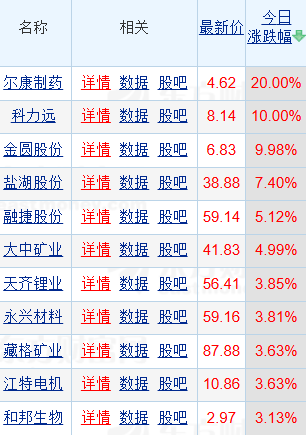
中信证券:津巴布韦暂停锂矿出口,板块有望大涨
Xin Lang Cai Jing· 2026-02-26 00:05
Core Viewpoint - Zimbabwe's Ministry of Mines announced a ban on lithium ore exports to strengthen mineral regulation and promote local processing, which is expected to tighten short-term lithium supply in China and potentially drive up lithium prices significantly [1][2][4]. Group 1: Export Ban Details - On February 25, Zimbabwe's Ministry of Mines suspended all exports of raw ore and lithium concentrate, allowing only companies with mining rights and approved processing capacity to export [2][4]. - The ban aims to enhance mineral regulation and accountability while maximizing the value of minerals retained within Zimbabwe [2][4]. Group 2: Industry Impact and Projections - By 2025, Zimbabwe is projected to account for 19% of China's lithium concentrate imports, with an estimated production of 28,000 metric tons of lithium resources, representing 10% of global output [4][11]. - The expected production from Zimbabwe in 2026 is 235,000 metric tons, which would constitute approximately 12% of global lithium resources [4][11]. - The ban is anticipated to exacerbate the short-term supply shortage of lithium carbonate in China, leading to a significant increase in lithium prices [4][11]. Group 3: Strategic Metal Supply Dynamics - The recent export ban is part of a broader trend of resource nationalism affecting strategic metals, with various countries implementing strict control policies [5][12]. - The ongoing geopolitical tensions, particularly between the U.S. and China, may lead to further unexpected policy changes that could disrupt the supply of strategic metals [5][12].
