
户外品牌营销

Search documents
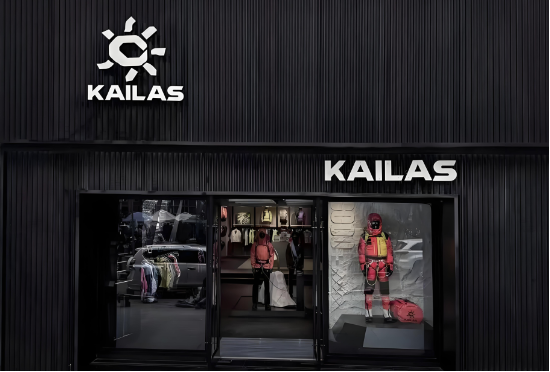
凯乐石陷“涨价门”争议:换名字贵900元,创始人曾称“我们赚得太少”
Xin Lang Cai Jing· 2025-12-26 10:27
Core Viewpoint - The well-known domestic outdoor brand Kailas is facing a price increase controversy, with consumers accusing the company of "price gouging" as new products are priced significantly higher than similar previous models [2][19]. Price Increase Controversy - Consumers have reported that the new Alta down jacket is priced at 4,800 yuan, which is 900 yuan more than the similar Kanasi down jacket that was previously priced at 3,900 yuan [5][21]. - A consumer highlighted that a soft shell jacket purchased in 2022 for 319 yuan is now listed at 1,360 yuan, and another jacket that was 399 yuan is now priced at 2,800 yuan, indicating a significant price increase over the years [2][21]. - Kailas's high-end down jackets are now priced higher than most domestic brands, with the most expensive item listed at 13,000 yuan, yet it shows zero sales on e-commerce platforms [2][6][7]. Company Background - Kailas was founded in 2003 by Zhong Chengzhan, who aimed to create a leading outdoor brand in China, inspired by his passion for outdoor sports [23][25]. - The brand initially focused on imitating established brands but later shifted to original designs after several product upgrades [25]. - Zhong Chengzhan has acknowledged that the company is not very efficient and, despite appearing to perform well, it struggles with profitability, which may explain the recent price hikes [2][25]. Marketing and Brand History - Kailas has a controversial history regarding its branding, having previously claimed to be an Australian brand, which has been criticized by consumers [28][30]. - The brand's marketing strategy included promoting a narrative of Australian origins to enhance its appeal, which has been met with skepticism by some consumers [30].

户外品牌“围攻”珠峰
2 1 Shi Ji Jing Ji Bao Dao· 2025-08-01 13:24
Core Viewpoint - The outdoor equipment market is experiencing significant growth, with brands increasingly using Mount Everest as a platform for marketing and brand validation, despite the challenges of appealing to a broader consumer base [2][3][4]. Industry Overview - The global outdoor equipment market is projected to reach $26 billion in 2024, with a compound annual growth rate (CAGR) of 5.83% over the next five years [2]. - The Chinese outdoor products market is expected to grow from 215 billion yuan in 2024 to 270 billion yuan by 2026 [2]. Brand Strategy - Climbing Mount Everest serves as a powerful marketing tool for outdoor brands, establishing credibility and expertise in extreme conditions, which resonates with consumers [3][4]. - Brands like Camel, Kailas, and Bosideng have leveraged Everest climbs for promotional purposes, enhancing their visibility and brand recognition [3][4]. Market Competition - The competition among outdoor brands is intensifying, with many global brands entering the Chinese market, including Mammut, Patagonia, and Arc'teryx [4]. - The need for differentiation is emphasized, as many brands risk becoming homogenized in their marketing strategies by all attempting to associate with Everest [4]. Consumer Trends - A significant portion of outdoor enthusiasts (nearly 90%) engage in outdoor activities monthly, indicating a growing interest in outdoor lifestyles [6][7]. - The average annual spending of outdoor enthusiasts ranges between 2,000 to 5,000 yuan, reflecting a robust consumer market [7]. Product Development - Brands are shifting focus from high-altitude gear to more accessible outdoor products that cater to urban and casual outdoor activities, aiming to broaden their consumer base [6][7]. - The trend towards "light outdoor" and "urban outdoor" apparel is becoming increasingly popular, integrating outdoor elements into everyday fashion [6][7].