房地产周期下行

Search documents
董秘长期空缺,万年青收监管函!一个月前总经理辞职,股价较历史高点回落70%,净利连续三年下滑
Mei Ri Jing Ji Xin Wen· 2026-01-23 07:40
Core Viewpoint - The company Wan Nian Qing has faced ongoing performance declines due to the downturn in the real estate cycle, leading to significant stock price depreciation and governance issues, including a long-term vacancy in the secretary position of the board [1][2][3] Group 1: Governance Issues - The company received a regulatory letter from the Shenzhen Stock Exchange regarding governance irregularities, including a long-term vacancy in the board secretary position since January 2023 [1][2] - The financial accounting for trade operations has been found to be non-compliant, leading to inaccurate revenue cost disclosures for the fiscal year 2024 [2] - There are inaccuracies in the disclosure of major customer income and incomplete reporting of restricted cash flow [2] Group 2: Financial Performance - Wan Nian Qing's revenue has consistently declined from 142.05 billion in 2021 to 59.57 billion in 2024, with net profits dropping from 15.93 billion to 1.32 million in the same period [3] - In the first three quarters of 2025, the company reported a revenue of 33.28 billion, a year-on-year decrease of 17.18%, while net profit was 748.55 million, showing a 7.27% increase [3] - The stock price has fallen by 70% from its historical high of 18.70 yuan in August 2020 to 5.53 yuan as of January 23, 2026, with a market capitalization of approximately 4.4 billion [3] Group 3: Cash Position and Share Buyback - Despite the declining performance, the company maintains a strong cash position with 47.93 billion in cash as of September 30, 2025, and relatively low interest-bearing liabilities [3] - In April 2025, the company completed a share buyback plan, repurchasing approximately 38.47 million shares for a total of 1.99 billion [4]

还清月供2.7万的房贷后 京城“零负债人群”想去创业
Zhong Guo Jing Ying Bao· 2026-01-20 00:12
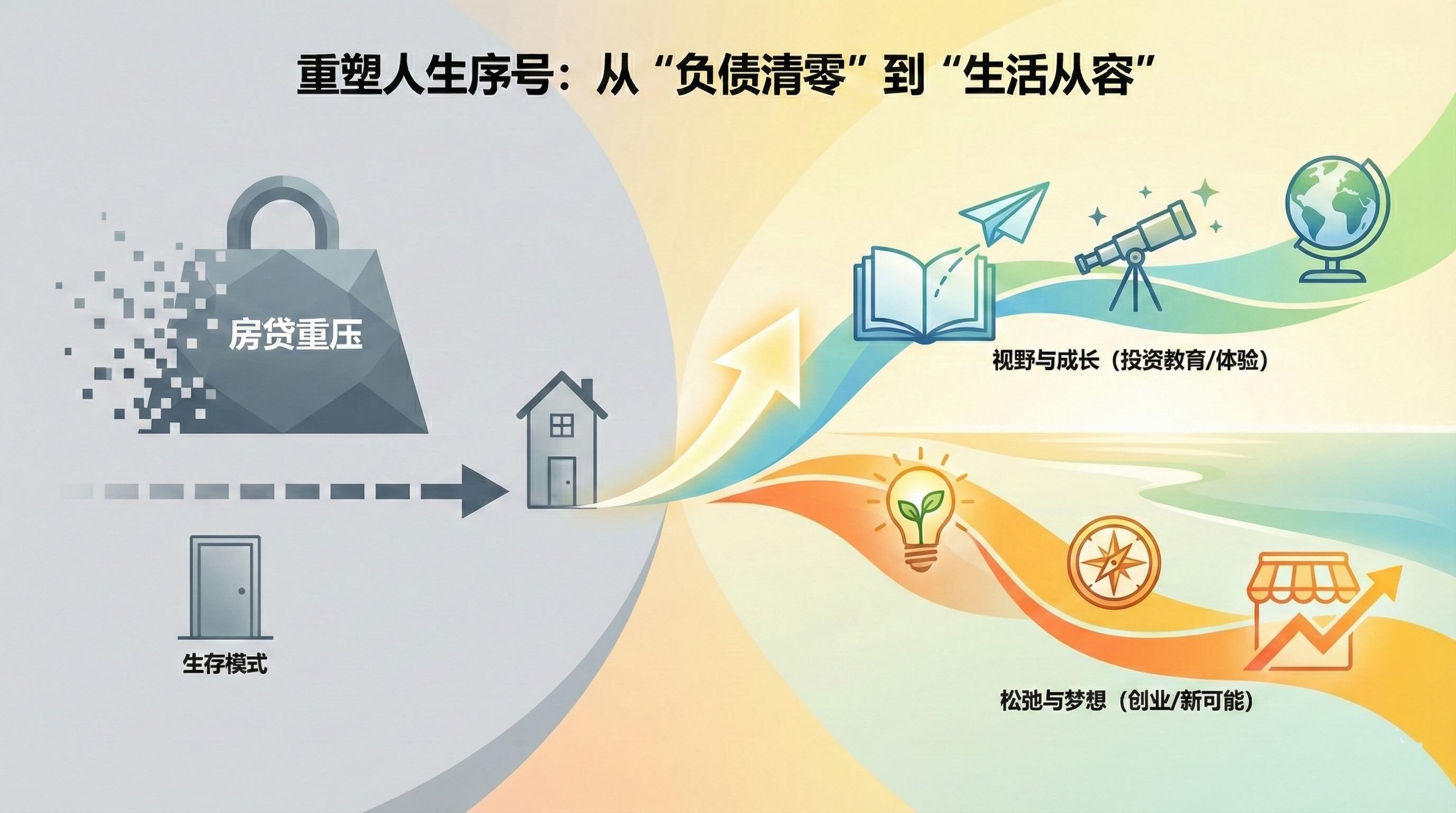
Core Insights - The article discusses the impact of mortgage repayment on personal finances and lifestyle choices, highlighting how the absence of mortgage pressure allows families to invest more in children's education and experiences [2][3][4]. Group 1: Financial Impact of Mortgage - The interviewee, Wang Jing, emphasizes that for a decade, his income was primarily allocated to mortgage repayments, which limited his family's financial flexibility [2]. - After paying off the mortgage in 2025, Wang Jing and his family felt a significant relief, prompting them to reconsider their lifestyle and financial priorities [2]. - The article notes that the financial burden of a mortgage directly affects spending habits, as seen in Wang Jing's previous reluctance to invest in quality educational experiences for his children [3]. Group 2: Shifts in Investment and Lifestyle Choices - With the mortgage cleared, Wang Jing redirected funds towards his children's extracurricular activities, spending around 70,000 to 80,000 yuan annually on classes like swimming and piano [3]. - The decision not to invest in a "school district house" reflects a shift in priorities, focusing on quality of life rather than property investment [3]. - The article highlights a broader trend where families are re-evaluating their financial strategies and lifestyle choices in light of changing economic conditions, particularly in the real estate market [7]. Group 3: Psychological and Social Effects - The absence of mortgage pressure is linked to a more relaxed lifestyle, allowing individuals to enjoy leisure activities without financial stress [4][6]. - The article illustrates how the removal of mortgage obligations can lead to a more carefree approach to work and parenting, as seen in the experiences of another interviewee, Chu Jie, who feels less constrained by financial pressures [6]. - The narrative suggests that the psychological relief from mortgage repayment can lead to a more open-minded approach to future financial decisions, including potential entrepreneurship [6][7].