房地产政策转向

Search documents
2026,房地产要下猛药了!辽宁新年第一会今日召开!|栋察楼市早报(1.4)
Sou Hu Cai Jing· 2026-01-04 17:06
Market Insights - The article emphasizes that in 2026, significant measures will be taken to stabilize the real estate market, moving away from incremental policies to more decisive actions [6][10][12] - The commentary from the authoritative publication indicates a major shift in the government's stance on real estate, recognizing its financial attributes and importance to the national economy [3][6] Policy Changes - The article outlines three key points that reflect a reversal of negative perceptions about the real estate sector: acknowledgment of real estate as a financial asset, its role in the national economy, and the need for effective management of market expectations [5][6] - The government recognizes that housing is the most significant asset for ordinary families, and further declines in housing prices could impact social stability [9] Financial Implications - The article mentions that the concentration of household wealth in real estate ranges from 59.1% to 77.2%, significantly higher than the 20% in financial assets [7] - It is anticipated that interest rates on housing loans will decrease, with the latest rates potentially dropping to 3.05% for first-time homebuyers [18][19] Economic Initiatives - The article discusses the launch of a consumption subsidy program in Liaoning, with over 12 million yuan allocated on the first day, aimed at stimulating consumer spending through various categories including home appliances and vehicles [28][29] - The program is expected to benefit over 20,000 consumers, with a total subsidy fund of 1,223 million yuan on the first day [28] Digital Currency Developments - Starting January 1, 2026, digital yuan wallets will earn interest, marking a transition from a cash-based system to a deposit currency model [33][34] - This change is expected to enhance user engagement with digital yuan and expand its application scenarios, solidifying China's leadership in central bank digital currency initiatives [34][41]

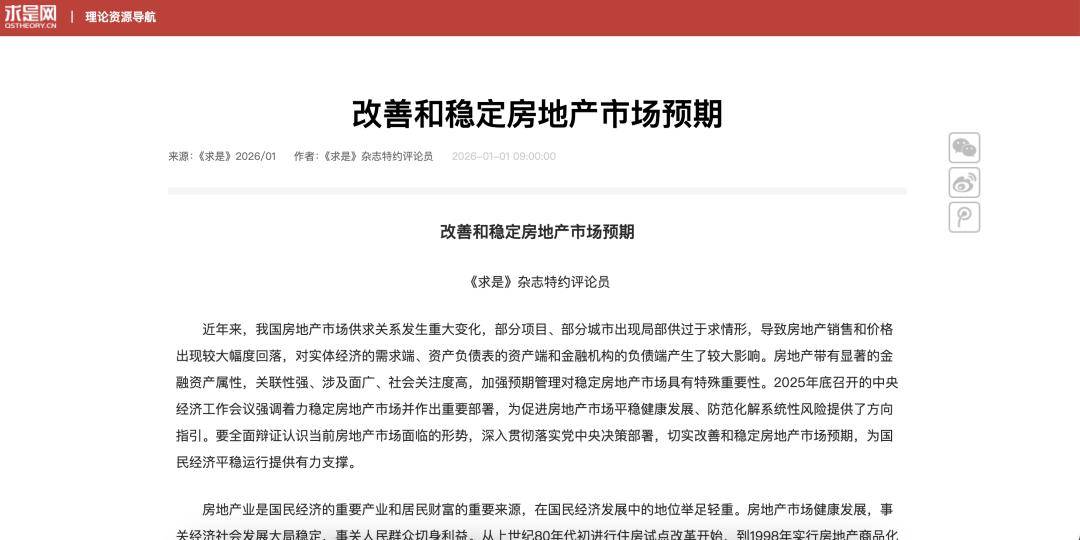
“催买房”无效后,国家动真格,7月起,房地产要有四大变化
Sou Hu Cai Jing· 2025-07-07 04:46
Core Insights - The article discusses the shift in China's real estate policy from merely encouraging home purchases to implementing substantial reforms aimed at addressing the underlying issues in the sector [1][3]. Group 1: Policy Changes - The focus of policies has transitioned from "rescuing projects" to "ensuring people's livelihoods," with an emphasis on making home buying more secure and appealing for the public [4][3]. - A series of measures have been introduced to tackle high inventory levels among real estate companies, including converting unsold properties into affordable housing and reducing rents for new residents [5][6]. - The government has tightened regulations on land acquisition, mandating developers to address idle land and unfinished projects before acquiring new land, with a policy stating that land not developed within two years will be reclaimed [7]. Group 2: Quality Over Speed - The development model has shifted from a focus on rapid turnover to prioritizing quality, with new standards set for housing construction, including minimum ceiling heights and green space requirements [8][9]. - Developers failing to meet these new quality standards risk losing their pre-sale qualifications, indicating a significant industry shift towards quality assurance [9][10]. Group 3: Urban Renewal - The article highlights the emergence of urban renewal as a key opportunity in the real estate market, particularly focusing on the renovation of older neighborhoods built before 2000 [12]. - The new urban renewal strategy aims to create "super communities" that meet all living needs within a 15-minute walk, moving away from traditional demolition and reconstruction models [12]. Group 4: Differentiated Policies - The approach to regulation has evolved from a one-size-fits-all strategy to a more differentiated policy framework, with varying measures based on city and district conditions [14]. - Core urban areas will continue to enforce strict measures against speculation, while cities with high inventory levels will see reductions in interest rates and down payments, along with potential home purchase subsidies [14].