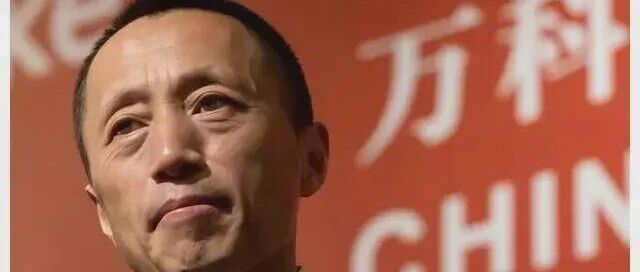
房地产黑铁时代

Search documents
最早喊出「活下去」的「打工皇帝」,没等到大结局
36氪· 2026-01-14 09:47
Core Viewpoint - The article discusses the retirement of Yu Liang, a significant figure in China's real estate industry, marking the end of his long career at Vanke, and reflects on his contributions and the challenges faced by the company during his tenure [4][5][10]. Group 1: Retirement Announcement - Yu Liang submitted his resignation to Vanke's board on January 8, 2026, due to reaching retirement age, and will no longer hold any position within the company [5]. - His departure is seen as a signal of Vanke's completion of a phase of "soft landing" amid ongoing industry challenges [5][10]. Group 2: Industry Challenges and Responses - Yu Liang has been vocal about the challenges in the real estate sector, coining terms like "black iron era" to describe the current state of the industry, emphasizing the need for survival and adaptation [6][22]. - In 2024, Vanke reported its first annual loss of 49.478 billion yuan, the largest in its history, highlighting the severe financial difficulties faced by the company [7][25]. Group 3: Career Highlights and Strategies - Yu Liang joined Vanke in 1990 and played a crucial role in its growth from a sales volume of 3 billion yuan to over 700 billion yuan, witnessing both rapid expansion and subsequent industry downturns [9][12]. - He implemented a strategy focused on mergers and acquisitions, enhancing operational efficiency, and introduced the "5986 model" for rapid project turnover, which helped Vanke maintain revenue during economic downturns [19][24]. Group 4: Transition and Future Outlook - Following his resignation as chairman in early 2025, Yu Liang expressed cautious optimism about the real estate market's recovery, indicating a potential return to stable growth [25]. - His retirement marks a significant transition for Vanke, leaving the company to navigate an uncertain future without his leadership [10][26].



“地产吹哨人”郁亮退休公告无感谢引关注 深铁308亿输血助力万科有序脱困
Chang Jiang Shang Bao· 2026-01-11 23:31
Core Viewpoint - The resignation of Yu Liang, known as the "whistleblower" of the real estate market, marks a significant transition for Vanke, a leading player in China's real estate sector, as it faces ongoing financial challenges and a changing market landscape [2][3][29]. Group 1: Yu Liang's Career and Resignation - Yu Liang announced his retirement due to age on January 8, after 36 years with Vanke, where he served as a key figure for 25 years [3][5]. - Under Yu's leadership, Vanke transformed from a billion-yuan company to a trillion-yuan enterprise, becoming a benchmark in the industry [3][14]. - Yu's departure was noted for its lack of emotional acknowledgment in the company's announcement, which surprised the market [24][25]. Group 2: Financial Challenges Facing Vanke - As of September 2025, Vanke's debt-to-asset ratio stood at 73.51%, with interest-bearing liabilities amounting to 339.18 billion yuan, while cash reserves were only 65.68 billion yuan [26]. - The company reported a net loss attributable to shareholders of 28.02 billion yuan for the first three quarters of 2025, with a significant decline in operating cash flow [26][27]. - Vanke's financial difficulties have led to a reliance on its major shareholder, Shenzhen Metro Group, which has provided loans totaling 30.80 billion yuan [28]. Group 3: Market Context and Future Outlook - The real estate market in China is currently in a downturn, with Vanke's financial health under scrutiny as it attempts to navigate through this challenging environment [29]. - Yu Liang's earlier warnings about the market's transition from a "golden era" to a "black iron era" have gained relevance as the industry faces deeper adjustments [20][21]. - Vanke is exploring debt restructuring options, including extending the maturity of its bonds, but has faced challenges in gaining investor confidence [28][29].
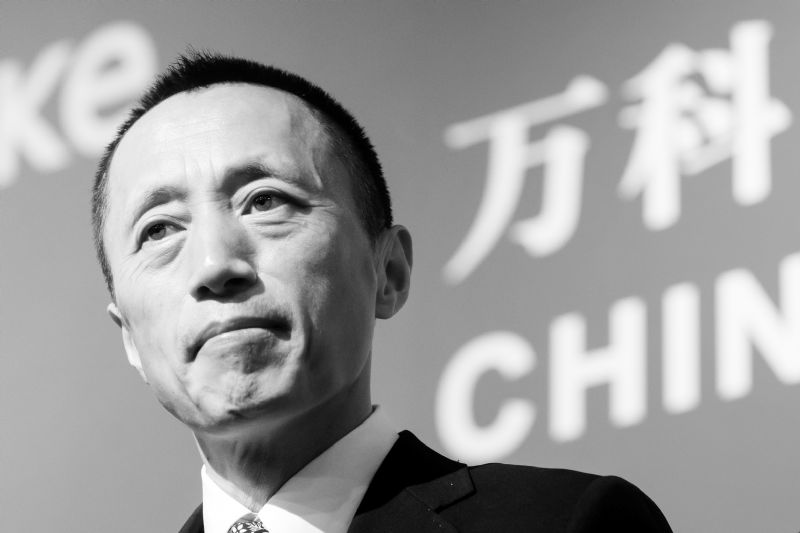
预警“活下去”的郁亮谢幕,万科仍困“深渊”
商业洞察· 2026-01-11 09:23
Core Viewpoint - The retirement of Yu Liang marks the end of an era for the Chinese real estate industry, symbolizing the transition from a period of rapid growth to a more uncertain future for the sector [5][23]. Group 1: Yu Liang's Career and Impact - Yu Liang, known as the "whistleblower" of the real estate industry, has been a pivotal figure in the development of Vanke, demonstrating keen insight into industry trends [7]. - He joined Vanke in 1990 and rose through the ranks, becoming the general manager in 2001 and later the chairman in 2017, leading the company to significant milestones, including surpassing 100 billion yuan in sales in 2010 [10][8]. - Yu Liang's cautious approach, influenced by his financial background, led him to predict industry downturns, coining terms like "silver age" and "black iron age" to describe the evolving market conditions [11][12]. Group 2: Vanke's Challenges and Management Changes - Vanke has faced severe challenges, with total interest-bearing liabilities reaching 362.93 billion yuan by Q3 2025, and a cash short-term debt ratio of only 0.43, indicating liquidity issues [19]. - In January 2025, significant management changes occurred, with Yu Liang stepping down as chairman and the introduction of new executives from the Shenzhen state-owned enterprise system, marking a shift to a dual management model [15][13]. - The company has been actively seeking to address its debt crisis, with the major shareholder, Shenzhen Metro Group, providing nearly 30 billion yuan in financial support and engaging in debt restructuring efforts [20][23]. Group 3: Industry Context and Future Outlook - The retirement of Yu Liang signifies the end of the "wild growth" era in the Chinese real estate sector, as the industry faces a deep adjustment phase characterized by management upheavals and financial distress [23][24]. - The ongoing debt crisis has led to a decline in Vanke's revenue, with a reported 26.61% year-on-year decrease in revenue for the first three quarters of 2025 [19]. - The future of Vanke and the broader real estate industry remains uncertain, as the sector grapples with the consequences of past growth strategies and the need for sustainable development [24].

万科这场马拉松,郁亮不跑了
3 6 Ke· 2026-01-09 11:29
Core Viewpoint - The retirement of Yu Liang from Vanke marks the end of an era for the company, which has faced significant challenges and leadership changes in recent years [1][3][14]. Group 1: Retirement Announcement - Vanke announced Yu Liang's retirement due to "age-related reasons," emphasizing that it would not affect the board's operations and that there were no disagreements within the board [3][14]. - The announcement lacked the customary expressions of gratitude typically extended to departing executives, raising questions about the nature of his exit [3][14]. Group 2: Leadership Changes - Yu Liang's retirement follows a series of high-profile departures, including the resignation of former President Zhu Jiusheng due to legal issues and the abrupt exit of Chairman Xin Jie [3][14][18]. - The company is transitioning to a leadership style influenced by local government, moving away from the previous market-driven management approach [17][18]. Group 3: Company Performance and Challenges - As of Q3 2025, Vanke's interest-bearing debt reached 362.93 billion yuan, with 151.39 billion yuan due within a year, while available cash was only 65.68 billion yuan, indicating a cash shortfall [18]. - The company's revenue for the first three quarters of 2025 was 161.39 billion yuan, a nearly 27% decline year-on-year, with a net loss of 28.02 billion yuan, worsening from the previous year [18]. Group 4: Yu Liang's Legacy - Yu Liang is recognized as a key figure in Vanke's history, having led the company from a small firm with sales of less than 2.5 billion yuan to the largest residential developer in China [10][11]. - He introduced the "5986" high turnover model, which became an industry standard and helped Vanke expand during the 2008 financial crisis [11][14]. Group 5: Future Outlook - The next leadership is expected to come from the Shenzhen Metro Group, indicating a shift towards a more government-influenced management style [17]. - The company faces significant challenges in addressing its debt and operational issues, with ongoing efforts to sell assets and negotiate with creditors [18].

预警「活下去」的郁亮谢幕,万科仍困「深渊」
36氪· 2026-01-09 08:57
Core Viewpoint - The retirement of Yu Liang marks the end of an era for the Chinese real estate industry, symbolizing the transition from a period of rapid growth to one filled with uncertainty and challenges [8][27]. Group 1: Yu Liang's Career and Impact - Yu Liang, who has been a pivotal figure in the real estate sector, officially retired at the age of 61 after a 36-year career at Vanke [4][8]. - He is recognized for his significant contributions to Vanke, leading the company to achieve over 100 billion yuan in sales in 2010, making it the first real estate firm in China to reach this milestone [13]. - Yu's cautious approach, influenced by his financial background, led him to predict industry downturns, coining terms like "Silver Age" and "Black Iron Age" to describe the evolving market conditions [13][11]. Group 2: Vanke's Current Challenges - As of Q3 2025, Vanke faced severe financial difficulties, with total interest-bearing liabilities reaching 362.93 billion yuan and a cash short-term debt ratio of only 0.43, indicating a precarious liquidity position [23]. - The company reported a revenue decline of 26.61% year-on-year, with a net loss of 28.02 billion yuan, exacerbating concerns over its financial health [23]. - Vanke's major shareholder, Shenzhen Metro Group, has provided nearly 30 billion yuan in financial support, highlighting the urgent need for capital to navigate the crisis [23][19]. Group 3: Management Changes and Future Direction - The recent management shake-up at Vanke, including Yu Liang's resignation and the appointment of new executives from Shenzhen Metro Group, signifies a shift towards a dual management model of state-owned and professional managers [19][14]. - The upcoming shareholder meeting will address a framework agreement for a loan of up to 22 billion yuan from Shenzhen Metro Group, aimed at repaying debts and stabilizing the company's finances [20]. - Despite the challenges, Vanke aims to deliver 117,000 housing units in 2025, having completed about 70% of the required deliveries, indicating a focus on maintaining operational commitments [24].
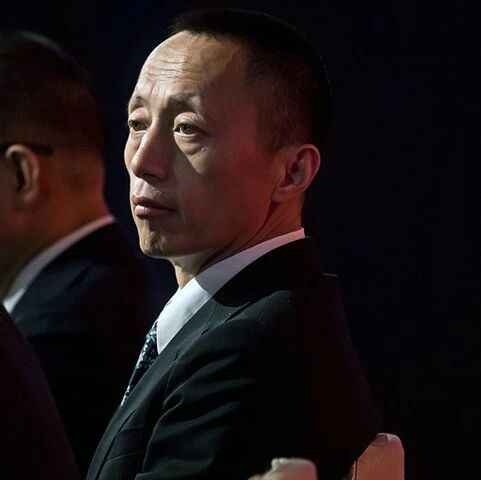
预警“活下去”的郁亮谢幕,万科仍困“深渊”
凤凰网财经· 2026-01-08 15:09
Core Viewpoint - The retirement of Yu Liang marks the end of an era for the Chinese real estate industry, symbolizing the transition from a period of rapid growth to an uncertain future for the sector [4][19]. Group 1: Yu Liang's Career and Impact - Yu Liang, known as a key figure in the Chinese real estate industry, has been referred to as the "whistleblower" of the sector due to his insightful predictions about industry turning points [5]. - He joined Vanke in 1990 and rose through the ranks, becoming the general manager in 2001 and later the chairman, leading the company to significant milestones, including surpassing 100 billion yuan in sales in 2010 [6][9]. - Under his leadership, Vanke transitioned from a focus on scale to emphasizing quality, coining terms like "white silver era" and "black iron era" to describe the industry's evolution [9][19]. Group 2: Transition of Leadership - In January 2025, Vanke announced a significant management reshuffle, with Yu Liang stepping down as chairman, marking the end of a 30-year era of professional management at the company [11]. - The new leadership structure, characterized by a combination of state-owned and professional managers, indicates a shift in Vanke's operational strategy [11][13]. Group 3: Financial Challenges and Debt Crisis - Vanke is facing severe financial difficulties, with total interest-bearing liabilities reaching 362.93 billion yuan and a cash short-term debt ratio of only 0.43, indicating a precarious liquidity position [16]. - The company reported a revenue decline of 26.61% year-on-year for the first three quarters of 2025, alongside a net loss of 28.02 billion yuan, exacerbating concerns about its financial health [16]. - To address these challenges, Vanke has received nearly 30 billion yuan in funding support from its major shareholder, Shenzhen Metro Group, and is exploring various financial strategies, including REITs and debt restructuring [16][19]. Group 4: Industry Context and Future Outlook - The departure of Yu Liang signifies not only a personal transition but also reflects the broader challenges facing the real estate sector in China, which is undergoing a significant downturn [4][19]. - The ongoing management changes and financial struggles at Vanke highlight the need for a new strategy to navigate the post-real estate boom landscape, raising questions about who will lead the company's recovery efforts [20].