房屋质量问题

Search documents
6.5万元/㎡的新房小区出现1431条裂缝,预看房后的业主们不满
Mei Ri Jing Ji Xin Wen· 2026-02-02 01:13
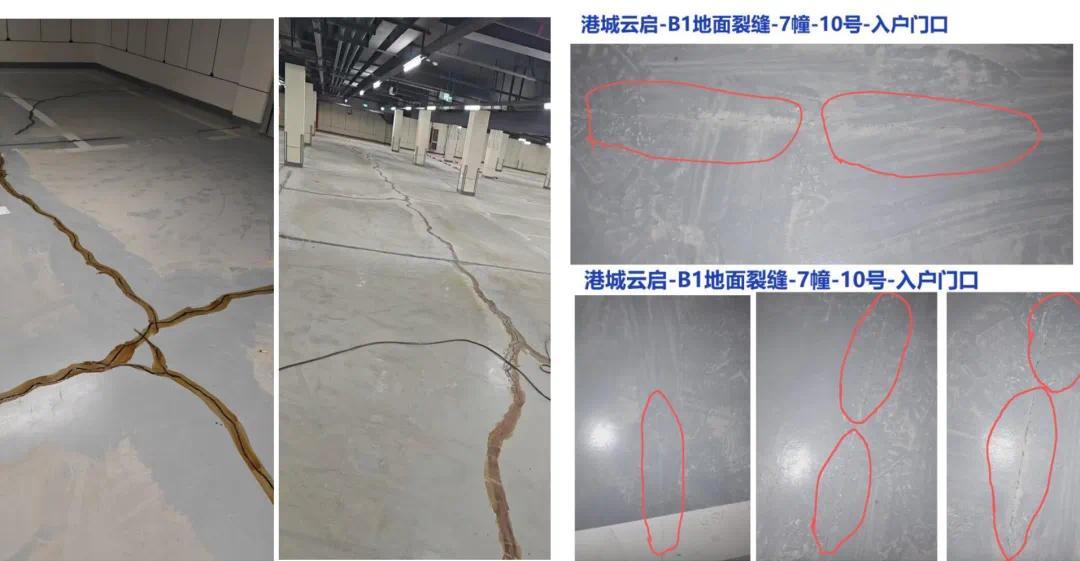
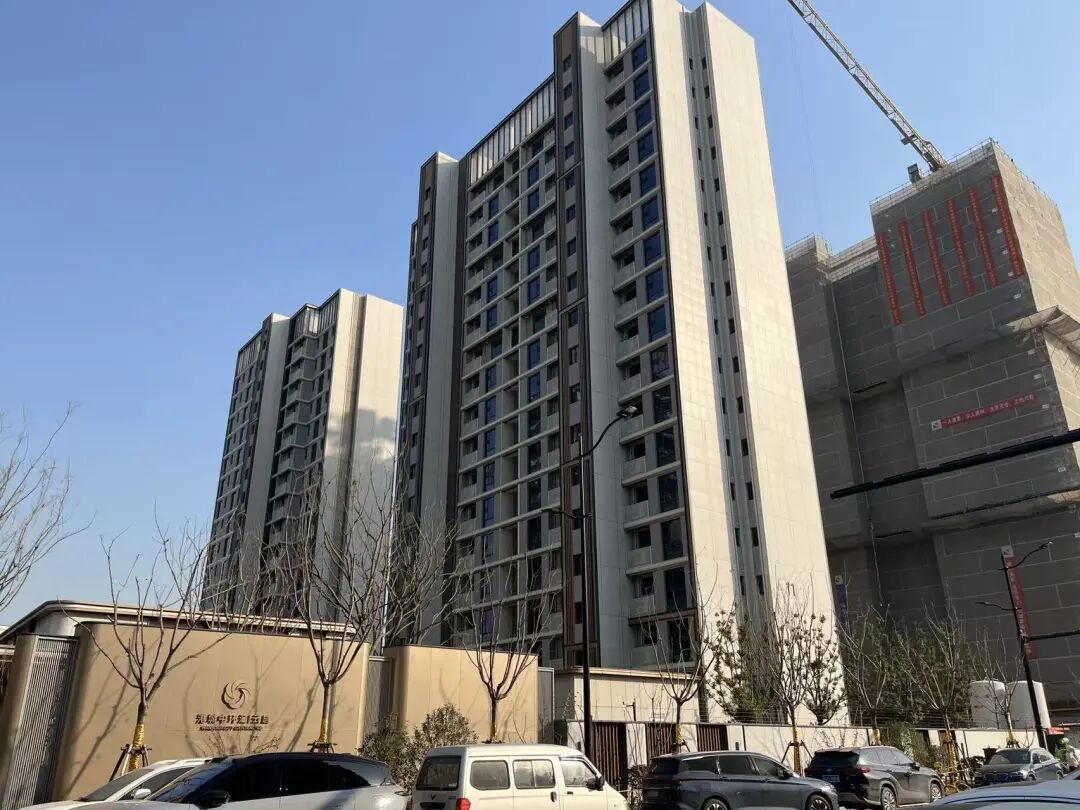
上海港城中环汇云启现场 每经记者 刘颂辉 摄 地下车库楼板和地面开裂严重,第三方检测机构统计的裂缝达到1431条⋯⋯近日,上海浦东新区热销楼盘港城中环汇云启在预看房之后,遭到不少业主质 疑。 据多位业主反映,小区的地下车库出现"边裂边补,边补边裂"情况,由于担心安全问题,业主们要求第三方检测机构进场,公开检测报告。 上海海港新城房地产有限公司(以下简称港城房产)市场部一位负责人1月28日向《每日经济新闻》记者(以下简称每经记者)表示,公司将与业主积极 沟通,妥善处理解决,后续有进展会及时对外公开。 业主:边裂边补,边补边裂 港城中环汇云启是上海港城集团旗下港城房产的"云字系"住宅项目,是集团首个进驻上海张江科学城的城市综合体项目的住宅部分。 该项目于2024年9月一次性推出720套79~187㎡新房,凭借相对低的入市均价(6.5万元/㎡)而迅速热销。克而瑞统计数据显示,港城中环汇云启曾创下 2024年10月上海市商品房楼盘成交套数及面积榜月度第一的纪录。 出于性价比的考虑,浦东张江的上班族陈丽(化名)以单价6.98万元/㎡的价格买了一套港城中环汇云启的房子,面积为99㎡。 另外,原本宣传为铝板、石材和金属漆的 ...

1431条裂缝,预看房后的业主们慌了
Mei Ri Jing Ji Xin Wen· 2026-01-28 13:23
态度很重要。 地下车库楼板和地面开裂严重,第三方检测机构统计的裂缝达到1431条⋯⋯近日,上海浦东新区热销楼盘港城中环汇云启在预看房之后,遭到不少业主质 疑。 据多位业主反映,小区的地下车库出现"边裂边补,边补边裂"情况,工程质量不达标。由于担心安全问题,业主们要求第三方检测机构进场,公开检测报 告。 上海海港新城房地产有限公司(以下简称港城房产)市场部一位负责人1月28日向《每日经济新闻》记者(以下简称每经记者)表示,公司将与业主积极 沟通,妥善处理解决,后续有进展会及时对外公开。 业主:边裂边补,边补边裂 港城中环汇云启是上海港城集团旗下港城房产的"云字系"住宅项目,是集团首个进驻上海张江科学城的城市综合体项目的住宅部分。 该项目于2024年9月一次性推出720套79~187㎡新房,凭借相对低的入市均价(6.5万元/㎡)而迅速热销。克而瑞统计数据显示,港城中环汇云启曾创下 2024年10月上海市商品房楼盘成交套数及面积榜月度第一的纪录。 出于性价比的考虑,浦东张江的上班族陈丽(化名)以单价6.98万元/㎡的价格买了一套港城中环汇云启的房子,面积为99㎡。 | | | | | 面层 | | (面层裂 | ( ...
单价6.5万元的新房小区,出现1431条裂缝,预看房后的业主们不满:边裂边补,边补边裂!开发商回应
Mei Ri Jing Ji Xin Wen· 2026-01-28 13:03
每经记者|刘颂辉 每经编辑|何小桃 陈梦妤 地下车库楼板和地面开裂严重,第三方检测机构统计的裂缝达到1431条⋯⋯近日,上海浦东新区热销楼盘港城中环汇云启在预看房之后,遭到不少业主质 疑。 据多位业主反映,小区的地下车库出现"边裂边补,边补边裂"情况,工程质量不达标。由于担心安全问题,业主们要求第三方检测机构进场,公开检测报 告。 上海海港新城房地产有限公司(以下简称港城房产)市场部一位负责人1月28日向《每日经济新闻》记者(以下简称每经记者)表示,公司将与业主积极 沟通,妥善处理解决,后续有进展会及时对外公开。 业主:边裂边补,边补边裂 港城中环汇云启是上海港城集团旗下港城房产的"云字系"住宅项目,是集团首个进驻上海张江科学城的城市综合体项目的住宅部分。 该项目于2024年9月一次性推出720套79~187㎡新房,凭借相对低的入市均价(6.5万元/㎡)而迅速热销。克而瑞统计数据显示,港城中环汇云启曾创下 2024年10月上海市商品房楼盘成交套数及面积榜月度第一的纪录。 出于性价比的考虑,浦东张江的上班族陈丽(化名)以单价6.98万元/㎡的价格买了一套港城中环汇云启的房子,面积为99㎡。 受访者供图 陈丽告诉 ...

比房价上涨更让购房者担心的是,房屋质量问题频现,购房者能否逃脱?
Sou Hu Cai Jing· 2025-10-13 18:42
Core Insights - The article highlights the increasing concern among homebuyers regarding housing quality issues, surpassing concerns about price fluctuations [1] - A significant percentage of new homeowners, over 68%, reported discovering various quality problems upon receiving their properties, marking a 12% increase from the previous year [1] Group 1: Common Housing Quality Issues - The most common housing quality issues include water leakage (32.7% of complaints), wall cracks (21.5%), uneven flooring (12.8%), and poor sealing of doors and windows (9.6%) [3][4] - Other notable issues include blocked or leaking pipes (8.2%), unsafe electrical designs (5.4%), and discrepancies between actual and contractual areas (2.8%) [4] Group 2: Homebuyer Rights and Remedies - Homebuyers can resolve quality issues through direct negotiation with developers, which successfully resolves about 45% of disputes [4][8] - If negotiations fail, buyers can seek mediation through property management or relevant authorities, with a success rate of approximately 30% [8] - Complaints can also be filed with consumer associations, which have a 65% success rate in resolving property-related complaints [9] - Legal action is a last resort, with a 72.3% success rate for homebuyers in court cases related to housing quality disputes [11] Group 3: Preventive Measures for Homebuyers - Selecting a reputable developer is crucial, as about 15% of developers are under scrutiny for quality issues [13] - Careful review of contracts is essential, ensuring clarity on quality standards, warranty terms, and dispute resolution processes [14] - Conducting thorough inspections during the handover process can help identify issues early, as 35% of buyers skip this critical step [15] - Following up on remediation efforts is vital, as 25% of buyers do not persistently track the resolution of reported issues [16][17] - Homebuyers may also consider purchasing quality insurance, which has a compensation success rate of 83% [18]

上海知名豪宅强制补缴近百万元“面积差价”,业主拒绝收房,称“开发商擅自违规变更设计规划”
Hua Xia Shi Bao· 2025-07-26 04:00
Core Viewpoint - The article highlights significant disputes between homeowners and the developer of the Haide No. 1 project in Shanghai, focusing on unauthorized design changes, discrepancies in measured and predicted areas, and various quality issues leading to homeowners refusing to accept their properties [2][3][4]. Group 1: Project Background - The Haide No. 1 project was originally developed by Gree Real Estate Co., which has since been rebranded as Zhuhai Huafa Group after transferring its real estate business [2][3]. - The project launched 163 units in February 2023 with an average price of 129,800 yuan per square meter and a subscription rate of 392% [3]. Group 2: Discrepancies in Area Measurements - Homeowners reported being forced to pay significant fees due to discrepancies between actual and predicted areas, with some facing additional charges of up to 600,000 yuan [4][5]. - The discrepancies were attributed to changes in the building's external outline and internal wall thickness, leading to an increase in measured areas [4][5]. Group 3: Quality and Compliance Issues - Homeowners expressed dissatisfaction with the quality of construction, citing issues such as rough interior finishes and design flaws that hinder functionality [7][10]. - The project reportedly failed to meet contractual agreements regarding public area standards and overall quality, further solidifying homeowners' refusal to accept the properties [7][12]. Group 4: Developer's Response - The developer, Shanghai Haikong Baolian Real Estate Co., claimed that the project adhered to all relevant regulations and standards throughout its design and construction [15][16]. - Despite ongoing communication, many key issues remain unresolved, and the developer has been criticized for a lack of genuine engagement with homeowners [16][17]. Group 5: Legal Actions and Future Steps - Some homeowners are considering legal action due to the developer's alleged breaches of contract and quality issues, with suggestions to pursue civil lawsuits or file complaints with relevant authorities [17].