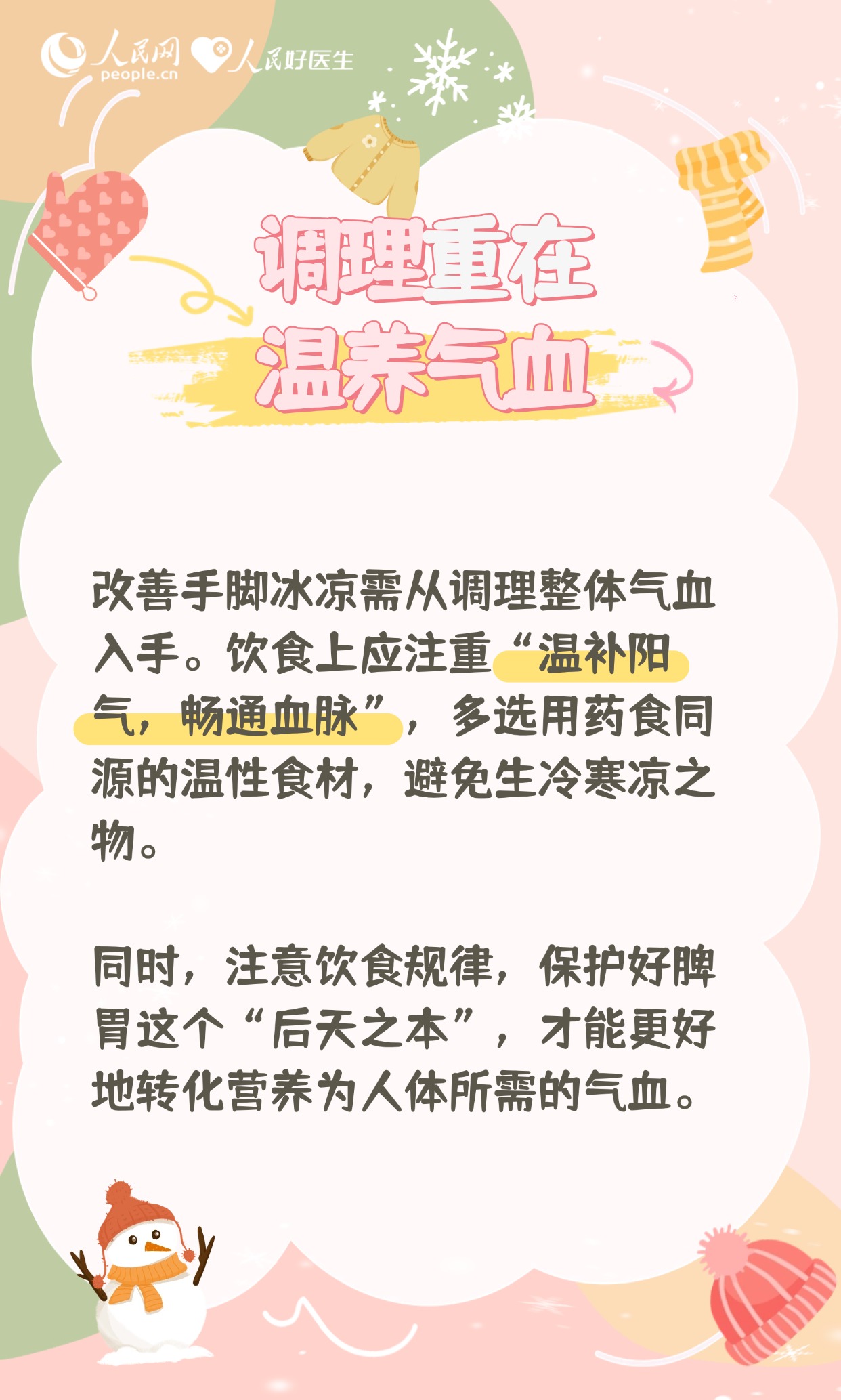
手脚冰凉调理

Search documents
手脚冰凉,如何温暖过冬?(健康驿站)
Ren Min Ri Bao Hai Wai Ban· 2026-01-22 22:36
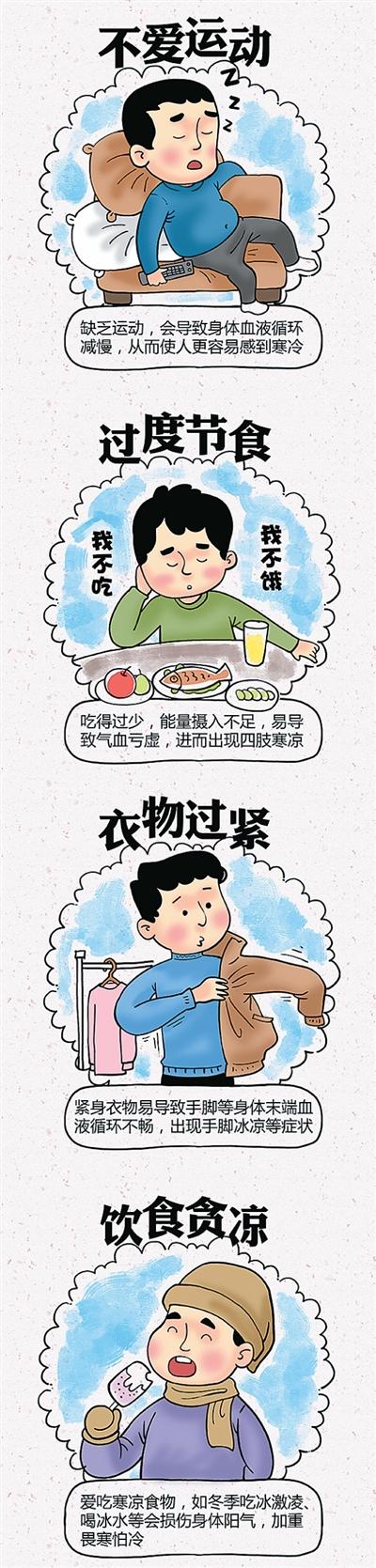
Group 1 - The article discusses the phenomenon of cold hands and feet, particularly among women, and explores the physiological reasons behind it [3][5] - Women are more prone to cold extremities due to lower average metabolic rates and muscle mass compared to men, which affects heat production [3][5] - Hormonal fluctuations during menstrual and pregnancy periods can also impact temperature regulation, contributing to the issue [3][5] Group 2 - The article outlines various lifestyle habits that exacerbate cold hands and feet, such as prolonged sitting, excessive dieting, and wearing tight clothing [5] - It emphasizes the importance of proper warming techniques, suggesting that core body warmth should be prioritized over extremities [6][7] - Recommendations include balanced diet, regular exercise, and stress management to improve overall body function and circulation [7][8] Group 3 - Traditional Chinese medicine (TCM) perspectives are presented, indicating that cold extremities may relate to internal deficiencies and poor blood circulation [5][8] - TCM suggests specific dietary and lifestyle adjustments based on individual body types to effectively address cold hands and feet [8][9] - The article warns against generic warming methods, stressing the need for personalized treatment based on TCM principles [9][14] Group 4 - The article provides guidelines for proper foot soaking practices, highlighting the importance of water temperature and duration to avoid adverse effects [11][12] - It mentions that excessive heat can lead to skin damage and other health risks, particularly for vulnerable populations [11][12] - Correct soaking methods are recommended to enhance relaxation and improve circulation without causing harm [12] Group 5 - The article clarifies misconceptions about cold hands and feet being solely related to "cold uterus" or "宫寒," emphasizing a broader physiological context [13][14] - It distinguishes between different types of cold conditions in TCM, such as "real cold" and "deficiency cold," which require different treatment approaches [14] - The need for professional assessment and tailored treatment plans is highlighted to avoid misdiagnosis and ineffective remedies [14]

告别手脚冰凉 中医6款暖身方陪你温暖过冬
Ren Min Wang· 2025-12-12 01:31
Core Viewpoint - The article discusses dietary recommendations for warming the body during winter, particularly for individuals experiencing cold extremities, which is linked to traditional Chinese medicine concepts of insufficient yang energy and blood circulation [1]. Dietary Recommendations - **Angelica and Ginger Lamb Soup**: Ingredients include 10g of angelica, 15g of ginger, and 250g of lamb, cooked until tender. This dish is effective for warming the body, nourishing blood, and alleviating cold pain, suitable for those with symptoms of cold extremities and abdominal cold pain [3][4]. - **Warming Beef Soup**: Made with small pieces of beef, 5g of ginger, 3g of pepper, 3g of dried tangerine peel, and 3 red dates. This soup helps to warm the body, dispel cold, and strengthen the spleen, particularly for individuals with cold abdominal pain and weak spleen function [4][5]. - **Yellow Chicken Soup**: Ingredients include one yellow hen, 250g of angelica, 20g of astragalus, 15g of ginger, and 200g of glutinous rice. The soup is beneficial for nourishing qi and blood, and is suitable for those with cold extremities, pale complexion, fatigue, and cold sensitivity [5][6]. - **Astragalus and Yam Porridge**: Prepared with 20g of astragalus, 51g of rice, and 30g of fresh yam. This porridge is effective for boosting qi, strengthening the spleen, and warming the body, ideal for those experiencing fatigue and cold extremities [7][8]. - **Longan and Red Date Tea**: Made with 10g of longan meat and 5 red dates, boiled for 15 minutes. This tea is a traditional warming drink that nourishes the heart and spleen, suitable for those with insomnia, forgetfulness, and palpitations [12][13]. - **Red Date and Dried Tangerine Peel Tea**: Ingredients include 3 slices of ginger, 6 red dates, and 5g of dried tangerine peel, boiled for 10 minutes. This tea helps to dispel cold, regulate qi, and nourish blood, suitable for those with cold stomach pain and poor appetite [14][15]. Additional Advice - The article emphasizes that dietary therapy should be gradual, and if symptoms persist or worsen, individuals should seek medical attention to rule out underlying causes. It also suggests engaging in appropriate physical activity and maintaining warmth to enhance blood circulation and improve cold resistance [16].