中医调理

Search documents
防治脾胃病 中医有妙招
Xin Lang Cai Jing· 2026-02-24 19:18
Core Insights - The articles emphasize the importance of maintaining digestive health, particularly during festive seasons when dietary habits may lead to gastrointestinal issues [1][2][3] Group 1: Dietary Recommendations - Experts suggest eating slowly and starting meals with vegetables to ease the digestive burden [1] - It is advised to limit the intake of greasy and salty foods, and to balance meals with lighter options like millet porridge [1][2] - For traditional foods like dumplings, incorporating ingredients such as water chestnuts and mushrooms can help reduce greasiness [1] Group 2: Children's Digestive Health - Children's digestive systems are particularly vulnerable, and it is recommended to avoid heavy foods during festive periods [2] - For children experiencing digestive issues, a shift to easily digestible foods like soups and porridge is advised [2] - Gentle methods such as abdominal massage can be used for infants, while older children may benefit from dietary adjustments and topical treatments [2] Group 3: Managing Gastrointestinal Issues - In cases of gastrointestinal distress, fasting for four to six hours is recommended, followed by the use of appropriate traditional Chinese medicine based on symptoms [3] - Differentiating between "cold damp" and "damp heat" conditions is crucial for selecting the right herbal treatments [3] - Recovery can be supported with tonics like ginseng and porridge made from yam and barley [3]
痛经别只会“多喝热水”!这几招帮你从根源暖起来!
Xin Lang Cai Jing· 2026-01-25 13:03
Core Viewpoint - The article discusses various traditional Chinese medicine (TCM) methods for alleviating dysmenorrhea, emphasizing the importance of balancing Qi and blood to address the underlying causes of menstrual pain [1][3]. Group 1: Causes of Dysmenorrhea - Common causes of Qi and blood stagnation include emotional stress, cold exposure, and dietary habits, leading to symptoms such as abdominal pain and dark menstrual blood with clots [1]. - Qi and blood deficiency can result from physical weakness, overexertion, or dieting, causing prolonged, mild abdominal pain during menstruation [1]. Group 2: TCM Remedies - Ear acupressure involves applying small magnetic beads or seeds to specific ear points to regulate the neuroendocrine system and relieve cramps, suitable for busy individuals seeking maintenance [1]. - Heat packs made from warming herbs can be applied to the abdomen to dispel cold and promote blood circulation, particularly beneficial for those with cold sensitivity and menstrual clots [2]. - The "Fire Dragon Can" technique combines moxibustion with scraping and massage to provide deep warmth to the uterus, ideal for women with severe dysmenorrhea [2]. Group 3: Internal Herbal Remedies and Lifestyle Adjustments - Personalized herbal prescriptions from TCM practitioners can harmonize Qi and blood, with recommendations for warm foot baths and dietary adjustments to avoid cold and spicy foods [3]. - Stress management techniques such as walking, music, and yoga are suggested to alleviate Qi stagnation, while gentle exercises are encouraged before menstruation [3]. - The article advises against ignoring severe menstrual pain and recommends medical evaluation for worsening symptoms or unusual menstrual patterns to rule out serious conditions [3].
手脚冰凉,如何温暖过冬?(健康驿站)
Ren Min Ri Bao Hai Wai Ban· 2026-01-22 22:36
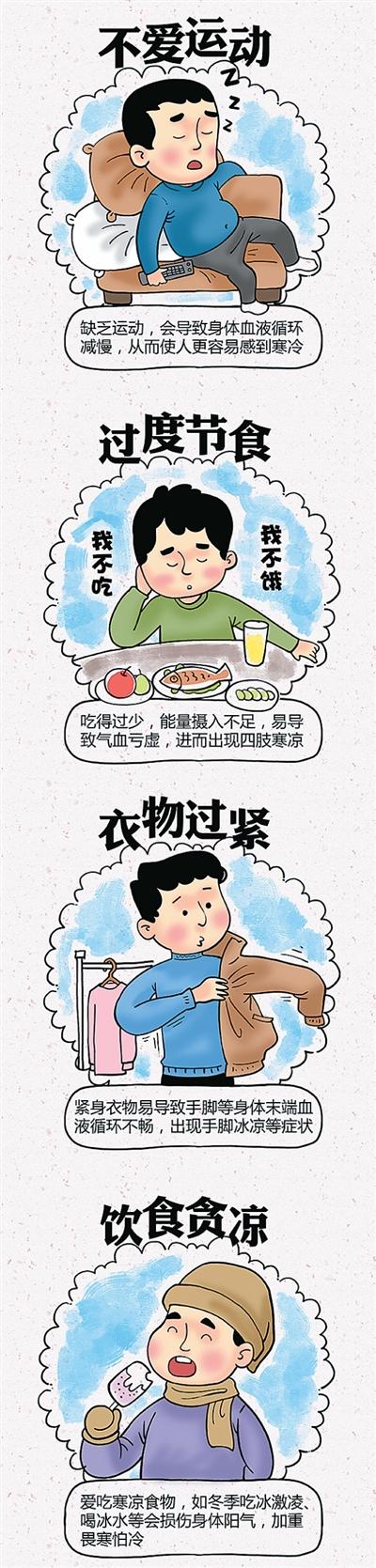
Group 1 - The article discusses the phenomenon of cold hands and feet, particularly among women, and explores the physiological reasons behind it [3][5] - Women are more prone to cold extremities due to lower average metabolic rates and muscle mass compared to men, which affects heat production [3][5] - Hormonal fluctuations during menstrual and pregnancy periods can also impact temperature regulation, contributing to the issue [3][5] Group 2 - The article outlines various lifestyle habits that exacerbate cold hands and feet, such as prolonged sitting, excessive dieting, and wearing tight clothing [5] - It emphasizes the importance of proper warming techniques, suggesting that core body warmth should be prioritized over extremities [6][7] - Recommendations include balanced diet, regular exercise, and stress management to improve overall body function and circulation [7][8] Group 3 - Traditional Chinese medicine (TCM) perspectives are presented, indicating that cold extremities may relate to internal deficiencies and poor blood circulation [5][8] - TCM suggests specific dietary and lifestyle adjustments based on individual body types to effectively address cold hands and feet [8][9] - The article warns against generic warming methods, stressing the need for personalized treatment based on TCM principles [9][14] Group 4 - The article provides guidelines for proper foot soaking practices, highlighting the importance of water temperature and duration to avoid adverse effects [11][12] - It mentions that excessive heat can lead to skin damage and other health risks, particularly for vulnerable populations [11][12] - Correct soaking methods are recommended to enhance relaxation and improve circulation without causing harm [12] Group 5 - The article clarifies misconceptions about cold hands and feet being solely related to "cold uterus" or "宫寒," emphasizing a broader physiological context [13][14] - It distinguishes between different types of cold conditions in TCM, such as "real cold" and "deficiency cold," which require different treatment approaches [14] - The need for professional assessment and tailored treatment plans is highlighted to avoid misdiagnosis and ineffective remedies [14]

胃痛牵出失眠易怒中医针灸“一站式”调理
Xin Lang Cai Jing· 2026-01-13 16:42
Core Insights - The article highlights the effectiveness of traditional Chinese medicine, particularly acupuncture, in treating various health issues, as demonstrated by a case study of an elderly man who experienced significant improvements in his health after undergoing treatment [1][2] Group 1: Patient Case Study - The patient, Mr. Li, suffered from chronic stomach pain, insomnia, and irritability for several years, which negatively impacted his quality of life [1] - After a series of acupuncture treatments, Mr. Li reported a significant reduction in stomach pain and improved sleep quality, eventually leading to a more enjoyable retirement life [2] Group 2: Treatment Approach - The treating physician, Dr. Tian, emphasized a holistic approach to treatment, explaining that the patient's symptoms were interconnected and stemmed from underlying issues such as liver qi stagnation [1] - The acupuncture treatment plan included specific acupoints aimed at relieving both physical and emotional symptoms, demonstrating the comprehensive nature of traditional Chinese medicine [1][2] Group 3: Overall Benefits of Traditional Chinese Medicine - The article underscores that traditional Chinese medicine addresses not just isolated symptoms but the overall state of the body and mind, promoting balance and well-being [2] - Dr. Tian encourages individuals to recognize bodily signals like pain and insomnia as indicators of deeper issues that can be resolved through proper treatment [2]
中医这样应对秋乏
Ren Min Ri Bao· 2025-10-17 01:06
Group 1 - The article discusses the phenomenon of autumn fatigue, which is attributed to the body's energy depletion during summer and the dryness associated with autumn [1] - It suggests dietary adjustments to alleviate autumn fatigue, recommending foods that boost energy such as astragalus, codonopsis, and yam for those experiencing qi deficiency, and foods that strengthen the spleen and eliminate dampness like loquat, radish, and poria for those with phlegm-damp type fatigue [1] - The article also recommends taking short naps between 11 AM and 1 PM to relieve brain fatigue and improve energy levels [1] Group 2 - For children, the article provides three methods to alleviate autumn fatigue, including gentle ear massages and specific pressure points on the ear [2] - It advises against giving children energy drinks that contain caffeine, as excessive caffeine can lead to sleep disturbances and affect their development [2]
全国高血压日|调理高血压 中医有五招
Ren Min Wang· 2025-10-08 00:20
Core Viewpoint - The article emphasizes the importance of managing hypertension, particularly through traditional Chinese medicine and lifestyle changes, to improve public health outcomes related to cardiovascular diseases [5]. Dietary Recommendations - Daily salt intake should be limited to 5 grams, with a recommendation to replace regular salt with low-sodium alternatives and to avoid high-sodium foods [7]. - A balanced diet should include fruits, vegetables, low-fat dairy, whole grains, and plant-based proteins, while reducing saturated and trans fats [8]. - Daily calcium intake should ideally exceed 1000 milligrams, with dairy products being the best source [8]. Physical Activity Guidelines - Engage in moderate-intensity aerobic activities for 30-60 minutes on 4-7 days a week, aiming for 60%-70% of maximum heart rate [9]. - Incorporate resistance and balance exercises, such as sit-ups and squats, into the routine [10]. Stress Management - Long-term stress can elevate blood pressure; therefore, stress-reducing techniques like meditation and ensuring 7-9 hours of sleep are recommended [14]. Weight Management - For overweight individuals with hypertension, a focus on weight control and metabolic improvement is crucial, with a suggested reduction in daily caloric intake by 30%-50% [17]. Herbal Remedies - Various herbal teas, such as chrysanthemum and hawthorn, are suggested for their potential benefits in managing blood pressure [19][21].