承担责任

Search documents
扛过去,你就赢了
3 6 Ke· 2025-11-08 02:45
Core Insights - The article emphasizes the importance of resilience and responsibility in the workplace, highlighting that enduring challenges leads to success. Group 1: Responsibility - Being responsible is a valuable quality in the workplace, reflected in one's attitude and actions [4][6] - A positive attitude is crucial; individuals must adopt a "can-do" mindset to overcome obstacles and achieve goals [5] - True responsibility involves acknowledging one's role in both successes and failures, rather than shifting blame [6] Group 2: Capability - Having the ability to handle tasks is essential; individuals must strive to fulfill commitments despite difficulties [8] - Capability is dynamic and grows with increased responsibility; individuals should continuously evolve to meet challenges [9] Group 3: Stability - Maintaining composure in the face of challenges is vital for long-term success; many give up due to fear and fatigue [10][12] - Individuals with determination focus on long-term value rather than immediate gratification, which helps them navigate crises effectively [12][13] - Strategies to maintain inner stability include enhancing one's passion and staying focused on problem-solving [15][16]
AI编程时代的生存原则是什么?吴恩达:快速行动,承担责任
3 6 Ke· 2025-09-22 23:30
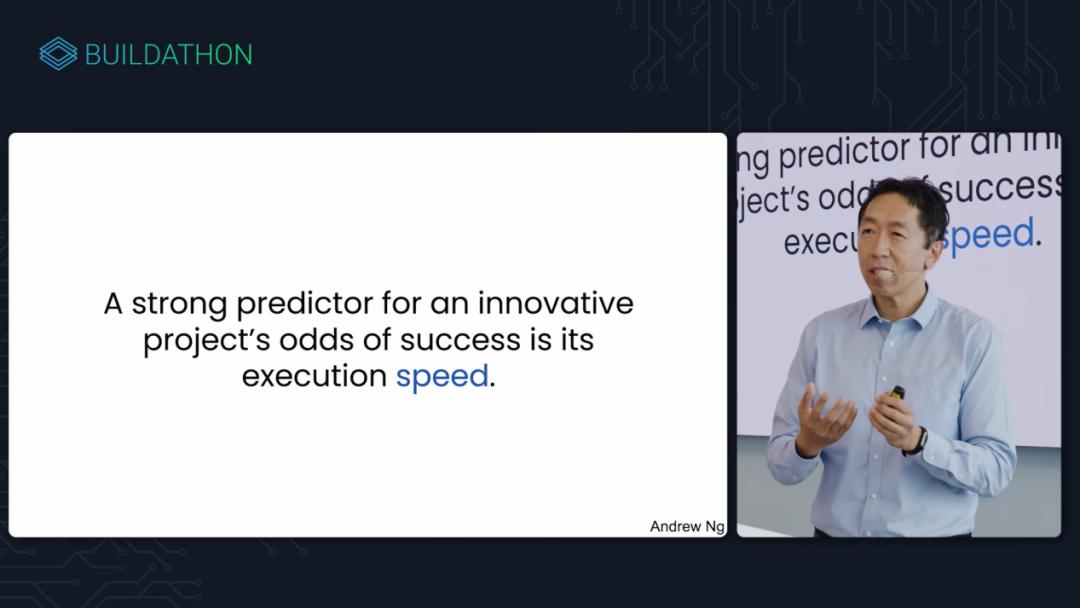
Core Insights - Andrew Ng emphasizes the transformative impact of AI-assisted programming on product development speed and efficiency, advocating for a culture of rapid prototyping and iterative testing [2][10][18] Group 1: AI-Assisted Programming - AI-assisted programming accelerates independent prototype development by tenfold, significantly reducing costs and enabling a viable strategy of rapid trial and error [2][10] - The evolution of programming tools has led to a depreciation in the value of traditional coding, necessitating a shift for developers towards roles as system designers and AI orchestrators [3][16] Group 2: Product Management Bottleneck - As engineering speeds increase, product decision-making and user feedback have become the new bottlenecks, requiring a shift in how data is utilized in decision-making processes [4][18] - Ng suggests that data should refine intuition rather than dictate decisions, advocating for a more nuanced approach to user feedback [19][20] Group 3: Skills and Education - Ng strongly opposes the notion that programming is unnecessary in the AI era, arguing that understanding programming is crucial for enhancing efficiency across various roles [5][21] - There is a significant shortage of AI engineers, with university curricula lagging in teaching essential skills such as AI-assisted programming and large language model utilization [6][25] Group 4: Future of Software Development - The rapid evolution of AI tools necessitates continuous learning and adaptation among developers to maintain competitive advantages [15][16] - Ng highlights the importance of foundational computer science knowledge, even as programming tools evolve, to ensure a deeper understanding of system design and architecture [43][44]