技术同质化

Search documents
智驾洗牌,“五大”要统一江湖了吗?
Jing Ji Guan Cha Wang· 2026-02-20 13:54
刘晓林/文 2025年9月公布的《智能网联汽车 组合驾驶辅助系统安全要求》强制性国家标准(征求意见稿)(下称《意见稿》)已结束公开征求意见阶段, 预计于2027年1月1日正式实施。这意味着,车企的智驾合规准备已进入一年倒计时。 这一被称为"智能驾驶史上最严新规"的落地,使得整车组合安全、极端场景测试、全生命周期合规迭代将成为硬性约束,行业准入门槛与持续运营成本也会 随之大幅抬升,车企研发路径和智驾行业的格局将不可避免地迎来震荡。是继续自研智驾技术还是采购成熟解决方案?这个一直伴随着汽车企业的命题,将 在2026年得到新的答案。 随着订单被华为、Momenta、地平线等几大智驾头部供应商瓜分,更现实的问题将浮出水面:全栈自研是否成为少数头部玩家的特权?绝大多数车企是否被 迫转向头部供应商?技术同质化与供应链集中风险如何化解?无规模优势的中小车企,能否在合规高压下找到生存支点?2026年,围绕智能驾驶技术主权、 供应链安全、规模效率的行业格局重构已经开启。 新规压顶:自研合规成本飙升 对整车企业而言,技术合规难度和能否承担自研成本,是智驾国标带来的最大挑战。 目前看来,虽然面临新规与成本的双重约束,但智驾行业并未 ...


曾毓群说不少企业倾向于抄袭和复制
Xin Lang Cai Jing· 2025-09-17 03:25
Core Insights - The energy storage industry is facing challenges related to technology homogenization, as many companies are opting for shortcuts by copying existing technologies instead of pursuing independent research and development [1] Industry Challenges - The founder and chairman of CATL, Zeng Yuqun, highlighted that the trend of technology homogenization is becoming evident in the energy storage sector [1] - There is a concern that the drive for quick profits, fueled by capital, is leading companies to prioritize imitation over innovation [1] Innovation Concerns - Zeng emphasized that innovation requires significant investment, and if all companies choose to take shortcuts, it raises the question of who will drive true innovation in the industry [1]

财说丨半年报首亏、实控人撤离,翔丰华滑向“泥潭”
Xin Lang Cai Jing· 2025-08-05 00:08
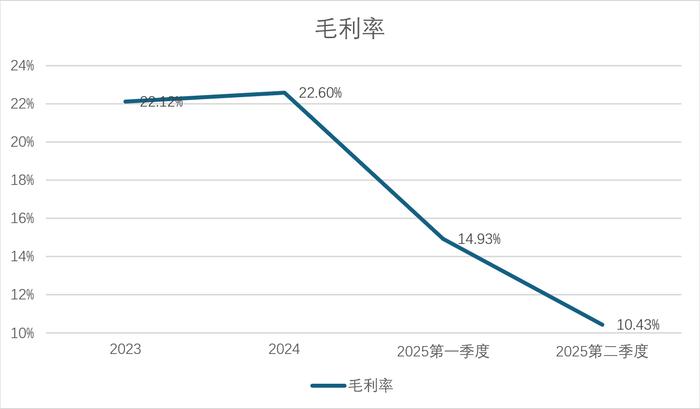
Core Viewpoint - Xiangfenghua (300890.SZ) reported its first half-year loss since its listing, with a loss of 2.95 million yuan, indicating significant financial distress in the lithium battery anode materials sector [1][2]. Financial Performance - In the first half of 2025, Xiangfenghua's revenue decreased by 2.80% to 688 million yuan, while net profit plummeted from 38.24 million yuan in the same period last year to a loss of 2.95 million yuan [1]. - The company's gross margin fell to 12.44%, down 57% from its peak of 28.79% in 2020, with the second quarter gross margin hitting a historical low of 10.43% [1][2]. - The net profit margin dropped from 5.3% to -0.49%, indicating a loss of 0.49 yuan for every 100 yuan in sales [1]. Industry Context - The lithium battery anode materials industry is facing severe price competition, with prices dropping by 40% from 2020 to 2024, leading to a staggering 98% decline in industry profits [2]. - The global production capacity for anode materials surged from 811,000 tons in 2020 to 3.546 million tons in 2024, an increase of 337% [2]. Capacity and Production Issues - Xiangfenghua's production capacity reached 90,000 tons by May 2025, with a recent expansion in its Fujian facility, despite the industry facing overcapacity [2]. - The demand for anode materials is projected at 2.47 million tons in 2025, while production capacity is expected to exceed 3.6 million tons, leading to significant oversupply [4]. Debt and Cash Flow Concerns - As of June 2025, Xiangfenghua's interest-bearing debt stood at 1.733 billion yuan, with a debt-to-asset ratio of 52.06%, reflecting a 3% increase from the end of 2024 [5]. - The company's operating cash flow turned negative, with a net outflow of 181 million yuan in the first half of 2025, and accounts receivable surged to 669 million yuan, a 32% increase year-on-year [5][6]. Management and Strategic Challenges - The core management has begun to reduce their stakes, with significant share reductions by major shareholders in late 2024 and early 2025 [8]. - Key projects, including the R&D center and artificial graphite production, have faced delays, indicating a lack of confidence in market recovery [8]. Market Dynamics - The industry is experiencing a "death spiral" where increased production leads to greater losses, with major players forced to accept unprofitable orders to maintain cash flow [9]. - Xiangfenghua's R&D spending was only 2.336 million yuan in the first half of 2025, representing less than 4% of total revenue, which is significantly lower than competitors [9]. Future Outlook - The only bright spot for Xiangfenghua is the energy storage sector, which saw a 64% increase in battery shipments in 2024, although the contribution of anode materials to this segment is limited [10].