
硅基负极材料

Search documents
万华切入锂盐,化工巨头“抢滩”锂电赛道
高工锂电· 2026-03-27 10:57
Core Viewpoint - The article highlights the strategic moves of chemical giants, particularly Wanhua Chemical, in the lithium battery sector, emphasizing their shift towards upstream resource control and full-cycle industrial chain integration to enhance competitiveness and mitigate risks in a changing market landscape [2][4][8]. Group 1: Investment and Strategic Moves - Wanhua Chemical plans to invest in a joint venture with Dazhong Mining to establish a lithium salt project with an annual production capacity of 200,000 tons, starting with an initial phase of 30,000 tons [2]. - Other chemical companies, including Xingfa Group, Hubei Yihua, and Yuntianhua, are also making significant investments in lithium battery materials, indicating a broader trend among industry leaders to strengthen their positions in the lithium battery supply chain [2][3]. - The competitive landscape is shifting from a focus on low-end production to high-value, high-tech products, with companies like Wanhua Chemical and BASF developing advanced lithium battery materials [5][8]. Group 2: Industry Trends and Dynamics - The lithium battery materials industry is entering a new phase characterized by resource and technology barriers, prompting chemical giants to adopt a more strategic approach to production and investment [2][4]. - The article notes that the competition in the lithium battery sector is fundamentally a cost competition, with upstream mineral resources playing a crucial role in determining profitability [4][8]. - Companies are increasingly focusing on creating closed-loop ecosystems that encompass the entire lithium battery lifecycle, from raw material sourcing to recycling [4][5]. Group 3: Global Expansion and Collaboration - Chemical giants are expanding their operations internationally, moving from product export to establishing local production capacities to navigate trade barriers and enhance market presence [6][7]. - Collaborations with leading battery manufacturers, such as CATL and BYD, are becoming more common, allowing companies to secure demand for their new capacities and mitigate the risk of overproduction [7][8]. - The article emphasizes that the ability to lock in downstream demand is critical for the profitability of new production capacities in a market characterized by oversupply [7].



逆势领跑!锂电龙头2025销量约60万吨
起点锂电· 2026-02-28 10:22
Core Viewpoint - The lithium battery anode industry in 2025 is characterized by structural recovery and industry differentiation, with leading company BTR (贝特瑞) showcasing resilience and strategic positioning during this transitional phase [2][4]. Financial Performance - BTR achieved a revenue of 16.98 billion yuan in 2025, marking a year-on-year increase of 19.29%, demonstrating strong revenue resilience [3][6]. - The net profit attributable to shareholders was 899 million yuan, a slight decrease of 3.32% year-on-year, while the net profit after excluding non-recurring gains and losses fell by 23.43% to 699 million yuan [3][9]. - Total assets increased by 7.73% to approximately 35.92 billion yuan, and shareholders' equity rose by 3.08% to about 12.60 billion yuan [3]. Industry Trends - The global lithium battery anode materials market saw a significant recovery in 2025, with a 44% year-on-year increase in production, and China accounted for 99% of the global output [6][8]. - The demand for anode materials was primarily driven by the explosive growth in the electric vehicle and energy storage markets, with BTR's anode material sales reaching approximately 600,000 tons, maintaining its leading market share [6][8]. Competitive Landscape - The industry is experiencing a trend of concentration, with BTR holding over 90% capacity utilization and strong ties with major battery manufacturers like CATL and BYD, allowing it to maintain a competitive edge [8][9]. - The global anode material shipment volume reached 2.723 million tons in 2025, reflecting a 48% year-on-year growth, indicating a shift towards a concentrated market structure [8]. Strategic Initiatives - BTR's short-term profit pressure is attributed to strategic investments in technology and global expansion, which are essential for building long-term competitive advantages [9][16]. - The company is focusing on three key growth areas: the acceleration of high-end product upgrades, the dominance of artificial graphite, and the expansion of overseas production capacity to mitigate trade barriers [10][13][15]. Future Outlook - BTR is positioned to improve its profitability as overseas production capacity is gradually released and the penetration of silicon-based anodes in the power battery sector increases [16]. - The overall industry is transitioning from a "price war" to a "value war," where technological innovation, capacity layout, and customer binding will be critical for survival and growth [16].

能源城市的准格尔样本:“五基”产业重构区域经济内核
Xin Lang Cai Jing· 2025-12-31 00:22
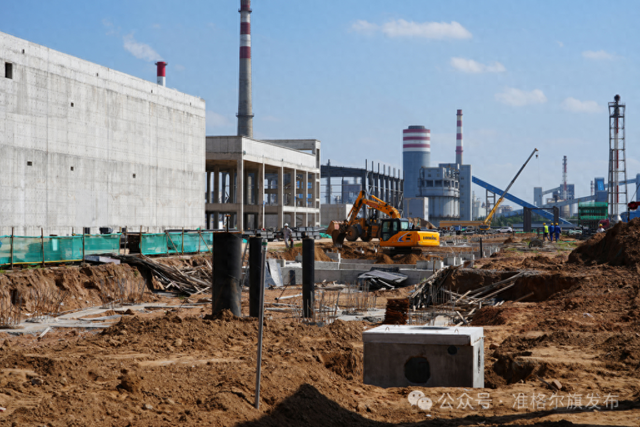
Core Viewpoint - The Inner Mongolia Zhuoerqi is transitioning from a coal-dominated economy to a diversified industrial structure driven by five major industry chains: coal-based, ash-based, soil-based, silicon-based, and green-based, showcasing a new model of production power transformation [1] Group 1: Coal-Based Industry Innovations - Zhuoerqi's coal-based industry is highlighted by the world's first 10,000-ton CO2-to-aromatic hydrocarbons project, set to commence production this year, which is part of a significant technological initiative in Inner Mongolia [1][4] - The project aims to address China's reliance on imported aromatic hydrocarbons and reduce carbon emissions from coal chemical processes, with the potential to increase CO2 conversion rates from 10% to 40% and aromatic selectivity exceeding 80% [5] - The collaboration between government, enterprises, and academic institutions has been crucial in overcoming technical challenges and facilitating the project's successful implementation [5][6] Group 2: Green Mining and Smart Technology - The transformation of coal mining in Zhuoerqi includes the establishment of green mining practices, with 200,000 trees planted in reclaimed areas and the integration of distributed photovoltaic projects [8] - The Dafenpu coal mine has adopted smart technology, achieving full coverage of 4G and 5G networks, enabling remote control and unmanned operations, thus enhancing safety and efficiency [9] Group 3: High-Value Solid Waste Utilization - The region is successfully converting industrial waste such as coal gangue and slag into high-value materials, with companies like Yuhua New Technology Materials leading in the production of various inorganic non-metallic materials [10][11] - The ash-based industry is also developing, with new products like grinding balls made from fly ash, which have a significantly higher market value compared to their raw materials [11] Group 4: Renewable Energy and New Materials - Zhuoerqi is leveraging its abundant wind and solar resources to develop green and silicon-based industries, with significant advancements in photovoltaic component production [14][17] - The Tianhe Solar Technology Company has achieved rapid project completion times, establishing a comprehensive solar industry chain in the region [14][18] Group 5: Government and Enterprise Collaboration - The local government has implemented supportive policies to enhance the business environment, including financial incentives and streamlined approval processes for new projects [21][22] - Zhuoerqi has been recognized for its excellent business environment, which has attracted numerous enterprises and fostered a collaborative ecosystem for industrial development [22]
广东道氏形成“碳材料+锂电材料+陶瓷材料”新格局
Xin Lang Cai Jing· 2025-12-23 07:40
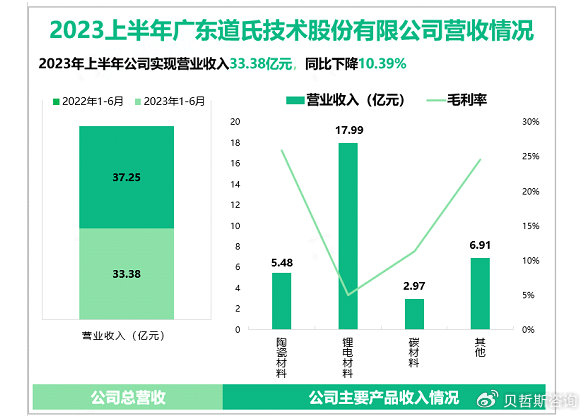
Core Viewpoint - The company maintains its leading position in the ceramic materials business while carbon materials and lithium battery materials are gradually becoming core strategic businesses. Group 1: Main Business Analysis - The company's revenue primarily comes from lithium battery materials and carbon materials related to the new energy industry, with a year-on-year decline attributed to several factors [1]. - Revenue from the carbon materials segment decreased due to increased product sales but forced price reductions; the shipment volume of conductive agents reached 12,000 tons, a 27% increase year-on-year, but prices were lowered due to supply-demand impacts and intense industry competition [1]. - The decline in revenue from the lithium battery materials segment is mainly due to cobalt salt products; while sales revenue from ternary precursors increased by 175% and shipment volume grew by 203%, cobalt salt shipment volume decreased by 52%, and prices fell due to declining cobalt metal prices [1]. - Overall, the company achieved a revenue of 3.338 billion yuan in the first half of 2023, a decrease of 10.39% year-on-year, with overseas business revenue accounting for 53% [1]. Group 2: Market Position and Competitive Landscape - The company began mass application of graphene conductive paste in lithium iron phosphate batteries in 2014, being one of the earliest enterprises in China to do so [3]. - In 2017, the company successfully developed carbon nanotube conductive paste for ternary lithium batteries [3]. - By 2022, the company expanded its product line to include graphite anode materials and silicon-based anode materials, with a graphite production capacity of 20,000 tons per year established at the Lanzhou base [3]. Group 3: Technical and Production Scale - The company adheres to a talent innovation plan, led by chief scientist Dong Angang from the Lawrence Berkeley National Laboratory, to build a strong technical R&D team [4]. - The company is recognized as a leader in customer acceptance and R&D capabilities within the industry [4].
国轩10亿成立新公司;亿纬签10年订单;450亿磷酸铁锂大单落地;吉利落子成都;宁德时代300亿工厂开建;创明32140电池满产
起点锂电· 2025-11-30 10:01
Group 1 - The 2025 (10th) Starting Point Lithium Battery Industry Annual Conference and Lithium Battery Golden Ding Award Ceremony will be held on December 18-19, 2025, in Shenzhen, with an expected offline attendance of over 1200 and online viewership of 30,000 [2] - EVE Energy signed a 10-year supply framework agreement with Chengdu Bamo, expecting to supply approximately 127,800 tons of ultra-high nickel ternary cathode materials from 2026 to 2035 [4][5] - EVE Energy and SK On will conduct a share swap to adjust the structure of their joint battery companies in China, with the transaction expected to complete by February 28, 2026 [6] Group 2 - CATL's joint battery factory with Stellantis in Spain has officially commenced construction, with a total investment of €4.038 billion (approximately RMB 33.156 billion) and an annual capacity of 50GWh [7] - CATL signed two memorandums of understanding for energy storage projects in Japan, totaling 2.4GWh, and a supply agreement for a 1GWh energy storage system [8] - Guoxuan High-Tech established a new company with a registered capital of RMB 1 billion, focusing on battery manufacturing and sales [9] Group 3 - Chengdu Shanjun Battery Co., Ltd. was established by Geely with a registered capital of RMB 50 million, focusing on battery manufacturing and sales [10] - Chuangming New Energy's 32140 cylindrical battery production line is operating at full capacity, with an expected annual capacity of 20GWh [11][12] - LG Chem announced a breakthrough in solid-state battery technology, significantly improving performance through uniform control of solid electrolyte particle size [13] Group 4 - Longpan Technology signed a supplementary agreement to sell 1.3 million tons of lithium iron phosphate cathode materials from 2025 to 2030, with a total sales amount exceeding RMB 45 billion [15] - Fangda Carbon plans to participate in the restructuring of the Shanshan Group, leveraging its advantages in the negative electrode industry [16] - Lianyi Intelligent Manufacturing submitted a listing application to the Hong Kong Stock Exchange, with a revenue of approximately RMB 37.6 billion in the first three quarters of 2025 [17][18] Group 5 - Ganfeng Lithium's 80,000 tons lithium iron phosphate project is expected to be operational by 2026 [19] - Better Ray has completed a 7,500-ton silicon-based anode production line, with plans for further development in the silicon anode field [20] - Longpan Technology's 110,000 tons high-performance cathode material project is under construction in Shandong [21] Group 6 - Tianci Materials has broken ground on its first electrolyte factory in North America, with an investment of approximately $200 million and an annual production capacity of 200,000 tons [22] - Huazi Technology reported significant growth in lithium battery equipment orders this year [25] - Mannester noted a positive trend in the lithium battery supply chain, with a noticeable increase in new orders compared to last year [26] Group 7 - Huaguan Technology delivered a complete assembly line for large-capacity square aluminum shell cells to a national key project [27] - Delong Laser confirmed its status as a qualified supplier for CATL, providing various laser solutions for battery manufacturing [28] - A lithium battery recycling project in Jinan signed a contract for a project with an annual processing capacity of 10,000 tons [30][31] Group 8 - Xiaomi clarified rumors regarding a fire incident in its battery production line, stating it was a minor issue during equipment debugging [33] - Li Auto reported a revenue of RMB 27.4 billion for Q3 2025, with a gross margin decline to 16.3% [34] - NIO's CEO stated the company's goal for 2026 is to achieve profitability for the entire year [35]


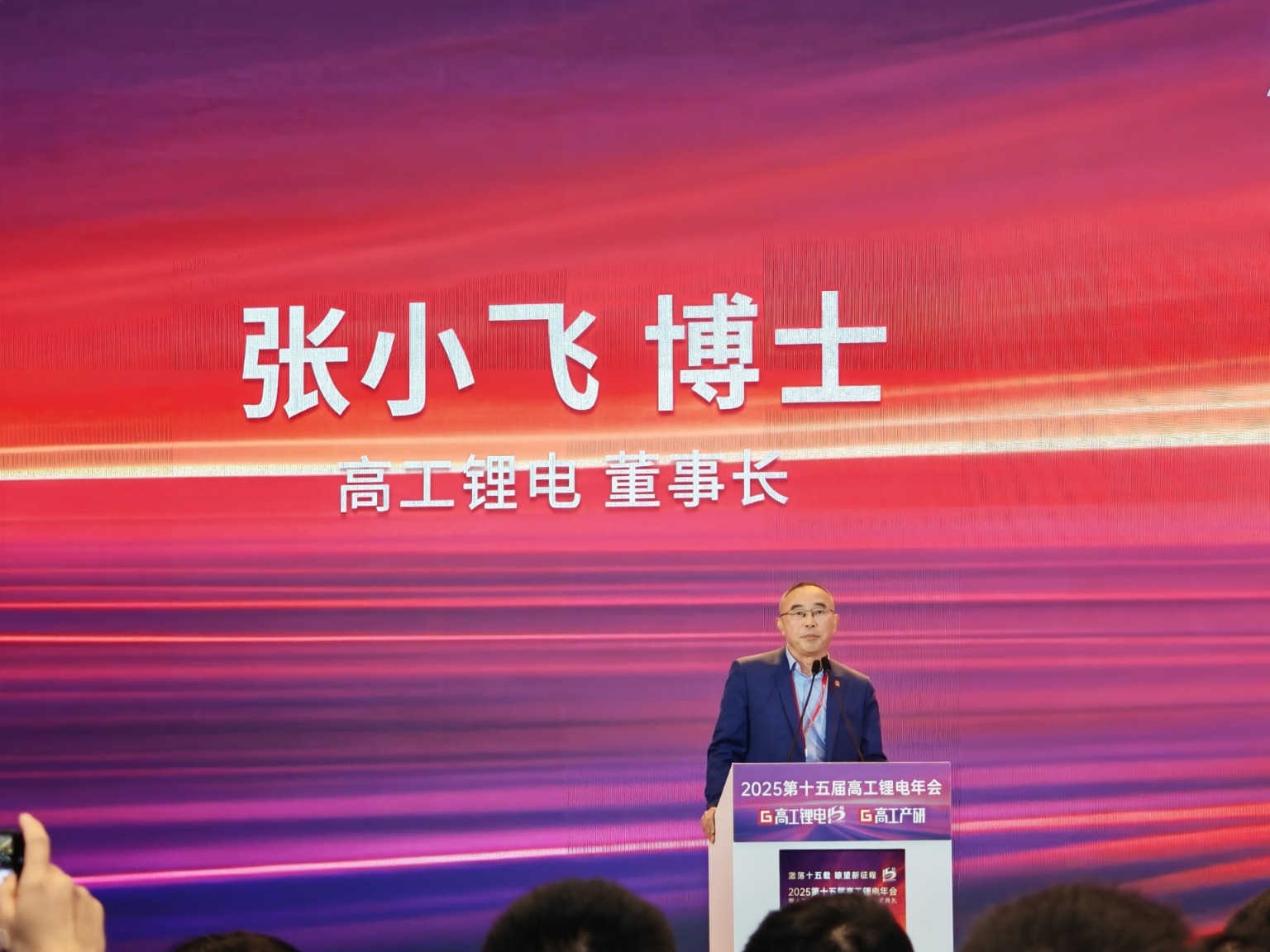
高工锂电董事长张小飞:今年动力电池出货量将突破太瓦时 多种锂电池材料价格或将上涨
Mei Ri Jing Ji Xin Wen· 2025-11-18 07:13
Core Insights - The lithium battery industry has experienced significant growth, with production increasing from approximately 15 GWh in 2010 to nearly 150 GWh in 2020, and is expected to see a 25-fold increase from 2020 to 2030 [1] - By 2025, the shipment volume of power batteries is projected to exceed 1 TWh for the first time, although the industry still faces a shortage of effective production capacity [1] - The market for lithium battery materials is expected to see price increases in 2026, with a forecasted addition of 700 GWh of effective capacity [1] Industry Growth - The lithium battery production is anticipated to grow threefold from 2025 to 2035 [1] - The share of lithium iron phosphate batteries in total shipments is expected to remain stable at around 75% [1] - Silicon-based anode materials are projected to have significant development potential, with production capacity expected to exceed 2.6 million tons by 2025 and potentially grow over 3.5 times by 2035 [1] Material Pricing and Capacity - In September 2025, multiple lithium battery materials are expected to see price increases, including power batteries, energy storage batteries, lithium hexafluorophosphate, separators, and electrolytes [1] - The current effective production capacity is described as very tight, indicating a pressing need for expansion in the industry [1]
石大胜华20251110
2025-11-11 01:01
Summary of the Conference Call for Shida Shenghua Industry Overview - The company operates in the lithium battery materials industry, focusing on lithium hexafluorophosphate (LiPF6), additives, and carbonate solvents, with significant production capacities located in Shandong, Hubei, and Fujian [2][4]. Key Points and Arguments Production Capacity and Growth - Shida Shenghua has a production capacity of 100,000 tons of liquid LiPF6 and 3,000 tons of solid LiPF6, along with 11,000 tons of additives and 736,000 tons of carbonate solvents, which are the main sources of revenue and profit [2][4]. - The company plans to start trial production of 5,000 tons of silicon-based anode materials in Q4 2025, with full-scale production expected in 2026, marking a second growth curve for the company [2][4]. Price Trends - LiPF6 prices have rebounded since late August due to increased downstream demand, reaching approximately 120,000 yuan/ton during the National Day holiday, with expectations for further price increases in Q4 and Q1 of the following year [2][6][15]. - The production cost for liquid LiPF6 is about 54,000 yuan/ton, while solid LiPF6 costs around 57,000 yuan/ton, based on current lithium carbonate prices [2][7]. Market Demand and Supply - The effective national production capacity for LiPF6 is around 315,000 tons, with a demand of approximately 250,000 to 280,000 tons this year, resulting in an industry utilization rate exceeding 80% [8]. - The company anticipates releasing 27,000 to 30,000 tons of LiPF6 production next year, with strong market demand expected to absorb new supply [9]. Customer Base and Sales Strategy - 70% of the LiPF6 produced is used for the company's own 500,000 tons of electrolyte production, with the remaining 30% sold externally, including long-term contracts with major battery manufacturers like CATL and BYD [10][12]. - The company has completed the onboarding process with major domestic battery manufacturers and is accelerating the certification process for remaining clients [10]. Electrolyte Business - The design capacity for electrolytes is 500,000 tons, with expected actual production and sales between 100,000 to 120,000 tons this year, and projected sales of 200,000 to 230,000 tons in 2026 [11]. - The profitability of the electrolyte business primarily comes from the sales of solvents and LiPF6 rather than processing fees, with price adjustments for long-term contracts expected in November [12][17]. Solvent Market Dynamics - The solvent market is currently in a state of low profitability, with prices expected to improve in Q4 due to recent price increases [23]. - The overall solvent demand for 2026 is projected to be between 2.2 to 2.4 million tons, with supply close to 4 million tons, indicating a potential oversupply situation [24]. Future Outlook - The company does not plan to expand production capacity further due to existing idle capacities in the market, which could lead to supply-demand imbalances if other companies also expand [26]. - The silicon-based anode project is expected to release capacity in Q1 2026, with anticipated profits of approximately 100,000 yuan per ton [39]. Additional Important Information - The company has a significant focus on internal raw material supply, which affects actual output levels, with expected shipments of 460,000 to 480,000 tons next year [25]. - The pricing dynamics between long-term and spot contracts are complex, with historical data not fully applicable to the current market cycle [18]. This summary encapsulates the key insights from the conference call, highlighting the company's strategic positioning, market dynamics, and future growth prospects in the lithium battery materials sector.

晓星拟控股优美科电池材料子公司
Zhong Guo Hua Gong Bao· 2025-11-07 08:38
Group 1 - HS Advanced Materials Company of South Korea announced an investment of €120 million to acquire a controlling stake in Extra Mile Materials NV (EMM), a subsidiary of Umicore Group [1] - Following the agreement, HS Advanced will hold 80% of EMM's shares, while Umicore retains a 20% stake [1] - This transaction marks HS Advanced's official entry into the battery materials sector, specifically targeting silicon-based anode materials [1] Group 2 - Silicon-based anode materials are considered crucial for the development of next-generation batteries, offering energy density more than ten times that of traditional graphite anodes [1] - A notable example in the industry is POSCO Group, which is set to complete a full-process production facility for silicon anode materials with an annual capacity of 550 tons by November 2024 in Pohang, South Korea [1]
晓星拟控股优美科电池材料子公司
Zhong Guo Hua Gong Bao· 2025-11-07 02:40
Core Viewpoint - HS Advanced Materials Company of South Korea announced an investment of €120 million to acquire a controlling stake in Extra Mile Materials NV (EMM), a subsidiary of Umicore Group, marking its entry into the battery materials sector [1] Company Summary - HS Advanced Materials will hold an 80% stake in EMM, while Umicore retains a 20% stake [1] - The company is a major producer of tire cord fabric, automotive safety belt yarn, and airbag fabrics globally [1] Industry Summary - The acquisition targets the silicon-based anode materials sector, which is considered crucial for the development of next-generation batteries [1] - Silicon-based anode materials have an energy density more than ten times that of traditional graphite anode materials [1] - A notable example in the industry is POSCO Group, which is set to complete a full-process production facility for silicon anode materials with an annual capacity of 550 tons by November 2024 in Pohang, South Korea [1]
切入下一代锂电池生产核心痛点 钱塘企业星科源获数千万元融资
Mei Ri Shang Bao· 2025-11-05 03:55
Core Insights - Hangzhou Xingkeyuan New Materials Technology Co., Ltd. has completed tens of millions of yuan in angel financing to advance the mass production of silicon-based anode materials [1] - The company aims to complete the ramp-up of its production line for hundreds of tons of silicon-based anode materials by the end of the year [1] - The core team of the company consists of members from top universities such as Tsinghua, Peking University, and MIT, with extensive experience in nanomaterials and battery technology [1] Industry Context - The new energy sector is experiencing explosive growth, but lithium battery performance issues such as endurance and charging speed are becoming increasingly prominent [1] - Upgrading anode materials is critical to overcoming these performance bottlenecks, as traditional graphite anodes struggle to meet higher performance demands [1] - Silicon-based anodes are viewed as ideal alternatives due to their theoretical capacity far exceeding that of graphite and their ability to significantly enhance charging efficiency [1] Technical Challenges - The commercialization of silicon-based materials faces challenges, particularly the significant volume expansion of silicon during complete lithiation, which can lead to material cracking and affect battery lifespan and performance [2] - The industry recognizes silicon-carbon composite material technology as a solution, but there is no unified standard for production processes and mass production equipment [2] - Xingkeyuan has adopted a differentiated technical approach, leveraging its expertise in ultra-fine nanosilicon to produce products that have already secured multiple orders internationally [2] Production Capabilities - The company has achieved stable mass production and shipment of ultra-fine nanosilicon and nanosilicon powder materials at hundreds of kilograms [2] - A 10,000 square meter facility for producing hundreds of tons is under construction in Qiantang District, which will effectively meet existing customer order deliveries and future R&D needs [2]