技能型社会

Search documents
职业教育需更好适配产业“三化”
Xin Hua Ri Bao· 2026-02-09 23:26
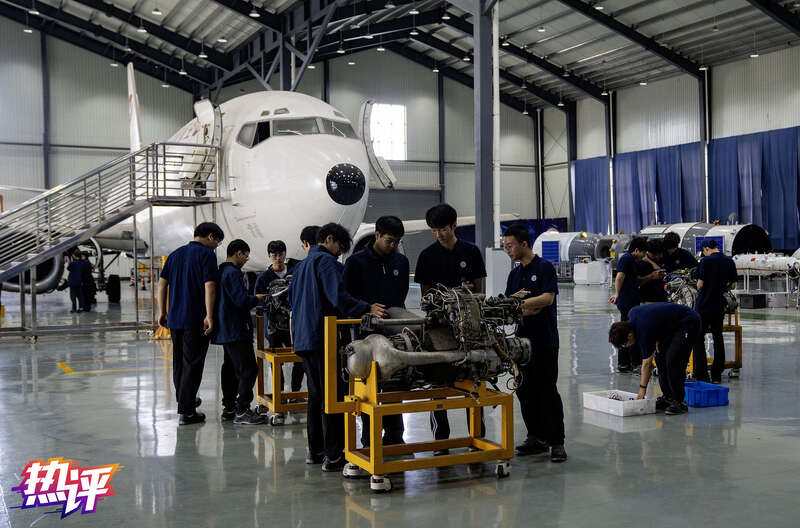
Group 1 - The core viewpoint emphasizes the importance of focusing on the real economy, advocating for the transformation and upgrading of traditional industries, and the development of strategic emerging industries during the 14th Five-Year Plan period [1] - The "three transformations" of industries—intelligent, green, and integrated—are essential for aligning with the new technological and industrial revolutions, as well as for China's industrial upgrading [1] - Vocational education is crucial for supplying over 70% of new employment personnel in modern manufacturing, strategic emerging industries, and modern services during the 14th Five-Year Plan [1] Group 2 - The revised Vocational Education Law in 2022 emphasizes enhancing the adaptability of vocational education, shifting from a "tool-oriented" approach to a "human-centered" approach [2] - Vocational education aims to develop individuals who are well-rounded, promoting self-awareness and enjoyment in their work, thus transforming students from "tool users" to "complete professionals" [2] - The need for vocational education to adapt to the intelligent, green, and integrated nature of industries by focusing on digital literacy, sustainable development, and interdisciplinary collaboration is highlighted [2] Group 3 - The transition from explicit knowledge to implicit knowledge in vocational education is necessary, emphasizing practical learning and the importance of experiential knowledge [3] - The apprenticeship model is essential for skill transmission, where learning occurs through demonstration and practice rather than mere theoretical instruction [3] Group 4 - The shift from a "school-closed" model to a "production-education ecosystem" is necessary for effective skill development, promoting interaction between various learning communities [4] - A sustainable development process for skilled talent should encompass lifelong learning, continuous employment, and re-education, involving collaboration among schools, enterprises, and communities [4] Group 5 - The need for an innovative skill evaluation system is emphasized, focusing on breaking down barriers and creating a comprehensive framework for assessing vocational education graduates [5][6] - The introduction of a new "eight-level worker" system aims to link skill levels with compensation, providing a foundation for lifelong development in the skilled workforce [6] - Building a skill-oriented society that values and promotes skills is crucial for improving the employment environment for skilled workers and expanding their development opportunities [6]
我市加快打造“30分钟职业技能培训圈”
Xin Lang Cai Jing· 2026-01-10 17:26
Group 1 - The core viewpoint of the articles highlights the successful transformation of individuals like Zhang Minhua through skill training and flexible employment opportunities, contributing to a stable income and economic independence [1][2] - The city is promoting a skill-based society by implementing five major actions focused on skill enhancement and innovation, aiming to create new income-generating pathways for residents by 2025 [2] - The "order-based" training model is being utilized to facilitate precise employment, with over 60,000 vocational skill training sessions conducted annually, resulting in the addition of 11,800 high-skilled talents [2] Group 2 - A high-skilled talent recognition and reward system has been established, which includes government recognition, industry rewards, and social incentives, supporting high-skilled talents with various benefits [3] - The implementation of a technician talent subsidy system provides financial support to skilled workers in high-demand positions, benefiting 3,895 individuals across the city [3] - The vision of "everyone learns skills, everyone has skills" is being actively pursued to build a solid foundation for a skill-based society [3]
新设立大学主要是职业本科 意味着什么?
Yang Shi Xin Wen Ke Hu Duan· 2025-05-25 01:45
Core Viewpoint - The establishment of new vocational undergraduate institutions in China is aimed at enhancing vocational education and addressing the demand for skilled talent in the labor market [1][3]. Group 1: New Vocational Institutions - On May 22, the Ministry of Education announced the approval of 32 new undergraduate institutions, with over 70% being vocational colleges [1]. - The focus on vocational undergraduate institutions is part of a broader strategy to improve the structure of higher education and meet the needs of a skills-based society [1][3]. Group 2: Policy and Goals - The 2021 policy document from the Central Committee and State Council aims for vocational undergraduate education to have an enrollment scale not less than 10% of higher vocational education by 2025, although current progress is still lacking [3]. - There is a need to control the establishment of new general undergraduate institutions while encouraging vocational ones, as many vocational schools have been focusing on升学 (academic advancement) rather than vocational training [3][4]. Group 3: Changing Perceptions - Recent trends show that high-scoring students are increasingly choosing vocational undergraduate programs over traditional ones, recognizing the value of practical skills for employment [4]. - The emphasis on maintaining a vocational education focus and fostering partnerships with industries is crucial for the acceptance and success of vocational institutions [4][5]. Group 4: Future Prospects - Some vocational undergraduate programs have already surpassed traditional undergraduate programs in admission scores, indicating a potential shift in perception and value of vocational education [5].