投融资平衡

Search documents
复盘投融资平衡周期,如何看待本轮“慢牛”的持续性?
Changjiang Securities· 2026-03-13 01:10
Investment Rating - The report maintains a "Positive" investment rating for the investment banking and brokerage industry [8] Core Insights - The balance of investment and financing is a key regulatory goal in capital markets, with financing cycles generally lagging behind investment cycles, influencing market investment styles and rhythms [3][5] - The report reviews historical financing cycles in the A-share market, focusing on the turning points of financing cycles and the interaction between financing regulation and market styles, while providing outlooks based on the current regulatory environment [5][14] Summary by Sections Historical Financing Cycle Review - The report categorizes past financing regulatory cycles into six stages, each lasting approximately 2-4 years: 1. 2008-2009 (Crisis-driven counter-cyclical easing) 2. 2010-2013 (Regulatory tightening) 3. 2014-2015.06 (Market-oriented reform easing) 4. 2015.07-2018 (Risk prevention tightening) 5. 2019-2023.07 (Registration system reform easing) 6. 2023.08 to present (Coordinated balance counter-cyclical adjustment) [6][15] Financing Cycle Turning Points - Easing turning points are often triggered by market distress, such as liquidity tightening during economic crises or the need for market reforms to meet financing demands [33] - Tightening turning points arise from the need for risk prevention and regulatory order, often following market overheating or significant downturns [36][38] Current Regulatory Environment - The current regulatory environment is characterized by stronger coordination and execution, with a focus on improving the stability of the market through enhanced regulatory mechanisms [7] - The financing policies are in the early stages of structural easing, with expectations for a sustained "slow bull" market due to the gradual improvement of the financing environment [7][30] Policy Coordination and Adjustment Rhythm - The report emphasizes that regulatory adjustments typically begin with IPO controls, which have the most direct impact on the secondary market, followed by refinements in other financing methods [40] - The coordination among IPO, refinancing, and mergers and acquisitions is crucial for achieving the regulatory goals of stabilizing the market and supporting the real economy [42][43]
复盘投融资平衡周期,如何看待本轮慢牛的持续性?
Changjiang Securities· 2026-03-12 08:59
Investment Rating - The report maintains a "Positive" investment rating for the investment banking and brokerage industry [10] Core Insights - The balance of investment and financing is a key regulatory goal in capital markets, with financing cycles generally lagging behind investment cycles, influencing market investment styles and rhythms [4][16] - The report reviews historical financing cycles in the A-share market, focusing on the turning points of financing cycles and the interaction between financing regulation and market styles, while providing an outlook based on the current regulatory environment [7][16] Summary by Sections Historical Financing Regulatory Cycles - The report categorizes historical financing regulatory cycles into six phases, each lasting approximately 2-4 years: 1. 2008-2009: Crisis-driven counter-cyclical easing 2. 2010-2013: Regulatory tightening 3. 2014-2015.06: Market-oriented reform easing 4. 2015.07-2018: Risk prevention tightening 5. 2019-2023.07: Registration system reform easing 6. 2023.08 to present: Coordinated balance counter-cyclical adjustment [8][17] Turning Points in Financing Regulation - Easing turning points are often triggered by market distress, such as liquidity crises or economic pressures, necessitating regulatory responses to support the market [31] - Tightening turning points arise from the need for risk prevention and regulatory order, often in response to overheating markets or significant market downturns [34][36] Policy Coordination and Adjustment Rhythm - The report emphasizes that regulatory adjustments typically begin with IPO controls, which have the most direct impact on the secondary market, followed by refinements in other financing methods [38] - The coordination of IPOs, refinancing, and mergers and acquisitions is crucial for adapting to macroeconomic conditions and market performance [40] Current Market Outlook - The current regulatory environment is characterized by stronger coordination and execution, with a focus on enhancing market stability and improving the financing structure for high-quality enterprises [9][27] - The report suggests that the ongoing "slow bull" market is likely to continue, supported by a gradual structural easing of financing policies [9][27]
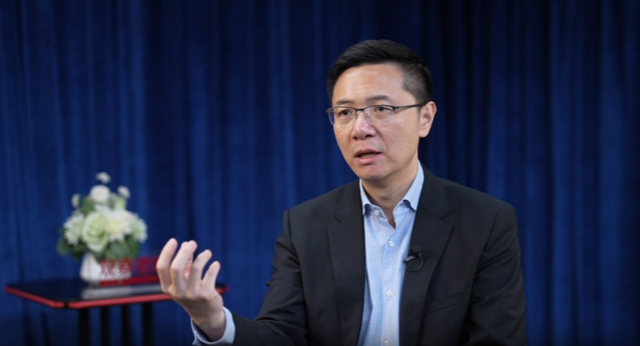
田轩:国家投资天生是耐心资本,为何难真正做到投早、投小、投硬科技?
Guan Cha Zhe Wang· 2026-02-09 10:48
Core Insights - The article emphasizes the importance of enhancing technological self-reliance and innovation in China's economic development, particularly in the context of the "14th Five-Year Plan" [1][44] - It discusses the current state of China's financial system in supporting technological innovation, highlighting both advantages and shortcomings [4][47] Group 1: Advantages of China's Financial System - The macroeconomic policies, including monetary and fiscal measures, have significantly supported technological innovation, with examples such as a 10 basis point interest rate cut and a 50 basis point reserve requirement ratio reduction in 2025 [5][50] - A multi-tiered capital market has been established, with various platforms like the main board, ChiNext, and the Beijing Stock Exchange catering to different types of enterprises, including high-growth tech firms [9][50] - The development of digital finance in China provides numerous applications that support small and medium-sized enterprises and tech innovators through supply chain finance and big data services [10][51] Group 2: Shortcomings of China's Financial System - The financial system is predominantly based on indirect financing, which does not align well with the needs of technological innovation, as banks prioritize certainty over the inherent uncertainties of innovation [10][52] - Despite a large number of venture capital firms, there is still a tendency to invest later in the development cycle, limiting support for early-stage, high-risk innovative companies [11][52] - The secondary market lacks completeness, with room for improvement in regulatory frameworks, including issuance, trading, and delisting systems to better support innovation [12][52] Group 3: Shift in Financing Dynamics - In 2025, direct financing surpassed indirect financing for the first time, with direct financing reaching 16.7 trillion yuan, accounting for 46.9% of the total social financing increment [13][55] - The mismatch between traditional financial models and the needs of technological innovation is evident in the pursuit of certainty versus the uncertainty of innovation processes [14][56] Group 4: Recommendations for Improvement - There is a need to enhance the inclusivity of the capital market to support early-stage tech companies, allowing for trial and error in innovation [20][23] - Optimizing the evaluation and assessment mechanisms for state-owned venture capital funds is crucial to encourage early and small investments in high-risk projects [29][30] - Encouraging corporate venture capital (CVC) can provide strategic support for innovation, as these investments often focus on long-term growth rather than immediate financial returns [31][32]

上市公司分红金额今年有望首破2.6万亿元
Zheng Quan Ri Bao· 2025-12-10 16:08
Core Viewpoint - The total dividend amount of A-share listed companies in China has reached a historical high of 2.46 trillion yuan this year, surpassing last year's total, with expectations to exceed 2.6 trillion yuan by the end of the year due to upcoming dividend announcements [1][2]. Dividend Growth - The dividend amounts have shown a year-on-year increase, with figures of 2.07 trillion yuan, 2.13 trillion yuan, and 2.4 trillion yuan projected for the years 2022, 2023, and 2024 respectively [2]. - Approximately 70% of listed companies have been implementing dividends consistently over the years [2]. Policy Influence - Regulatory policies have been a significant driver for increasing shareholder returns, encouraging cash dividends through various reforms and guidelines [4][5]. - The China Securities Regulatory Commission (CSRC) has introduced new regulations to enhance the cash dividend system and promote frequent dividends [4][10]. Corporate Performance - Improved corporate profitability has been a crucial foundation for increased dividends, with a reported 1.36% growth in revenue and 5.50% growth in net profit for listed companies in the first three quarters of the year [6]. - Companies are experiencing stable operations and improved cash flow, which supports their ability to maintain and increase dividend payouts [6]. Emerging Trends - There are notable trends in dividend distribution, including enhanced stability, increased frequency, and clearer long-term dividend planning among companies [7][8]. - A diverse range of industries, including emerging sectors like technology and renewable energy, are beginning to participate in dividend distributions, alongside traditional sectors [9]. Future Outlook - The implementation of new regulations is expected to further enhance the willingness of companies to distribute dividends, potentially leading to a more frequent and stable dividend ecosystem [10][11]. - Companies are likely to adopt a complementary approach to shareholder returns through both dividends and stock buybacks, enhancing overall market attractiveness [11].
证券|统筹市场投融资改革,逐步走向IPO新常态
中信证券研究· 2025-03-03 00:24
Core Viewpoint - The normalization of IPOs is essential for balancing investment and financing, and it is a necessary reform direction for the capital market to serve the real economy [1] Policy Aspects - Since September 2024, the capital market has shown significant recovery due to the implementation of a new round of reforms and technological breakthroughs by enterprises [2] - The absolute values of various liquidity indicators in the A-share market have reached or approached the levels seen during the 2015 bull market, indicating a restoration of the market's financing capacity [2] Market Aspects - The capital market plays a crucial role in attracting incremental funds and supporting industrial structure transformation through IPOs [3] - The current market capitalization of emerging industries in the A+H market is significantly lower than that of the US market, indicating a need to enhance the scale of IPOs in these sectors [3] Market Outlook - The number of IPOs in the A-share market is expected to increase slightly, with projections suggesting around 150 new listings in 2025 [4] - Based on the average IPO financing scale of 680 million in 2024, the total IPO financing scale in 2025 could reach 1,020 billion [4] Industry Impact - Investment banking revenues are expected to stabilize and recover, with a projected increase of approximately 6 billion in underwriting and sponsorship fees in 2025 [6] - The new regulations on underwriting fees are anticipated to smooth cash flow for investment banks [6] Investment Strategy - The normalization of IPOs is a clear policy direction from regulators, aimed at enhancing the capital market's functionality in serving the real economy [8] - Two main lines of focus for the securities industry include: 1. Leading institutions building international first-class investment banks [8] 2. Mid-sized institutions transitioning to specialized operations [8]