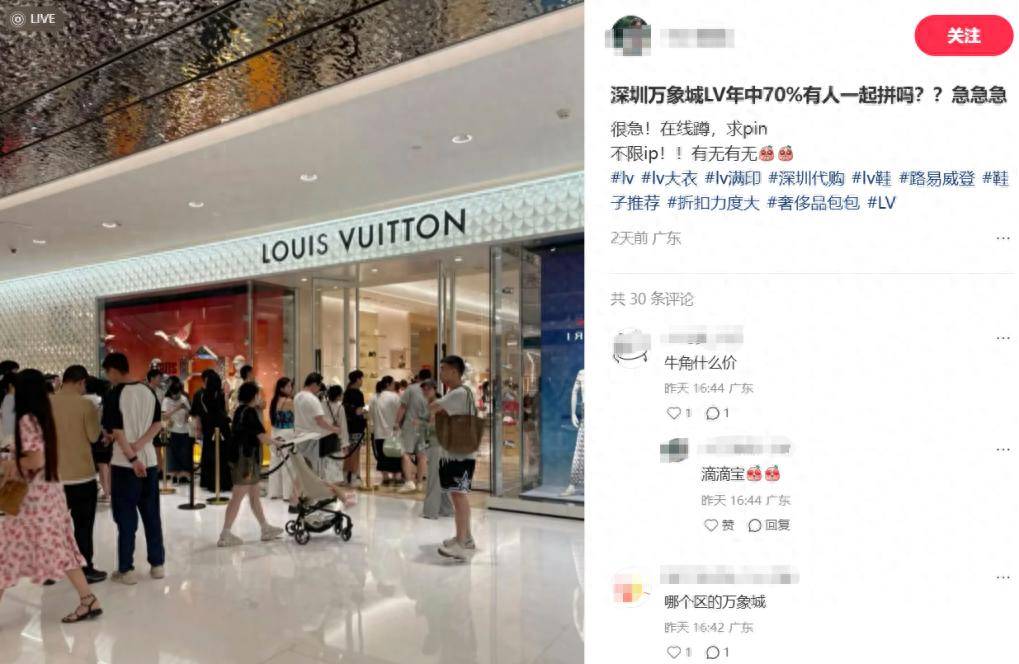
折扣奢侈品

Search documents
这届年轻人,买奢侈品的逻辑彻底变了
3 6 Ke· 2025-12-16 11:12
Core Insights - The luxury goods market is experiencing a shift in consumer behavior, particularly among younger generations who prioritize value and discounts over brand prestige and logos [2][3][5][6] Group 1: Changing Consumer Preferences - Young consumers are increasingly seeking high-quality luxury items at lower prices, moving away from the traditional notion that higher prices equate to better quality [2][5] - Research indicates that nearly 50% of luxury goods users on platforms like Xiaohongshu are born after 1995, with a significant portion starting to pay attention to luxury brands before the age of 22 [3] - The trend shows that young consumers prefer discount channels, with a 30% year-on-year increase in luxury sales reported by discount e-commerce platform Vipshop from January to September this year [3][6] Group 2: Market Dynamics - Major luxury brands like LVMH and Kering are facing declining profits, with LVMH's operating profit down 15% and net profit down 22% in the first half of 2025 [3] - The discount luxury market is projected to grow at five times the rate of the full-price market between 2025 and 2030, indicating a significant shift in consumer purchasing behavior [6] Group 3: Trust and Quality Assurance - The need for third-party authentication has become essential in the discount luxury market, as consumers seek assurance of product authenticity and quality [10][11] - China’s inspection and certification authority, Zhongjian, is establishing itself as a key player in providing quality assurance for discounted luxury goods, enhancing consumer trust [10][11] - The collaboration between Zhongjian and e-commerce platforms aims to redefine quality standards for discounted luxury items, addressing consumer concerns about authenticity and value [11]

奢侈品消费急转弯,年轻人流行“花小钱买大牌”
Sou Hu Cai Jing· 2025-08-25 17:23
Group 1 - The luxury goods consumption landscape is undergoing a "discount luxury revolution," where young consumers are increasingly purchasing high-end brands at significantly reduced prices, often one-third or less of the original retail price [3][8] - Offline luxury goods sales events have transformed into treasure hunts for young consumers, with brands like Hermes and Chanel frequently participating in exclusive sales that create a sense of urgency and scarcity among shoppers [3][6] - Online discount platforms, such as Vipshop, have become popular among young consumers, with significant price reductions on luxury items, exemplified by a COACH bag selling for over 3,000 yuan less than its retail price during a promotional event [6][8] Group 2 - Young consumers are maturing in their purchasing decisions, focusing on high cost-performance and value rather than blindly paying for brand premiums, indicating a shift in consumer behavior towards "treasure hunting" shopping experiences [8][9] - The sales of COACH products have seen a nearly 20% increase since July, driven by the appeal of high value and affordability, reflecting a broader trend in the luxury market [8] - The future of luxury consumption may evolve to prioritize "worth" over the traditional dichotomy of "full price" versus "discount," suggesting a more rational approach to luxury purchases [9]