持续改善

Search documents
精益华宝丨华宝集团以持续改善赋能高质量发展
Xin Lang Cai Jing· 2026-01-23 13:10
Core Insights - The manufacturing industry is undergoing a wave of lean transformation, with more production enterprises adopting lean management as a key path to enhance core competitiveness [1][9] - Huabao Group is proactively embracing change by fully advancing lean production management, integrating proposal improvement and on-site optimization into a diverse system of lean initiatives, focusing on "continuous improvement" to upgrade production models from traditional to lean [1][9] Lean Production Implementation - The essence of lean production lies in waste elimination and continuous improvement, which has been deeply integrated into every operational aspect of Huabao Group [1][9] - The group encourages its production enterprises to abandon a short-sighted mindset and adhere to the principle of "small victories lead to big victories," focusing on improvements at the production site [1][9] - Employees are encouraged to actively participate in problem identification and optimization, with frontline workers providing valuable insights that directly address production pain points [1][9] Case Studies of Continuous Improvement - At Jiangxi Xinhui, since 2025, the company has focused on enhancing on-site management by incorporating 5S inspections into regular control, forming special teams led by department heads to implement a "full-area coverage, targeted improvement, monthly review" mechanism [4][11] - Jiangxi Xianghai leverages technological innovation in new product development and process optimization, resulting in significant increases in capacity and efficiency [6][13] - In 2025, Jiangxi Xianghai reported a 66.5% increase in leaf alcohol production and a 33% increase in furfural production compared to the previous year, with significant reductions in consumption per kilogram [6][13] Systematic Approach to Continuous Improvement - Continuous improvement is not a series of isolated fixes but a comprehensive iterative system that spans the entire production operation [7][14] - Huabao Group's production enterprises utilize data and standards to establish a closed-loop management mechanism that includes problem discovery, root cause analysis, solution formulation, implementation, effectiveness evaluation, and result solidification [7][14] - The company believes that continuous improvement is not only the core of lean production but also a cultural gene and value pursuit embedded in the enterprise [7][14]

陈春花:工作是一种修行
Jing Ji Guan Cha Bao· 2025-07-16 10:24
Core Perspective - Life should be viewed as a journey, and work as a form of practice or cultivation [2][10] Group 1: Benefits of Work as Practice - Work leads to a calmer mind, which enhances one's appearance and demeanor [3] - Engaging in work allows individuals to focus on self-improvement rather than serving others [4] - Efficient work habits can be developed by concentrating on one task at a time, leading to higher productivity [5] Group 2: Aspects of Work as a Form of Cultivation - Continuous improvement in daily tasks is essential, akin to the concept of "diligence" in spiritual practice [6][7] - Work helps in overcoming desires and refining character through goal management and compliance with processes [8] - The quality of work reflects the development of one's character, with each task contributing to personal growth [9]
线上狂欢时代,日本为何仍是“线下消费天堂”?
Hu Xiu· 2025-04-24 13:30
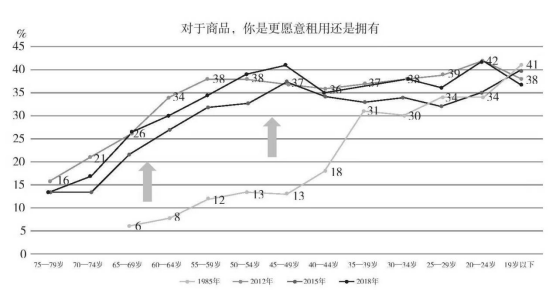
Group 1 - The Japanese consumer sector, including both essential and discretionary consumption, accounts for over 20% of the Nikkei 225 index, with four of the top ten companies being consumer firms (Toyota, Sony, Fast Retailing, and Nintendo) [1] - The article focuses on the core assets of major global stock markets, specifically analyzing the Japanese consumer sector [2] - Japan's offline retail innovation has thrived despite the global shift towards e-commerce, with a rich variety of retail formats emerging post-1990s, including convenience stores, dollar stores, hard discount stores, second-hand shops, and specialty chains [3][4] Group 2 - The success of Japan's offline retail is attributed to unique consumer culture characteristics and the traits of Japanese companies [5] - The history of retail innovation in Japan began in the 1970s, shifting from American-led changes to Japanese-led transformations, with convenience stores being a significant innovation [6][7][8] - Convenience stores in Japan are tailored to local consumer needs, emphasizing product availability, service quality, and operational efficiency [9][10][12] Group 3 - The emergence of specialized chains and discount stores has further diversified the retail landscape, with examples like drugstores and hard discount stores gaining popularity [13][14] - The SPA (Specialty store retailer of Private label Apparel) model, exemplified by Uniqlo, integrates product planning, manufacturing, and retailing, allowing for rapid market response and inventory control [19][20][21] - Uniqlo's operational efficiency is highlighted by its low markup and high net profit margin, achieved through streamlined processes and a focus on quality [25][31] Group 4 - Japanese consumer companies, including Uniqlo, exhibit characteristics such as craftsmanship, long-termism, and a strong organizational culture [33][34] - The emphasis on detail and quality in product development reflects the Japanese "craftsmanship spirit," which is evident in Uniqlo's approach to basic clothing items [35][36][37] - The organizational culture in Japanese firms promotes consistency and vertical management, ensuring that company philosophy permeates all levels of operation [39][40][41] Group 5 - The Japanese consumer market is characterized by a rational and individualistic consumption attitude, with second-hand stores becoming a cultural phenomenon rather than merely a budget option [46][47] - The evolution of consumer attitudes over decades reflects a shift towards lower ownership desires, particularly among younger generations [48][49][51] - Japanese consumer brands, shaped by cultural values, focus on long-term value accumulation through repeat purchases and word-of-mouth marketing [54]