
合规

Search documents
效率与合规:采用更智能的风险管理方式
Refinitiv路孚特· 2026-02-10 06:03
Core Insights - Compliance teams are facing a "storm" of increasing risks, changing regulatory requirements, and reduced resources, making traditional due diligence processes inadequate [1][4] - There is a need for a new approach that provides actionable, risk-related information to facilitate faster decision-making [1] Group 1: API Integration Benefits - API integration allows compliance teams to easily access due diligence reports within existing workflows, significantly improving efficiency and reducing friction [2] - This integration is particularly beneficial for large compliance teams managing hundreds or thousands of business relationships, enabling them to focus on analysis rather than administrative tasks [2] Group 2: Advantages of Structured JSON Data - Reports presented in machine-readable JSON format enhance the benefits of API integration by providing clear and accurate data, facilitating AI-driven compliance operations [3][5] - Structured JSON data eliminates the need for manual review of PDF reports, allowing for seamless data flow into existing compliance systems and freeing up resources for higher-value tasks like risk analysis and strategic planning [5] Group 3: Real-World Application - A case study involving an international pharmaceutical company demonstrated the effectiveness of API integration and structured JSON data in streamlining compliance processes, reducing errors, and speeding up onboarding [8][10] - The integration resulted in faster report generation, reduced manual data entry errors, and improved scalability without increasing the workforce [9] Group 4: Strategic Advantages - The adoption of API connections and structured JSON data transforms compliance from a passive task to a proactive strategy, enabling informed decision-making and reducing risk exposure [11] - This shift allows compliance teams to concentrate on critical areas requiring judgment and information-based decisions, thus creating a new strategic advantage [11]


HASHKEY(3887.HK)首次覆盖报告合规为先机构为核:香港数字资产领先者
Ge Long Hui· 2026-02-06 18:09
Core Viewpoint - HashKey is positioned to become a significant player in the digital asset market due to its comprehensive licensing and a closed-loop ecosystem, amidst increasing compliance requirements and active institutional participation [1][2]. Group 1: Investment Highlights - The initial coverage gives HashKey a "Buy" rating with a valuation of HKD 28.1 billion, corresponding to a target price of HKD 10.14 per share. Revenue projections for 2025-2027 are HKD 0.782 billion, HKD 1.211 billion, and HKD 2.338 billion, reflecting year-on-year growth of 11%, 55%, and 90% respectively, while net profits are projected at -HKD 1.084 billion, -HKD 0.717 billion, and -HKD 0.047 billion [1]. - HashKey holds full licenses from the Hong Kong Securities and Futures Commission, making it the leading licensed institution in Hong Kong's digital asset market with over 75% market share [1]. - The company has established three synergistic business segments: trading facilitation, on-chain services, and asset management, creating a compliant and secure digital asset ecosystem [1]. Group 2: Institutional Focus and Profitability - HashKey's institutional business is gaining traction, with institutional trading volume accounting for 68% in the first half of 2025, and Omnibus client transaction volume increasing nearly fivefold. Institutional business revenue now represents 85.52% of total revenue [2]. - The company is currently not profitable due to a low-fee customer acquisition strategy and high R&D and sales expenses to meet regulatory requirements, but profitability is expected to improve as the business ecosystem matures and customer loyalty increases [2]. - The tightening of global digital asset regulations is driving institutional demand, positioning HashKey as a preferred partner for institutions seeking to navigate compliance and risk [2].
HashKey HLDGS:合规为先机构为核:香港数字资产领先者-20260206
GUOTAI HAITONG SECURITIES· 2026-02-06 02:45
Investment Rating - The report assigns a rating of "Buy" for HashKey Holdings [4]. Core Insights - HashKey is positioned as a leading player in the digital asset market in Hong Kong, with a comprehensive licensing framework and a focus on compliance, which is becoming increasingly critical as the digital asset landscape evolves [2][8]. - The company is expected to see significant revenue growth from 2025 to 2027, with projected revenues of HKD 7.82 billion, HKD 12.11 billion, and HKD 23.38 billion, representing year-on-year growth rates of 11%, 55%, and 90% respectively [8]. - HashKey's net profit is projected to improve significantly, moving from a loss of HKD 1.08 billion in 2025 to a profit of HKD 594 million by 2028 [8]. Summary by Sections 1. HashKey: Compliance First, Building a Full Ecosystem - HashKey was established with a "compliance first" strategy, obtaining full licenses from the Hong Kong Securities and Futures Commission, making it a leading licensed virtual asset trading platform in Hong Kong [17][24]. - The company has developed a comprehensive ecosystem that includes trading facilitation, on-chain services, and asset management, catering to both institutional and retail clients [24][29]. 2. Focus on Institutional Trading Business, Gradual Improvement in Profitability - HashKey has shifted its focus towards institutional clients, with institutional trading volume increasing significantly, accounting for 68% of total trading volume in the first half of 2025 [30][34]. - The company has seen its trading volume grow from HKD 4.2 billion in 2022 to HKD 638.4 billion in 2024, driven by the launch of its trading platforms [30][34]. 3. Steady Progress on the Compliance Path, Attracting Institutional Participation - The tightening of global digital asset regulations has created a clear framework that enhances investor protection and promotes sustainable development in the digital asset industry [43]. - HashKey's comprehensive licensing and compliance strategy positions it as a preferred partner for institutions looking to engage in the digital asset space [8][43]. 4. Profit Forecast and Valuation Analysis - The report utilizes a price-to-sales (P/S) valuation method, comparing HashKey to peers like Coinbase and OSL, resulting in a valuation of HKD 28.1 billion and a target price of HKD 10.14 per share [8]. - HashKey's revenue is expected to grow significantly, with total revenues projected to reach HKD 3.415 billion by 2028, reflecting a robust growth trajectory [4][8].
第34期“A+H新浪潮”上市公司交流会:李想致辞共探产融新生态
Feng Huang Wang Cai Jing· 2026-01-23 03:27
Group 1 - The event titled "'A+H New Wave' and the 34th Listed Company Entrepreneur Exchange Conference" was held in Beijing, focusing on the opportunities and challenges faced by A+H listed companies in industrial upgrades, capital operations, and cross-border layouts [1] - The conference aimed to gather the strength of listed company entrepreneurs to discuss collaborative development, capital empowerment, and paths for industrial upgrades, contributing to the construction of a new ecosystem of industry-finance integration [1] - Li Xiang, the president of the Listed Company Branch of the China Business Culture Research Association, emphasized the importance of compliance as a top-level agenda, guiding listed companies to become enduring "value lights" rather than fleeting "hot spots" [1] Group 2 - Li Xiang highlighted the significance of the number "34," which symbolizes a complete bull-bear cycle in the capital market, reminding companies to adhere to their value foundations regardless of external changes [1] - The event featured key speakers, including former Vice President of the Supreme People's Court Jiang Bixin, who elaborated on the logic that "compliance is the cornerstone of market value," and Zhang Yuzhong from the State Administration for Market Regulation, who provided authoritative interpretations of policies for companies going abroad [1] - The forum announced a comprehensive upgrade of the "Industry Mentor" mechanism, aiming for "one-on-one" guidance to achieve industrial synergy through a "big ship leading small ships" approach [2]
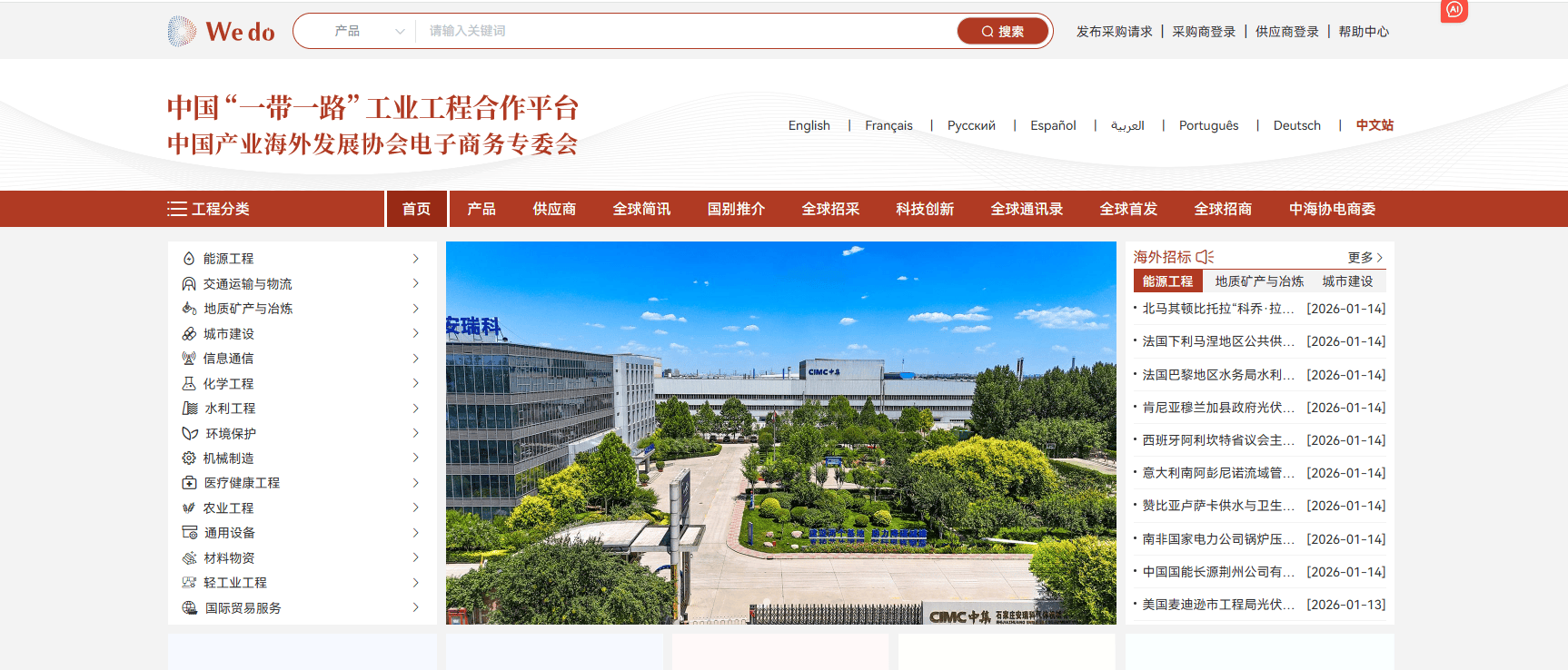
当工业合作遇上全球化,我们需要怎样的信息平台?
Sou Hu Cai Jing· 2026-01-14 09:15
Core Insights - The article emphasizes the need for a specialized information platform to facilitate global industrial cooperation, highlighting the challenges faced by companies in navigating international markets and the importance of tailored solutions [1][2]. Group 1: Globalization Needs - Global industrial cooperation requires "precise matching" rather than "broad traffic coverage," focusing on making the right connections rather than just increasing visibility [1]. - The platform, Dimension Network, has established a comprehensive service capability that spans the entire industrial engineering chain, addressing the long project cycles typical in global industrial projects [1]. - Trust is fundamental in industrial cooperation, and Dimension Network supports this through a robust compliance framework that includes standard alignment, technical protection, and policy adaptation [1]. Group 2: Ecosystem Partnership - Dimension Network positions itself as an "ecosystem partner" rather than a mere "traffic intermediary," providing long-term support and compliance assurance to industrial enterprises seeking to expand globally [2]. - The platform's focus on deep industry knowledge and understanding of global cooperation dynamics is seen as a solution to the challenges faced by companies entering overseas markets [2]. Group 3: Multilingual and Vertical Focus - The platform supports eight languages, including Chinese, English, French, Spanish, and Russian, covering over 200 countries, particularly focusing on the 150 countries along the Belt and Road Initiative [3]. - Dimension Network specializes in core sectors such as energy engineering, transportation construction, information communication, and chemical engineering, integrating over 1,000 sub-industry categories for precise matching [3]. Group 4: Comprehensive Support - The platform enables companies to present engineering cases and technical solutions instead of merely listing product specifications, enhancing the feasibility assessment for potential partners [3]. - It covers the entire project lifecycle from design to maintenance, creating a closed-loop ecosystem that supports finding agents, securing projects, and providing services [3]. Group 5: Trust and Compliance - Dimension Network is certified as a high-tech enterprise and has obtained ISO9001 quality management certification, ensuring compliance and security for its users [3]. - The platform has achieved an A+ security rating and PCI DSS payment security certification, safeguarding the transmission of commercial information and cooperation data [3]. Group 6: Systematic Compliance - The platform aligns with international standards and participates in revising IEC international standards, helping companies meet global market entry requirements [3]. - It adheres to China's data cross-border regulatory framework, ensuring compliance with personal information protection laws and enabling secure data transmission [3]. - Dimension Network provides real-time updates on local regulations for over 150 countries along the Belt and Road, assisting companies in compliance assessments before project engagements [3].
TP:2026年出海全球展望报告
Sou Hu Cai Jing· 2026-01-03 13:16
Core Insights - The report highlights that 2026 will be a pivotal year for Chinese companies' globalization, transitioning from "scale-driven" to a new phase characterized by refined operations, forward-looking strategies, and sustainable growth [1][7] - Chinese outbound investment continues to expand, diversifying from traditional manufacturing and infrastructure to technology, e-commerce, and digital services, with a more balanced global distribution towards emerging markets like ASEAN, the Middle East, and Latin America [1][12][27] Group 1: Key Forces Shaping the 2026 Outbound Landscape - Six key forces are identified that will shape the outbound landscape in 2026, including the integration of AI into core operations, which is expected to see global spending on AI core systems exceed $300 billion by 2026, with a 40% year-on-year growth in AI deployment among Chinese outbound enterprises [2][13] - Customer experience is emerging as a new growth currency, with companies excelling in customer experience seeing revenue growth rates more than double those of their competitors [2][14] - Compliance is evolving into a competitive advantage, with a focus on "trust by design" becoming essential in operational frameworks [2][15] Group 2: Industry Trends and Performance - Cross-border e-commerce continues to lead, with exports reaching 1.83 trillion RMB in 2023, and the electric vehicle sector accounting for 40% of global exports [2][18] - The media and entertainment industry is experiencing strong growth, highlighting the core value of customer experience and brand trust across three key sectors [2][18] - The TP Outbound Confidence Index (CCI) for 2026 scores 7.8, indicating a high level of confidence, with cross-border e-commerce and digital content identified as significant growth engines [2][19] Group 3: Strategic Recommendations for Success - Future success for Chinese outbound brands hinges on combining intelligence with empathy, innovation with trust, and deepening localized operations while enhancing AI-enabled customer experiences [3][19] - Companies must establish a forward-looking compliance framework and leverage ecosystem collaboration for efficient expansion [3][19] - The report emphasizes that the next wave of outbound growth will be built on closer cooperation with international ecosystems, service partners, and digital platforms [2][19] Group 4: Localization as a Growth Engine - Deep cultural localization is crucial for enhancing retention and reputation in overseas markets, requiring brands to align with local audience expectations beyond mere translation [4][55] - Successful localization involves systematic adjustments across product experience, communication methods, service expectations, and community engagement [4][56] - A multi-language global delivery framework supports Chinese clients in over 170 markets, integrating local insights and cultural understanding [4][56]

稳定币正在进入主流金融,而 MOVA 选择从结算层解决问题
Sou Hu Cai Jing· 2025-12-18 10:20
Core Viewpoint - The article discusses the advantages of stablecoins in cross-border remittances, highlighting their efficiency and cost-effectiveness compared to traditional banking systems, while also addressing the compliance risks associated with their use [1][5][6]. Group 1: Advantages of Stablecoins - Traditional cross-border remittances incur an average fee of around 6%, with delays of 2-5 business days, while stablecoins can facilitate transfers in minutes with fees as low as a few cents or under 1 USD [1][3]. - Stablecoins bypass the traditional banking intermediaries, allowing for direct peer-to-peer transactions, which significantly reduces time and costs [3][4]. - The technology behind stablecoins is accessible globally, requiring only internet access and a digital wallet, making them particularly beneficial in regions with weak financial infrastructure [4]. Group 2: Compliance and Risks - The anonymity and lack of identity verification in stablecoin transactions pose risks for money laundering, fraud, and other illicit activities, which raises compliance concerns for businesses and financial institutions [5][6]. - The challenge lies in integrating compliance measures such as identity verification and anti-money laundering protocols into the stablecoin transaction process without sacrificing speed and cost [6][7]. Group 3: MOVA's Solution - MOVA aims to create a blockchain designed for payment and settlement that combines the speed of stablecoin transactions with the compliance features of traditional financial systems [9][15]. - By embedding compliance capabilities like decentralized identity (DID) and transaction behavior monitoring (KYT) into the blockchain protocol, MOVA seeks to ensure that transactions are both fast and compliant [12][13]. - The future of large-scale cross-border payments will require a system that balances speed, compliance, and reliability, addressing the limitations of traditional stablecoins [15][16].

2026年汽车金融有哪些机会点?
Zhong Guo Qi Che Bao Wang· 2025-12-14 06:38
Core Insights - The automotive finance industry is expected to shift towards quality and efficiency enhancement in 2026, with opportunities focusing on compliance, technology empowerment, and international expansion [1][10] Group 1: Industry Trends - The automotive finance sector is currently experiencing low-level competition, primarily focused on price reduction, leading to unsustainable profits [3] - The overseas market, particularly in new energy vehicles and commercial vehicle exports, is seen as a key direction for breaking through industry challenges [3] - The car mortgage business is anticipated to thrive in 2026 due to increased funding, improved customer acquisition models, and optimized business processes [7] Group 2: Technology and AI Integration - AI is reshaping the automotive finance industry by enhancing efficiency, optimizing service experiences, and expanding business boundaries [4] - The transition from "single-point intelligence" to "global intelligence" in AI applications is crucial for improving overall process efficiency [4] Group 3: Compliance and Regulation - Compliance is fundamental for sustainable growth in the automotive finance sector, especially with the increasing application of AI [9] - Companies that prioritize compliance and consumer rights protection will have a competitive advantage in capturing market opportunities [9][10] - Adhering to local market regulations is essential for building trust in overseas markets, which is a core competitive advantage for financial technology companies [9]

2026,如何留在“牌桌”上?
Sou Hu Cai Jing· 2025-12-10 20:41
Core Insights - The central theme for corporate management in 2026 is "human efficiency" [2] - A significant shift is occurring where management focus is transitioning from growth to efficiency, driven by investor pressure [3] Group 1: AI Transformation - By 2026, AI will evolve from being a tool to becoming an integral part of the workforce, significantly impacting decision-making processes [4][5] - The adoption rate of generative AI in enterprises surged from 33% to 65% within a year, indicating a rapid integration into various sectors [4] - AI will enhance human capabilities rather than merely replace them, leading to a competitive landscape focused on managing digital employees effectively [5] Group 2: Compliance and Quality Development - Compliance is becoming a critical factor for business survival, shifting from a legal concern to a strategic imperative under national development policies [6] - Companies relying on non-compliant practices for profit are at risk of being phased out as compliance becomes a baseline requirement [6][7] - The focus on compliance will compel businesses to address internal efficiency issues, such as excessive meetings and redundant processes [7] Group 3: From Cost-Cutting to Empowerment - The approach to improving efficiency is shifting from "cost-cutting" to "empowerment," emphasizing the need for a more sophisticated management strategy [9][12] - Empowerment strategies include eliminating inefficiencies, optimizing skill utilization, and fostering a culture of recognition and reward [12][13] - The new paradigm will require viewing employees as investments rather than costs, promoting a culture of achievement over mere monitoring [13] Group 4: Management Evolution - By 2026, AI is expected to lead to the elimination of a significant portion of middle management roles, as organizations flatten their structures [16] - The traditional roles of managers are being challenged by AI's capabilities, necessitating a shift in management focus towards efficiency and value creation [16] - Future managers will need to adapt to new roles as facilitators of human and AI collaboration, emphasizing empowerment and strategic thinking [18] Group 5: Global Operations and Challenges - As Chinese companies expand internationally, the focus will shift to enhancing operational efficiency in global markets [17] - Compliance with local labor laws and cultural expectations will be crucial for success in overseas markets [19] - Companies must build a cohesive global network that respects local differences while maintaining operational efficiency [17][19] Conclusion - The five transformative changes—AI disruption, compliance pressures, management quality enhancement, organizational streamlining, and global operations—collectively redefine human efficiency as a core organizational capability for the future [20]

Binance 实现 3 亿用户:加密货币行业的里程碑与分水岭
3 6 Ke· 2025-12-09 08:33
Core Insights - Binance has achieved a significant milestone by surpassing 300 million users by December 2025, demonstrating rapid growth compared to traditional internet giants like Facebook and Instagram [1][2] - The company has also made strides in regulatory compliance, receiving authorization from the Financial Services Regulatory Authority (FSRA) in Abu Dhabi, which signifies its adherence to high international standards in governance and consumer protection [2][3] User Growth - Binance's user growth trajectory has accelerated dramatically, taking nearly five years to reach its first 100 million users, 26 months to reach 200 million, and only 17 months to reach 300 million [1] - This growth is indicative of a shift in the Web3 landscape, where Binance has established itself as a leader in user acquisition [1][7] Regulatory Compliance - Binance has actively pursued regulatory approvals, including registration with India's Financial Intelligence Unit and obtaining licenses in Kazakhstan and Brazil, marking its 21st global regulatory milestone [4][5] - The company's compliance efforts are aimed at transitioning from a "disruptor" to a "builder," seeking sustainable growth within existing financial and legal frameworks [6] Security and Trust - Binance has built a robust security framework, with its security team helping recover assets for 7.5 million users and preventing nearly $10 billion in potential fraud losses [8][9] - The company has implemented a proof of reserves system and established a user asset protection fund, providing a safety net of up to $1 billion for users [9] Product Ecosystem - Binance has developed a comprehensive product matrix that includes wealth management, payment solutions, and decentralized finance (DeFi) services, creating a "savings-consumption-investment-exploration" closed loop [10][11] - The platform has processed over $230 billion in payment transactions, demonstrating its utility in real-world applications and helping users save approximately $1.75 billion in cross-border fees [10] Investment and Market Position - Binance secured a $2 billion investment from Abu Dhabi's MGX, marking the largest single investment in a crypto company and symbolizing the convergence of traditional finance and Web3 [11][12] - This investment positions Binance as a next-generation global financial infrastructure, reflecting its growing acceptance among institutional investors [11][12]