换电标准化

Search documents
趋势研判!2026年中国纯电动汽车换电行业政策、发展历程、产业链、市场规模、竞争格局及发展趋势分析:市场规模将达245亿元,换电设备占53.88%[图]
Chan Ye Xin Xi Wang· 2026-01-07 01:26
Core Insights - The pure electric vehicle battery swapping industry is becoming a significant complement to traditional charging infrastructure in China, serving as a bridge between transportation and new smart grid systems [1][5] - The market for battery swapping is projected to grow significantly, with estimates suggesting it will reach 16.7 billion yuan by 2025 and 24.5 billion yuan by 2026 [5] Market Overview - The pure electric vehicle battery swapping market is divided into two main segments: battery swapping station operations and battery swapping equipment [1][5] - By 2025, the battery swapping station operation segment is expected to reach 7.5 billion yuan, accounting for 44.91% of the market, while the equipment segment is projected to reach 9.2 billion yuan, making up 55.09% [5] - For 2026, the battery swapping station operation is anticipated to grow to 11.3 billion yuan (46.12%), and the equipment segment to 13.2 billion yuan (53.88%) [5] Industry Definition and Business Model - The battery swapping model involves centralized charging stations that store, charge, and distribute batteries, providing battery replacement services for electric vehicles [2] - The model can be categorized into chassis swapping, side swapping, and box swapping, applicable to both private and operational vehicles [2] Industry Development History - The development of electric energy in China has evolved through three phases: initial exploration of battery swapping, the rapid growth of charging modes, and the standardization of battery swapping in pilot cities [4] Competitive Landscape - The competitive landscape includes two types of companies: electric vehicle manufacturers with battery swapping networks and independent third-party solution providers [6] - Key players in the industry include Youyou Green Energy, China Petroleum & Chemical Corporation, and Aodong New Energy, among others [6][10] Key Companies - Aodong New Energy is a leading player in the battery swapping industry, focusing on establishing a comprehensive ecosystem for battery swapping services [8] - Youyou Green Energy specializes in providing charging module products and solutions, serving a diverse customer base including charging station operators and electric vehicle manufacturers [10] Industry Trends - The battery swapping infrastructure is crucial for supporting the development of the electric vehicle industry and promoting green energy transitions in transportation [11] - There is an increasing demand for standardization in battery swapping to facilitate the large-scale adoption of battery swapping models [11]



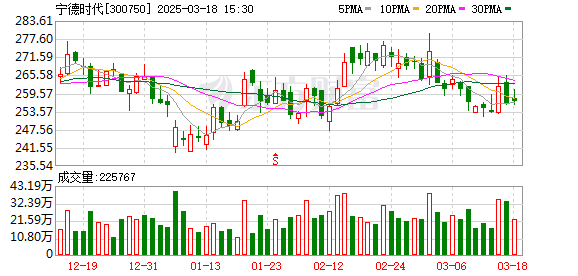
宁德时代、蔚来,战略合作
Zhong Guo Zheng Quan Bao· 2025-03-18 09:47
Core Viewpoint - NIO and CATL have signed a strategic cooperation agreement to jointly develop a battery swapping network and promote the unification of industry technology standards [2][5]. Group 1: Strategic Cooperation - The agreement includes a capital investment from CATL of up to 2.5 billion yuan in NIO's subsidiary, NIO Energy [2]. - Both companies aim to leverage their technological, management, platform, and brand resources to create the world's largest and most advanced battery swapping service network [5][6]. - The partnership will also focus on the development of new models under NIO's Firefly brand, which will adopt CATL's chocolate battery swapping standards [2][6]. Group 2: Battery Swapping Network Development - NIO has established 3,172 battery swapping stations, forming a high-speed battery swapping network across 14 major city clusters and nearly 1,000 highway stations, connecting over 700 cities nationwide [8]. - The collaboration will implement a "dual network parallel" model to enhance the convenience and efficiency of battery swapping for electric vehicle owners [6][8]. - CATL's chocolate battery swapping technology aims to enable battery swaps in just 1.5 minutes, significantly improving the user experience [6]. Group 3: Standardization and Industry Impact - The companies will work together to promote the establishment and dissemination of national battery swapping technology standards, facilitating cross-brand and cross-model battery compatibility [6][9]. - CATL's CEO emphasized that the collaboration marks a milestone in collaborative innovation across the entire industry chain [6]. - The standardization of battery swapping is expected to reduce development costs for new models and shorten development cycles by over six months [8].