换电设备

Search documents
趋势研判!2026年中国纯电动汽车换电行业政策、发展历程、产业链、市场规模、竞争格局及发展趋势分析:市场规模将达245亿元,换电设备占53.88%[图]
Chan Ye Xin Xi Wang· 2026-01-07 01:26
Core Insights - The pure electric vehicle battery swapping industry is becoming a significant complement to traditional charging infrastructure in China, serving as a bridge between transportation and new smart grid systems [1][5] - The market for battery swapping is projected to grow significantly, with estimates suggesting it will reach 16.7 billion yuan by 2025 and 24.5 billion yuan by 2026 [5] Market Overview - The pure electric vehicle battery swapping market is divided into two main segments: battery swapping station operations and battery swapping equipment [1][5] - By 2025, the battery swapping station operation segment is expected to reach 7.5 billion yuan, accounting for 44.91% of the market, while the equipment segment is projected to reach 9.2 billion yuan, making up 55.09% [5] - For 2026, the battery swapping station operation is anticipated to grow to 11.3 billion yuan (46.12%), and the equipment segment to 13.2 billion yuan (53.88%) [5] Industry Definition and Business Model - The battery swapping model involves centralized charging stations that store, charge, and distribute batteries, providing battery replacement services for electric vehicles [2] - The model can be categorized into chassis swapping, side swapping, and box swapping, applicable to both private and operational vehicles [2] Industry Development History - The development of electric energy in China has evolved through three phases: initial exploration of battery swapping, the rapid growth of charging modes, and the standardization of battery swapping in pilot cities [4] Competitive Landscape - The competitive landscape includes two types of companies: electric vehicle manufacturers with battery swapping networks and independent third-party solution providers [6] - Key players in the industry include Youyou Green Energy, China Petroleum & Chemical Corporation, and Aodong New Energy, among others [6][10] Key Companies - Aodong New Energy is a leading player in the battery swapping industry, focusing on establishing a comprehensive ecosystem for battery swapping services [8] - Youyou Green Energy specializes in providing charging module products and solutions, serving a diverse customer base including charging station operators and electric vehicle manufacturers [10] Industry Trends - The battery swapping infrastructure is crucial for supporting the development of the electric vehicle industry and promoting green energy transitions in transportation [11] - There is an increasing demand for standardization in battery swapping to facilitate the large-scale adoption of battery swapping models [11]



119亿估值换电龙头赴港,奥动新能源能否打动投资者?
Zhi Tong Cai Jing· 2025-12-23 02:12
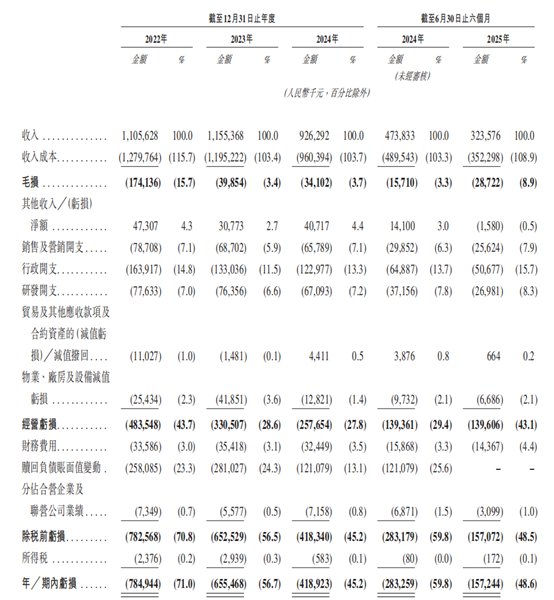
Core Viewpoint - The Hong Kong IPO market has shown significant recovery in 2023, with over a hundred new stocks listed, reflecting increased market liquidity and investor confidence. In this context, Aodong New Energy, a leading player in the battery swapping sector, has initiated its listing process on the Hong Kong Stock Exchange, aiming to capitalize on its market position as the largest independent third-party battery swapping solution provider in China by 2024 [1][2]. Company Overview - Aodong New Energy has completed multiple rounds of equity financing since 2018, with a post-money valuation reaching 11.9 billion RMB in January 2022 [1]. - The company is currently in a strategic investment phase prior to profitability, with its commercial potential and long-term value still under market scrutiny [1]. Financial Performance - Aodong New Energy's revenue from 2022 to 2024 was reported as 1.106 billion RMB, 1.155 billion RMB, and 926 million RMB, respectively, with corresponding losses of 785 million RMB, 655 million RMB, and 419 million RMB, indicating a trend of narrowing losses but fluctuating revenue [2][3]. - In the first half of 2025, the company reported a revenue of 324 million RMB, a year-on-year decrease of 31.71%, with a loss of 157 million RMB [2]. Revenue Structure - The company is transitioning from a device sales-driven model to a service-driven model, with revenue from battery swapping services increasing from 29.0% in 2022 to 69.8% in the first half of 2025, while equipment sales revenue dropped from 66.1% to 17.1% [4]. - The compound annual growth rate (CAGR) for battery swapping service revenue from 2022 to 2024 was 39.5%, despite a 48.2% decline in equipment sales revenue in 2024 [4]. Research and Development - Aodong New Energy has maintained a consistent investment in R&D, with total R&D expenses reaching 248 million RMB from 2022 to the first half of 2025, accounting for 6.6% to 8.3% of total revenue [4]. - However, R&D spending decreased by 27.4% in the first half of 2025 compared to the previous year, attributed to cost optimization measures [4]. Market Dynamics - The battery swapping industry in China is projected to grow from 1.5 billion RMB in 2020 to 10.3 billion RMB in 2024, with a CAGR of 61.1%, and is expected to reach 70.5 billion RMB by 2030 [7]. - Despite the growth potential, the industry faces challenges due to its "heavy asset, high service" nature, leading to prolonged profitability cycles [9]. Competitive Landscape - Aodong New Energy is currently the leading independent third-party battery swapping solution provider in China, but faces increasing competition from major battery manufacturers like CATL, which is rapidly expanding its battery swapping network [9][10]. - The company is strategically reducing its own battery swapping station network while seeking to enter the commercial vehicle sector, which presents a more rigid demand for battery swapping services [11]. Future Outlook - The transition towards service-oriented operations and the focus on commercial vehicles are expected to improve Aodong's financial performance in the long run, although the company is still experiencing significant operational challenges [11].
新股前瞻|119亿估值换电龙头赴港,奥动新能源能否打动投资者?
智通财经网· 2025-12-23 02:08
Core Viewpoint - The Hong Kong IPO market has shown significant recovery in 2023, with over 100 new listings and substantial growth in both the number of listings and total financing, reflecting improved market liquidity and investor confidence. In this context, Aodong New Energy, a leading player in the battery swapping sector, has initiated its listing process on the Hong Kong Stock Exchange [1]. Company Overview - Aodong New Energy is recognized as China's largest independent third-party battery swapping solution provider, with a solid market position as of 2024 [1]. - The company has completed multiple rounds of equity financing since 2018, with a post-money valuation of 11.9 billion yuan as of January 2022 [1]. Financial Performance - Aodong New Energy's revenue from 2022 to 2024 was 1.106 billion yuan, 1.155 billion yuan, and 926 million yuan, respectively, with corresponding losses of 785 million yuan, 655 million yuan, and 419 million yuan, indicating a trend of narrowing losses but fluctuating revenue [2][3]. - In the first half of 2025, the company reported a revenue of 324 million yuan, a year-on-year decrease of 31.71%, with a loss of 157 million yuan [2]. Revenue Structure - The company is transitioning from a device sales-driven model to a service-driven model, with the proportion of revenue from battery swapping services increasing from 29.0% in 2022 to 69.8% in the first half of 2025 [4]. - The compound annual growth rate (CAGR) for battery swapping service revenue from 2022 to 2024 reached 39.5%, despite a significant decline in equipment sales revenue by 48.2% in 2024 [4]. Research and Development - Aodong New Energy has maintained a consistent investment in R&D, with cumulative R&D expenses reaching 248 million yuan from 2022 to the first half of 2025, accounting for 6.6% to 8.3% of total revenue [4]. - The company has developed a competitive edge with its proprietary "snap-on" battery swapping technology, achieving industry-leading swapping speeds [5]. Market Dynamics - The battery swapping industry in China is projected to grow from 1.5 billion yuan in 2020 to 10.3 billion yuan in 2024, with a CAGR of 61.1%, and is expected to reach 70.5 billion yuan by 2030 [7]. - Despite the growth potential, the industry faces challenges due to its capital-intensive nature and the long path to profitability [9]. Competitive Landscape - Aodong New Energy is currently the leading independent third-party battery swapping service provider, but faces increasing competition from major battery manufacturers like CATL, which is rapidly expanding its battery swapping network [9][10]. - The company is strategically shifting its focus towards commercial vehicles, which have a more pressing need for battery swapping due to longer operational hours and higher willingness to pay [10]. Future Outlook - While the battery swapping industry has promising prospects, Aodong New Energy continues to experience operational challenges, including declining revenue and negative cash flow, indicating it has not yet overcome its performance "growing pains" [11]. - The company's shift towards operational services and the commercial vehicle sector may lead to substantial improvements in performance, with ongoing market attention on its profitability turning point [11].
趋势研判!2025年中国充换电设备行业政策、产业链图谱、市场运行现状及未来发展趋势分析:新基建赋能高速扩张,车网互动牵引未来生态[图]
Chan Ye Xin Xi Wang· 2025-12-06 02:35
Industry Overview - Charging and swapping equipment is essential for providing power to electric vehicles, encompassing core charging devices and auxiliary maintenance facilities, serving as a critical link between new energy vehicles and the power system [2][5] - The industry is entering a phase of "quantity and quality improvement" driven by robust demand for charging infrastructure and supportive national policies [1][5] Market Size and Growth - By October 2025, the total number of charging infrastructure units in China is expected to reach 18.645 million, with 5,036 battery swapping stations [1][6] - The market size of the charging and swapping equipment industry is projected to reach 35.6 billion yuan in 2024, with a year-on-year growth of 12% [11] Policy Support - A series of national policies have been implemented to support the development of charging infrastructure, including guidelines for integrating electric vehicles with the power grid and promoting large-scale applications of vehicle-grid interaction [5][6] Industry Chain - The industry chain consists of upstream core components and raw material suppliers, midstream equipment manufacturers, and downstream charging service operators [6][8] Regional Distribution - The distribution of public charging facilities shows a concentration in key provinces such as Guangdong, Zhejiang, and Jiangsu, which account for 66.1% of the total [8][9] Competitive Landscape - The market is characterized by high concentration, with the top 15 charging operators holding 83.8% of the market share, led by companies like TELD and Star Charge [9][10] Technological Advancements - The industry is experiencing a shift towards high-voltage and liquid-cooled charging technologies, with 800V platforms becoming more common [11][12] - The standardization and automation of battery swapping equipment are accelerating, reducing swapping times to 3-5 minutes [11] Future Trends - The industry is expected to focus on technological innovation, ecological collaboration, and optimized layout, with a shift towards high-quality development [12][14] - The charging network will aim for comprehensive coverage, balancing urban and rural infrastructure to meet diverse energy needs [15][16]