车电分离

Search documents
【新能源周报】新能源汽车行业信息周报(2026年3月9日-3月15日)
乘联分会· 2026-03-17 08:37
Industry Information - The Ministry of Transport will enhance high-power charging capabilities at highway service areas to alleviate the difficulties of finding charging stations and long waiting times for electric vehicle owners. Currently, the coverage rate of charging facilities at highway service areas is 98.8% [7] - National Committee member Jiang Haoran suggests accelerating the large-scale application of high-level autonomous driving, addressing issues such as outdated laws and regulations, limited application scope, and insufficient integration of infrastructure [8] - National People's Congress representative Liu Wu advocates for the acceleration of "fiber optics on vehicles" to resolve bandwidth anxiety in smart connected vehicles, emphasizing the limitations of traditional copper cables [9] - Honeycomb Energy reported that 39% of its overseas shipments in January-February 2026 were for electric vehicles, indicating a strong global expansion strategy [9] - CATL forecasts a net profit of 72.2 billion yuan for 2025, a year-on-year increase of 42.28%, with a projected revenue of 423.7 billion yuan [10] - The Ministry of Industry and Information Technology emphasizes the need to accelerate the research and promotion of advanced process technologies to improve the comprehensive utilization of electrolytic manganese slag [11] - The first domestically produced high-performance automotive-grade MCU chip by Fenghuo Communication will enter mass production this year, marking a significant step in domestic automotive electronics [12] - The first automotive-grade chip packaging and testing factory in China has been established in Shanghai, enhancing the domestic supply chain for automotive chips [13] - Insurance companies are exploring the "separation of vehicle and battery" model for car insurance, which may reduce costs for electric vehicle consumers but requires further development before widespread adoption [14] - Guoxuan High-Tech has commenced construction of a new industrial park in Ganzhou with an initial investment of 3.2 billion yuan, focusing on low-altitude economic power batteries [15] - The "14th Five-Year Plan" supports the new battery industry, promoting high-quality development through a three-fold closed-loop strategy [15] - Sodium-ion battery technology is entering a new phase of large-scale application, with major players accelerating their layouts in this area [15] - Hunan Highway Group and BYD are collaborating to implement a 5-minute fast charging solution across the province's highway service areas [16] - In February, the domestic power battery installation volume reached 26.3 GWh, with a year-on-year increase of 11.4% [17] - The Ministry of Industry and Information Technology is organizing the selection of the first batch of national emerging industry development demonstration bases, focusing on key sectors such as AI and smart connected vehicles [20] - Weinan Battery has signed a contract with Wuhan East Lake High-tech Zone to establish a new infrastructure project with a total investment of 9.8 billion yuan [20] - Academician Ouyang Minggao predicts that the next five years will see significant advancements in seven key technology directions for new energy vehicles [20] - Chinese companies are actively participating in the development of the "Battery Valley" in France, enhancing the local electric vehicle supply chain [20] Policy Information - Qingdao, Shandong, will issue 250 million yuan in subsidies for vehicle trade-ins, with a maximum subsidy of 120,000 yuan for personal purchases of new energy vehicles [22] - The Guangdong government is accelerating the development of high-level autonomous driving and establishing safety sandboxes for comprehensive testing [24] - Chengdu has launched a new round of automotive consumption rewards, offering up to 8,000 yuan in subsidies for new car purchases [27] - Yibin, Sichuan, aims to strengthen its photovoltaic industry chain, targeting a scale of 40 billion yuan by 2026 [28] - The Zhangjiakou government plans to improve electric vehicle charging infrastructure, with 1,196 new charging facilities to be constructed [28]




投资98亿元!蔚能电池新项目签约湖北
鑫椤锂电· 2026-03-17 07:17
Core Insights - The article discusses the significant investments and developments in the lithium battery sector, particularly focusing on the establishment of a new infrastructure project by Weinan Battery in Wuhan, with a total investment of 9.8 billion yuan [1][2]. Group 1: Market Overview - The article outlines various market segments related to lithium batteries, including carbonates, electrolytes, copper foils, lithium cobalt oxide, ternary materials, lithium iron phosphate, manganese lithium phosphate, and sodium-ion batteries, among others, with a focus on their projected trends for 2025 [1]. - It highlights the expected growth in the global lithium battery application market from 2025 to 2029, indicating a comprehensive analysis of market trends and competitive strategies [2]. Group 2: Weinan Battery Developments - Weinan Battery has signed a contract with the Wuhan East Lake High-tech Zone to launch a new infrastructure project aimed at enhancing battery asset management and application technologies, which will support NIO's Battery as a Service (BaaS) model [2]. - The BaaS model allows users to separate vehicle and battery purchases, offering flexibility in battery capacity rental and monthly service fees, thus promoting a more sustainable energy ecosystem [2]. Group 3: Infrastructure Investments - In addition to the battery project, NIO is investing in the establishment of its energy headquarters in Wuhan, which includes the construction of 3,753 battery swap stations and over 28,000 charging piles across the country [2].
蔚能电池98亿项目落地武汉!
起点锂电· 2026-03-14 10:44
Group 1 - The article discusses the upcoming 2026 Second Cylinder Battery Technology Forum, focusing on advancements in all-tab technology and the leadership of the large cylindrical battery market [4] - The event will take place on April 10, 2026, at the Venus Hall in Shenzhen, organized by Qidian Lithium Battery and Qidian Research Institute SPIR, with several prominent sponsors and speakers from the industry [4] - The forum aims to gather key players in the cylindrical battery sector, highlighting the importance of collaboration and innovation in battery technology [4] Group 2 - NIO's battery business is expanding significantly, with a recent investment of 9.8 billion yuan to establish a new battery application technology and asset management base in Wuhan [5] - The Battery as a Service (BaaS) model allows customers to purchase NIO vehicles without the battery, opting instead to rent the battery, which has attracted over 500,000 users and a battery management capacity of approximately 42 GWh [5][6] - NIO has established a wholly-owned battery company to enhance its battery technology research and development, focusing on improving battery performance and integration within its ecosystem [6] Group 3 - The C-round financing for NIO's battery subsidiary, Weinan, has been substantial, with a total of 1 billion yuan raised in the C3 round alone, indicating strong investor confidence and support [7] - Weinan's business model is centered around battery asset management, leveraging the battery rental service to generate profits, which is closely tied to NIO's vehicle sales and operational success [8][9] - The partnership between NIO and CATL is crucial for developing long-life battery solutions, which are essential for addressing consumer concerns about battery longevity [10][11] Group 4 - The collaboration between NIO and CATL includes a five-year agreement focusing on technology, ecosystem, and market development, emphasizing the importance of long-life batteries and standardized battery management [10][11] - NIO's strategy involves enhancing its operational capabilities and data management while relying on CATL for hardware and battery technology, indicating a clear division of responsibilities [11] - The competitive landscape includes other players like BYD, which are exploring fast charging and battery performance, suggesting that NIO's success in the battery rental market will depend on continuous innovation and adaptation [11]
蔚来能盈利,是谁的功劳?
雷峰网· 2026-03-13 08:30
Core Viewpoint - NIO has achieved its first quarterly profit with a net profit of 300 million yuan in Q4, marking a significant turnaround from a nearly 7 billion yuan loss in the same quarter last year, raising questions about the sustainability of this profitability into 2026 [2][4][6]. Group 1: Financial Performance - In 2025, NIO delivered a total of 326,000 vehicles, a year-on-year increase of 46.9%, with Q4 deliveries reaching 125,000 units, an increase of 38,000 units from Q3 [4]. - Q4 vehicle sales revenue increased by 12.4 billion yuan, with a single vehicle gross profit of 46,000 yuan, leading to a quarterly gross margin of 18.1%, up 3.4 percentage points from Q3 [6]. - For the entire year, NIO reported revenues of 87.49 billion yuan, a 33.1% year-on-year growth, with a gross profit of 11.92 billion yuan, also reflecting a 33.1% increase [6][7]. Group 2: Business Model and Strategy - NIO's profitability is closely linked to the rapid growth of high-margin models, operational efficiency improvements, and a positive cycle in its business model [4][6]. - Non-vehicle businesses contributed over 10 billion yuan in revenue, accounting for 12% of total income, with a gross margin of 11.9%, indicating a shift in NIO's business model [7]. - The company plans to maintain quarterly R&D investments of 2 to 2.5 billion yuan while achieving efficiency comparable to competitors spending 3 to 4 billion yuan [8]. Group 3: Market Position and Future Outlook - NIO aims for a 40% to 50% increase in sales by 2026, despite a slight decline in the overall Chinese passenger car market, with a focus on electric vehicle growth [16]. - The company is set to launch three key models in 2023, including the ES9, ES7, and L80, to drive sales growth [16]. - NIO emphasizes the importance of maintaining a competitive edge in a market facing increasing product homogeneity and technological convergence [20]. Group 4: Challenges and Competitive Landscape - The automotive industry faces challenges such as raw material shortages and rising costs, which could increase the cost of high-end smart electric vehicles by 6,000 to 10,000 yuan [17][18]. - NIO is committed to managing these cost pressures without passing them onto consumers, focusing on efficiency improvements [18]. - The company recognizes the need to navigate the "new car death valley effect," where new models may not sustain sales momentum post-launch [17].
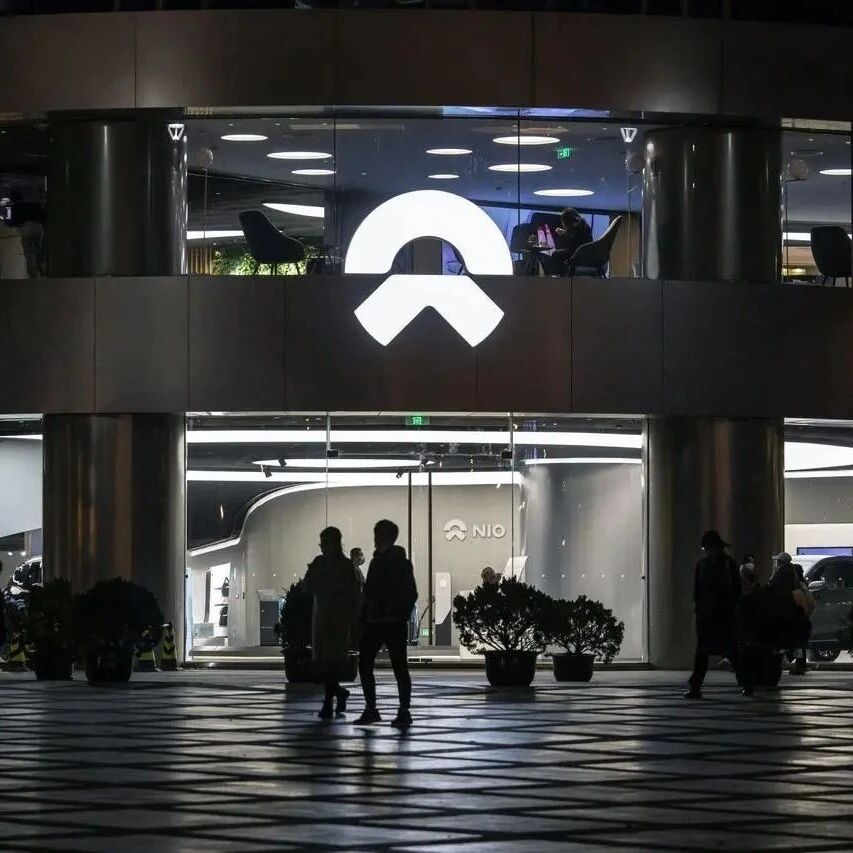
合肥国投战略入股武汉蔚能,推动合肥市新能源产业聚能升级
Xin Lang Cai Jing· 2026-02-23 05:22
Group 1 - Wuhan Weinan Battery Asset Co., Ltd. announced the completion of a C3 round financing totaling 1 billion yuan, with Hefei Guotou strategically investing through its managed fund to accelerate industrial collaboration and resource sharing in Hefei's new energy sector [1][2] - Wuhan Weinan, founded in 2020 by NIO and CATL, is the world's first company focused on battery-as-a-service (BaaS) technology and operations, having managed battery assets exceeding 42 GWh and serving over 550,000 users [2][3] - The strategic investment by Hefei Guotou aims to enhance the new energy industry by extending, supplementing, and strengthening the industrial chain, with plans to support Wuhan Weinan's technology development and business expansion [3]

蔚能再获10亿融资!
起点锂电· 2026-02-15 04:49
Core Viewpoint - Wuhan Weinan Battery Asset Co., Ltd. (Weinan) has successfully completed a C3 round of equity financing amounting to 1 billion yuan, bringing the total financing in the C series to nearly 2 billion yuan, indicating strong market recognition of its Battery-as-a-Service (BaaS) model and development prospects [2][3] Group 1 - Weinan was established in August 2020 as a joint venture by NIO Inc. and CATL, focusing on battery rental services (BaaS) and operating under a "separation of vehicle and battery" model [2] - The company has completed 8 rounds of financing since its inception, showcasing its strong capital attraction, with major shareholders including NIO holding approximately 19.4% and CATL holding about 9% [2][3] - The recent C3 round financing has expanded Weinan's state-owned shareholder base, with new investments from Hefei Construction Investment and Hefei Economic Development, enhancing collaboration between industry resources and capital [3] Group 2 - The funds from the latest financing will be allocated to three core areas: expanding battery asset management, increasing R&D investment in battery management and swapping technologies, and developing resource recycling initiatives [3][4] - Weinan's operational battery asset scale has surpassed 42 GWh, serving over 550,000 users, indicating significant market penetration [3] - The BaaS model not only lowers the purchase threshold for users but also alleviates concerns regarding battery degradation and charging anxiety, creating a win-win situation for commercial and social value [4][5] Group 3 - The 1 billion yuan financing and continued support from state-owned enterprises will enhance Weinan's R&D and financial capabilities, accelerating technological innovation and the implementation of battery asset management services [5] - Weinan aims to leverage shareholder resources to optimize its BaaS service model and promote battery technology innovation and resource recycling, contributing to a green and low-carbon energy ecosystem [5]
蔚能10亿元融资落地,合肥建投、合肥经开两家国资“入场”
Huan Qiu Lao Hu Cai Jing· 2026-02-14 03:04
Core Insights - Wuhan Weinan Battery Asset Co., Ltd., jointly established by NIO and CATL, announced the completion of C3 round equity financing amounting to 1 billion yuan, bringing the total financing amount for the C round to 2 billion yuan [1] - The financing was led by existing shareholders and included new investments from several state-owned capital shareholders, enhancing the company's resources for battery asset management and technology innovation [1] - The funds will primarily be used for battery asset management, technology research and development, and resource recycling, aiming to improve service levels and accelerate the industrialization of research outcomes [1] Company Overview - Wuhan Weinan was established in August 2020, focusing on intelligent management of the entire lifecycle of power batteries and battery-as-a-service (BaaS) [1] - The company operates under a "separation of vehicle and battery" model, allowing users to rent batteries of different capacities without purchasing them upfront [1] - As of now, the company has surpassed an operational battery asset scale of 42 GWh and serves over 550,000 users, contributing to the development of the new energy electric vehicle industry [2] Financing History - Since its establishment, Wuhan Weinan has completed 8 rounds of financing, including an angel round of 600 million yuan and several subsequent rounds totaling nearly 2 billion yuan [2] - The current shareholder structure includes 28 shareholders with a registered capital exceeding 2.2 billion yuan, with NIO holding approximately 19.4% as the largest shareholder [2]
换电模式能否走通?
Zhong Guo Qi Che Bao Wang· 2026-02-10 07:58
Core Viewpoint - The article discusses the challenges and potential of the battery swapping model in the electric vehicle (EV) industry, highlighting the investments made by companies like NIO and CATL, and the financial viability of this model. Investment and Cost Analysis - NIO's first-generation battery swapping station cost approximately 3 million yuan, while the second generation costs between 1.5 to 2 million yuan, with over 1,100 second-generation stations expected by December 2025 [3] - The initial investment for a battery swapping station includes equipment costs of 1.5 million yuan, line costs of 200,000 yuan, and battery costs of 620,000 yuan, with operational costs including a monthly salary of 5,000 yuan and annual rent and maintenance of 100,000 yuan [7] Profitability and Financial Outlook - NIO aims to achieve profitability by the end of 2025, with a forecasted adjusted operating profit of 700 million to 1.2 billion yuan for Q4 2025, marking its first quarterly adjusted operating profit since inception [3] - Long-term projections suggest that the battery swapping model could yield a return rate of 5.5%, potentially becoming a stable cash cow for companies once it reaches a steady state [6] Market Dynamics and Competitive Landscape - CATL has ambitious plans to establish 1,000 battery swapping stations by 2025, with a long-term goal of 30,000 stations, which would cover over 20 million vehicles [5] - The battery swapping model is closely related to the concept of battery separation, which can lower vehicle purchase costs and enhance battery longevity through standardized management [10] Industry Concerns and Challenges - Concerns exist regarding the high costs of building and operating battery swapping stations compared to charging stations, which may deter some automakers from adopting this model [13] - The rapid development of battery technology poses a risk that companies may become locked into outdated models if they heavily invest in battery swapping infrastructure [13] - The lack of standardized battery sizes and interfaces across different automakers complicates the implementation of a universal battery swapping system [13] Consumer Perception and Adoption - Some consumers express reluctance to accept used batteries from swapping stations, and the cost of battery swapping can be comparable to traditional fuel costs, which may hinder adoption [14] - The emergence of ultra-fast charging technologies is narrowing the performance gap between charging and swapping, potentially reducing the perceived value of battery swapping [14] Competitive Positioning - The report indicates that BYD is gaining market share in the 50,000 to 150,000 yuan segment, increasing from 25% in 2019-2020 to an expected 56-57% in 2023-2024, creating competitive pressure on other automakers [15] - For companies without in-house battery production, adopting the battery swapping model may be a viable strategy to remain competitive in the lower-priced vehicle market [16]
吉利再成立电池公司!
起点锂电· 2026-02-07 10:00
Group 1 - The core viewpoint of the article is that Geely is intensifying its investment in the battery industry chain after resolving conflicts with its partner, Xinwanda [2] - Geely has established a new battery company, Baoji Shanju Battery Co., Ltd., with a registered capital of 50 million yuan, just four months after the establishment of another battery company, Zhejiang Jiyao Tongxing Holdings Co., Ltd., which has a registered capital of 1 billion yuan [3] - The restructuring of Geely's battery business aims to create a unified battery industry group, Ji Yao Tongxing, to streamline operations and enhance efficiency by consolidating various brands and technologies [5][4] Group 2 - Geely plans to achieve a production capacity of 70 GWh by 2027, focusing on lithium iron phosphate blade battery technology for its brands such as Zeekr, Lynk & Co, and Galaxy [3][4] - The company will not expand its production capacity further but will optimize existing capacity, with a distribution plan of 40% for Ji Yao Tongxing products, 40% for CATL products, and 20% for other capacities [5][6] - Geely is also exploring the acquisition of idle battery production capacity in the market instead of building new factories, aiming for practical cooperation and resource restructuring [8] Group 3 - Geely is set to make significant advancements in solid-state battery technology, with plans to complete the production of a 20Ah solid-state cell by 2024 and launch a solid-state battery pack by 2026 [10] - The solid-state battery development utilizes sulfide electrolyte technology, achieving a conductivity of over 7 mS/cm, while also exploring oxide technology with a conductivity of 0.8 mS/cm [10][11] - The company aims to use sulfide batteries for high-end models and oxide batteries for mass-market vehicles, creating a complementary dual-route strategy [11]


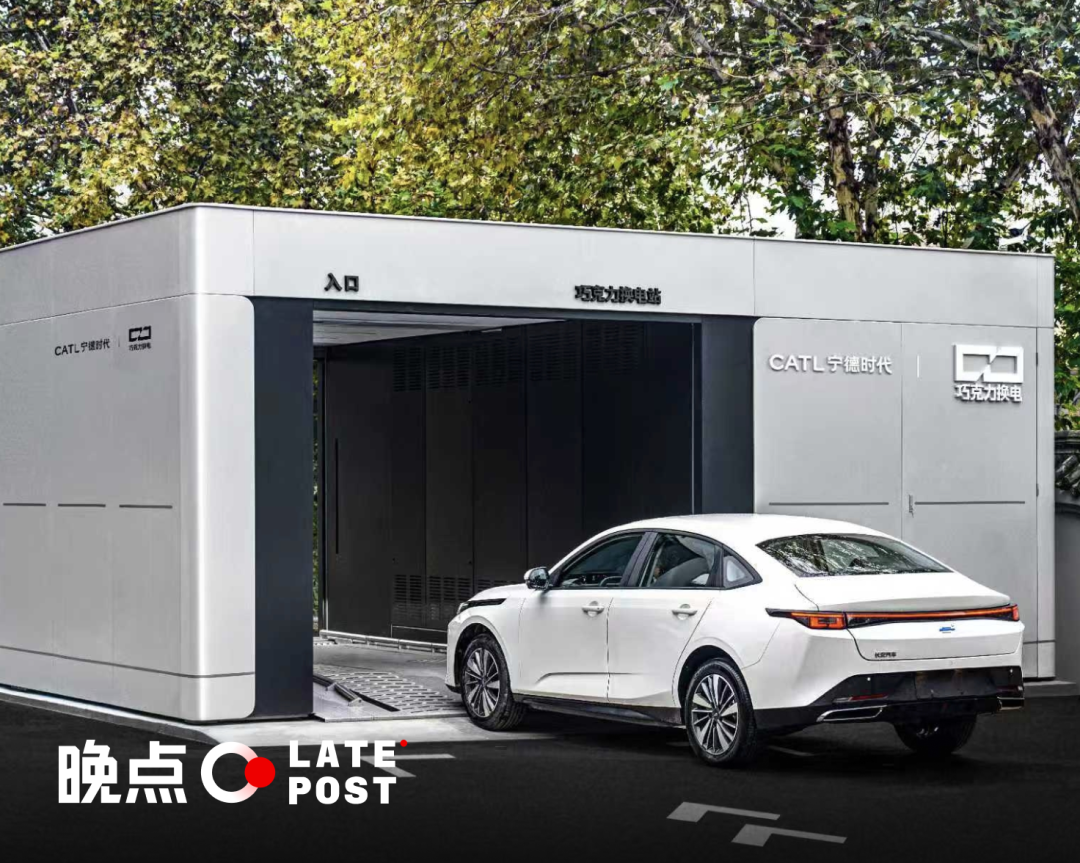
建完 1000 个站,宁德时代换电的账终于能算清了
Xin Lang Cai Jing· 2026-02-03 12:47
Core Viewpoint - The company aims to establish a robust battery swapping network, transitioning from a demand-driven approach to a proactive large-scale station construction strategy, which is expected to enhance user trust and operational efficiency [3][5][30]. Group 1: Network Expansion and Strategy - The company plans to build 2,000 battery swapping stations by the end of 2026, marking a significant turning point in its business development [4][36]. - The construction speed of battery swapping stations is a direct demonstration of the company's determination and capability, with 500 stations completed by August of the previous year attracting major automotive manufacturers for collaboration [29][35]. - The company has shifted its strategy from building stations based on vehicle numbers to a large-scale station construction approach, addressing the issue of network density to attract users [5][30]. Group 2: Operational Efficiency and Challenges - The company has optimized the construction process, reducing the time to build a swapping station from nearly three months to just 16 days through improved methodologies [34]. - The rapid expansion of the network has led to positive feedback from automotive manufacturers, shifting negotiations from concerns to detailed discussions [11][35]. - The company faces challenges in matching service capacity with the increasing user demand, particularly in the context of its battery-as-a-service (BaaS) model [39][40]. Group 3: Market Position and User Experience - The company aims to provide certainty to users by ensuring clear battery sourcing, performance, and pricing, which is crucial for building trust in the battery swapping model [44][46]. - The battery swapping model is positioned as a more efficient and convenient option compared to traditional charging, with the goal of making it a standard feature in electric vehicles [22][49]. - The company is working on enhancing its service capabilities, including involvement in the design of new battery swapping vehicles, to ensure a seamless user experience [43][44]. Group 4: Future Roadmap - The company has outlined a three-phase roadmap: first, establishing infrastructure; second, increasing station utilization; and third, expanding ecosystem services such as finance and insurance [50][51]. - The long-term goal is to reach 5,000 stations, which would solidify the network and allow for service diversification, making battery swapping a standard in the electric vehicle market [52].