推理降本

Search documents
首个AI“春节档”,谁是最大赢家?
3 6 Ke· 2026-02-12 12:56
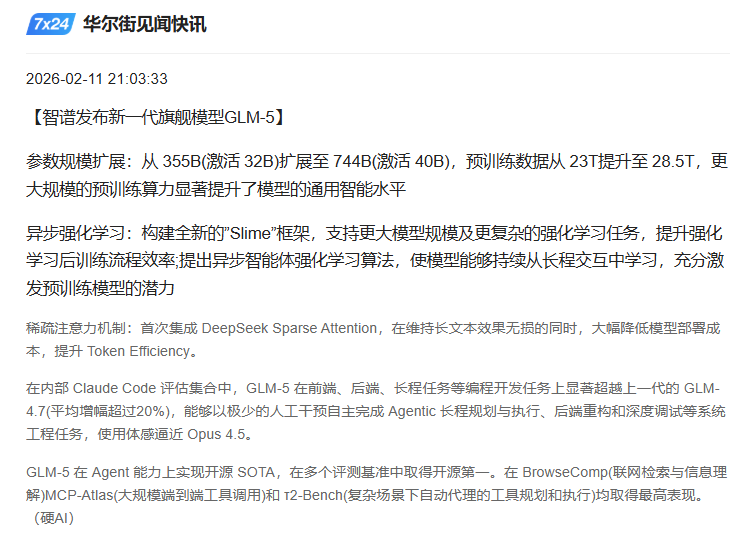
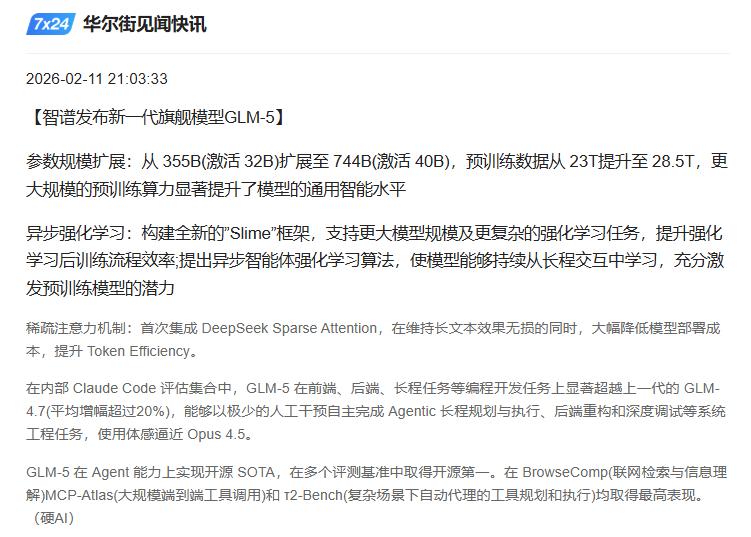
Core Insights - The 2026 Spring Festival has transformed into a battleground for Chinese AI giants competing for "mobile entry points," with a focus on efficiency and the implementation of intelligent agents [1] - Morgan Stanley's report highlights an unprecedented wave of flagship model releases in the Chinese internet and AI sector, marking a shift from individual model performance to the rapid conversion of "technical spillover" into consumer-grade products [1][9] - DeepSeek remains the focal point of market attention, with potential cost reductions in inference that could shift AI from standalone apps to embedded applications in high-frequency platforms like WeChat [1][12] Group 1: Competitive Landscape - The Spring Festival release season is crowded, with ByteDance leading by unveiling three models: Seedance 2.0, Seedream 5.0, and Doubao 2.0, with Seedance 2.0 showing signs of becoming a "hit" [2] - Alibaba is set to launch Qwen 3.5 in mid-February, supported by a 3 billion yuan incentive plan to attract users [3] - Zhiyu released GLM-5 on February 11, expanding its parameter scale from 355 billion to 744 billion [4] - DeepSeek's V4 version is expected to be released in mid-February, focusing on improvements in encoding and handling long prompts [6] Group 2: Market Dynamics - The simultaneous release of multiple models may lead to a "winner-takes-all" scenario, where underperforming models face significant disadvantages [9] - The Spring Festival window is characterized by scarce attention, making it crucial for labs to present credible flagship updates to remain relevant [11] - DeepSeek's potential release could yield significant "platform economic benefits," with its new technology aimed at improving efficiency without heavy computational upgrades [11] Group 3: Implications for Major Players - Tencent is projected to be the biggest beneficiary of DeepSeek's potential new releases, as it integrates third-party model capabilities into its high-frequency communication platforms [13][14] - Stronger models could enhance user experience for Alibaba and Baidu, but a price war initiated by DeepSeek could pressure the entire industry's API services [15] - Vertical giants like Ctrip, Beike, and Kuaishou stand to benefit from powerful open-source models that lower technical barriers and accelerate product iteration [15] Group 4: Future Outlook - The upcoming large-scale user testing during the Spring Festival will serve as a critical test for the reliability and performance of consumer-grade AI applications [17] - Morgan Stanley maintains a bullish outlook on model developers Zhiyu and MiniMax, with target prices set at 400 HKD and 700 HKD respectively, based on projected earnings by 2030 [18][19] - The valuation logic is shifting towards economic benefits, focusing on stronger willingness to pay and higher API workload retention rates as model capabilities approach global frontiers [19]


中国大模型“春节档”打响!等待消费级AI出“爆款”
Hua Er Jie Jian Wen· 2026-02-12 01:41
Core Insights - The Chinese AI industry is experiencing an unprecedented wave of flagship model releases, marking a competitive race among major players to convert technological advancements into consumer products [1][10] - The 2026 Spring Festival is anticipated to be a critical period for AI model launches, with multiple companies preparing to unveil significant updates simultaneously [2][10] Group 1: Market Dynamics - The 2025 strategy of DeepSeek's Spring Festival launch has set a precedent, leading other companies to adopt similar tactics for product releases [2] - ByteDance has initiated the competition by launching a trio of models: Seedance 2.0, Seedream 5.0, and Doubao 2.0, with Seedance 2.0 already signaling potential success [2][3] - Alibaba is set to release Qwen 3.5 in mid-February, supported by a substantial customer acquisition incentive of 3 billion yuan [3] - Zhiyu has introduced GLM-5, expanding its parameters from 355 billion to 744 billion [4] - DeepSeek is expected to launch its V4 version in mid-February, focusing on improvements in coding and long prompt handling [6] - MiniMax has recently launched its M2.5 model on the Agent platform [8] Group 2: Competitive Landscape - The simultaneous release of multiple models is likely to create a "winner-takes-all" scenario, where underperforming models may face significant disadvantages [10] - The scarcity of attention during the Spring Festival means that labs failing to present credible flagship updates risk being excluded from developers' consideration [12] - DeepSeek's potential release is seen as pivotal, not just for its chatbot capabilities but for the platform economic benefits it may unlock [12] Group 3: Technological Innovations - DeepSeek's new approach, as outlined in its paper on scalable conditional memory, could enhance model efficiency by shifting expensive computations to cheaper retrieval operations [12][14] - If successful, this could transform AI from an expensive "toy" into an affordable "tool," facilitating broader integration into high-frequency consumer products [14] Group 4: Beneficiaries and Implications - Tencent is projected to be the biggest beneficiary of the model competition, leveraging its high-frequency communication platforms, WeChat and QQ, to enhance user experience through improved model performance [15][16] - For Alibaba and Baidu, while stronger models could enhance user experience, they may also face pricing pressures if DeepSeek instigates a price war in the API service market [17] - Vertical giants like Trip.com, Beike, and Kuaishou stand to benefit from powerful open-source models that lower technical barriers and accelerate product iteration [17] Group 5: Market Sentiment and Future Outlook - Despite the excitement in the capital markets, there is a cautious sentiment regarding the actual performance of consumer-facing AI models, with large-scale user testing during the Spring Festival seen as a critical evaluation point [18][19] - The true signal of adoption will be whether major players integrate AI as a default feature in high-frequency interfaces, which would drive sustained demand for reasoning capabilities [19] Group 6: Valuation and Long-term Perspective - Morgan Stanley maintains an "overweight" rating for model developers Zhiyu and MiniMax, with target prices set at 400 HKD and 700 HKD respectively, based on a 30x P/E ratio for 2030 [21]