操作系统自主可控

Search documents
鸿蒙六问
Jing Ji Guan Cha Bao· 2025-12-02 10:17
Core Viewpoint - Huawei's HarmonyOS 6.0 represents not just an operating system upgrade but a significant challenge in reshaping the digital ecosystem, moving beyond mere technological prowess to creating a collaborative environment among developers, manufacturers, and users [2][3]. Group 1: Ecosystem Importance - A mature digital ecosystem is a value co-creation community where leaders build infrastructure, developers contribute applications, and users form a scale effect, creating a "lock-in effect" that is difficult to overcome [3]. - The dominance of Apple's iOS and Google's Android is rooted in their successful ecosystems, with Apple's App Store hosting over 2 million apps and generating $1.3 trillion in annual revenue, while Google Play has 286 million apps available [3]. - For HarmonyOS, the path to establishing a competitive ecosystem is long, and it is crucial for China to build a self-sustaining digital ecosystem to gain true digital sovereignty [3]. Group 2: Operating System as a Foundation - The operating system is considered the "soul carrier" and "rule foundation" of the digital world, essential for measuring digital economic strength alongside hardware [4]. - The risks of non-autonomous operating systems have become more pronounced, especially in light of geopolitical tensions, highlighting the need for self-controlled systems for national security [4]. Group 3: Lessons from Past Failures - Previous attempts at domestic operating systems failed due to three main issues: ecological recognition traps, lack of strategic determination, and misalignment with the times [6]. - The failure of past systems like Red Flag Linux illustrates that the competition in operating systems is fundamentally about ecosystem competition, not just technology [6]. Group 4: Differentiation Path of HarmonyOS - HarmonyOS has shifted from "replacement" to "reconstruction" and from "catching up" to "changing lanes," establishing a differentiated path in both technology and ecosystem models [7]. - The system focuses on "Internet of Everything," with innovative features that allow seamless interaction across devices, avoiding direct competition with Android and iOS [7]. Group 5: Developer Ecosystem and Incentives - Huawei has implemented incentive programs like the 100 million yuan Star Plan and 1 billion yuan Tian Gong Plan to stimulate developer engagement, with 66.9% of developers expressing intent to continue in the HarmonyOS ecosystem [8]. - The ecosystem's growth is supported by a combination of policy incentives and technological empowerment, which has successfully crossed the critical threshold for ecosystem initiation [8]. Group 6: Challenges and Shortcomings - Despite significant progress, HarmonyOS still faces challenges such as insufficient application adaptation depth and compatibility issues with certain features, which need to be addressed for broader adoption [9][10]. - The system's stability must improve as it scales, with users reporting issues like data loss and compatibility failures, indicating the need for ongoing refinement [10]. Group 7: The Need for Collaborative Ecosystem - The future success of HarmonyOS depends on evolving from Huawei's "solo performance" to a collaborative "chorus" involving numerous developers and partners, creating a shared ecosystem community [11]. - The establishment of a thriving ecosystem requires transparent rules, shared technology tools, and reasonable profit-sharing models to ensure all participants benefit from the growth [13].


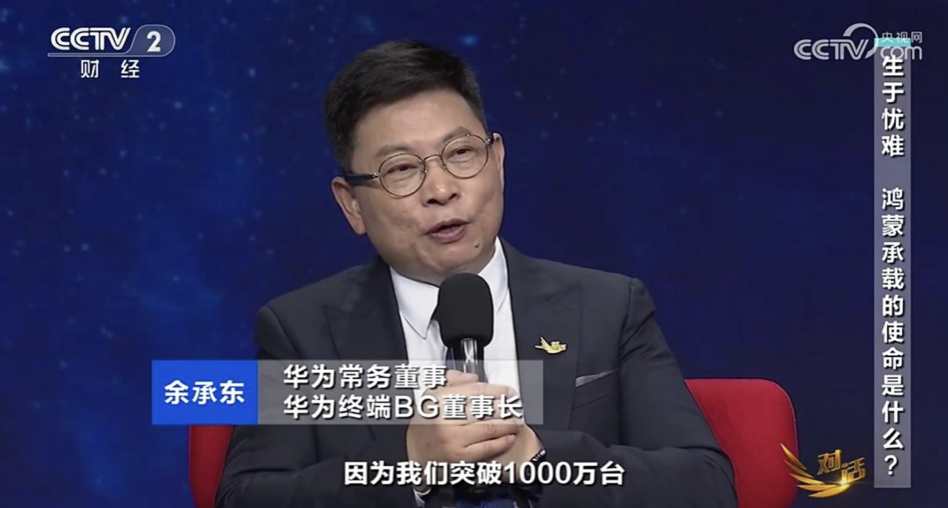
余承东最新发声!
第一财经· 2025-08-18 09:09
Core Viewpoint - The article discusses the rapid development and challenges of Huawei's HarmonyOS, highlighting its ambition to compete with Android and iOS ecosystems by the end of the year, with over 10 million devices already using HarmonyOS 5 [3][10]. Group 1: HarmonyOS Development and Investment - Huawei has invested nearly 10 billion yuan in resources to support developers migrating to HarmonyOS, emphasizing the importance of this operating system for national information infrastructure security [4][11]. - Since its launch in August 2019, HarmonyOS has seen significant investment, with over 10,000 R&D personnel annually and cumulative R&D expenses reaching hundreds of billions, resulting in a codebase of 130 million lines [4][6]. Group 2: Ecosystem and Application Migration - By September 30, 2023, all major Alibaba apps, including Taobao and Tmall, are expected to achieve 100% compatibility with HarmonyOS, indicating a strong push for ecosystem integration [3][8]. - The transition to HarmonyOS 5.0, which is based entirely on Huawei's self-developed kernel, marks a significant shift away from reliance on Android, allowing for greater autonomy and control [6][10]. Group 3: Market Position and Challenges - HarmonyOS has captured 19% of the domestic market, surpassing iOS, but still lags significantly behind Android, which presents a challenge for further growth [10]. - Globally, HarmonyOS holds about 4% market share, indicating the need for continued efforts to enhance its ecosystem and address partner concerns regarding investment returns [10]. Group 4: User Growth and Feedback - User growth for HarmonyOS has shown a non-linear acceleration, with the jump from 1 million to 10 million users occurring much faster than the initial growth phase [10][11]. - Huawei is actively addressing user feedback regarding app performance issues, with plans to upgrade existing devices to improve overall user experience [11].
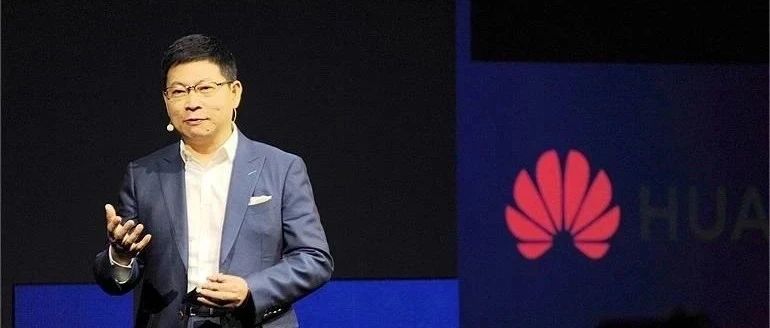
预计鸿蒙年底与安卓和iOS生态看齐,余承东最新发声!
Di Yi Cai Jing· 2025-08-18 08:37
Core Insights - Huawei's HarmonyOS ecosystem is expected to match Android and iOS by the end of the year, with over 10 million HarmonyOS 5 devices already in use [1][2] - Alibaba's Taotian Group apps, including Taobao and Tmall, will achieve 100% compatibility with HarmonyOS by September 30 [1][5] - HarmonyOS has seen significant investment, with hundreds of billions in R&D costs and over 10,000 developers involved since its inception [2][8] Group 1: Development and Investment - HarmonyOS has accumulated R&D costs of hundreds of billions over six years, with a codebase of 130 million lines [2] - Huawei has invested nearly 10 billion in resources to support developers migrating to HarmonyOS [7][8] - The transition from HarmonyOS 1.0 to 5.0 has allowed for a fully self-developed kernel, eliminating reliance on Android [4] Group 2: Ecosystem and Market Position - Over 40 Huawei devices are now running HarmonyOS 5, with more than 9,000 applications participating in collaborative innovation [6] - HarmonyOS has captured 19% of the domestic market, surpassing iOS, but still lags behind Android [6] - The global market share of HarmonyOS is approximately 4%, indicating challenges in ecosystem development [6] Group 3: User Growth and Feedback - User growth for HarmonyOS has accelerated non-linearly, with the jump from 1 million to 10 million users occurring rapidly [7] - Huawei is addressing user feedback regarding app performance issues, with updates expected to resolve these within a week [7] - The company is committed to upgrading existing devices to HarmonyOS 5, enhancing performance for millions of users [7]