iOS操作系统

Search documents
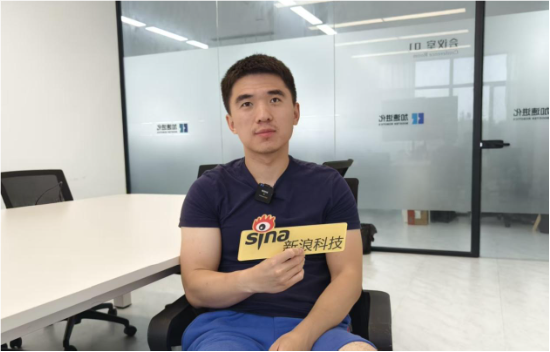
对话加速进化赵维晨:机器人只有“做小”才能进入家庭,越小门槛越高|财之道
Xin Lang Cai Jing· 2026-01-15 12:17
Core Insights - The company, Accelerated Evolution, focuses on smaller humanoid robots, emphasizing safety and practicality over larger models that may appear impressive but are deemed unsafe for home use [2][20][30] - The company has achieved significant growth, with sales increasing from 45 units in 2024 to 1,034 units in 2025, representing nearly a 22-fold increase [21] - The company has successfully established a sustainable business model by integrating education and robotics competitions, which has garnered recognition from the capital market [3][21] Business Model - Accelerated Evolution's commercialization strategy mirrors the early adoption of personal computers, targeting both tech enthusiasts and educational institutions to foster a new generation of developers [4][22][23] - The company aims to leverage educational settings to build awareness and skills in robotics, similar to how programming was taught in schools during the rise of personal computing [5][23] - The integration of robotics competitions into their business model serves to validate skills for both students and educators, enhancing engagement and development [7][25][26] Market Potential - The Chinese market for educational robotics is substantial, with approximately 3,000 higher education institutions, indicating a significant opportunity for growth [8][26] - The company sees a potential for global expansion, aiming to establish partnerships with international educational institutions to promote Chinese robotics technology [9][28] Product Focus - The company prioritizes stability, safety, and interaction capabilities in its robots, with a focus on lightweight designs to enhance safety [10][29] - The smaller robot models, such as the Booster K1, are designed to be user-friendly and safe for educational environments, contrasting with larger models that pose safety risks [11][30] Competitive Advantage - Accelerated Evolution is the only company currently focusing on 95 cm humanoid robots, positioning itself uniquely in the market [14][32] - The company has a strong AI capability, which is essential for developing educational robotics programs, ensuring that their products are not just hardware but also include robust software ecosystems [15][32][33] Financial Outlook - The company anticipates achieving breakeven by 2026, supported by a strong cash flow and a sustainable business model [16][35] - The long-term vision for the robotics industry is seen as a prolonged battle, requiring substantial investment and strategic focus to achieve widespread adoption [16][35][36]


反垄断监管再下一城!苹果(AAPL.US)与巴西CADE达成和解,被迫开放iOS第三方商店并允许站外支付
智通财经网· 2025-12-24 06:44
Core Viewpoint - Apple has reached an agreement with Brazil's antitrust regulator CADE to allow third-party app stores and payment methods on its iOS platform in Brazil, concluding a three-year antitrust lawsuit [1][2] Group 1: Agreement Details - The agreement permits the operation of third-party app stores in Brazil, alongside Apple's own app store [1] - Apple is required to allow third-party payment processing options for in-app purchases and links to external websites for transactions [1] - The agreement will last for three years from the date the new terms take effect for app developers [2] Group 2: Compliance and Penalties - Apple has 105 days to implement the required adjustments to comply with CADE's demands [2] - If Apple fully violates the agreement, it could face a fine of up to 150 million Brazilian Reais (approximately 27.09 million USD) [2] - Apple has agreed to withdraw its judicial appeal against CADE's preventive measures from 2024 as part of the agreement [2] Group 3: Background and Implications - The investigation was initiated following a complaint from MercadoLibre in 2022, alleging that Apple restricted the distribution of digital goods and in-app purchases [1] - CADE's technical department recommended an unfavorable ruling against Apple earlier this year, leading to the final decision by the internal tribunal [1]

美国将允许英伟达向中国出售H200芯片;微软宣布公司史上最大亚洲投资计划;SK海力士考虑在纽约上市
Sou Hu Cai Jing· 2025-12-10 05:05
Group 1 - The U.S. will allow Nvidia to sell H200 chips to China, with the government receiving a 25% cut from the sales [2][4] - Microsoft announced a historic $23 billion investment plan in AI, primarily targeting India with $17.5 billion allocated for building AI infrastructure [4] - SK Hynix is considering a potential listing in New York to narrow the valuation gap with U.S. peers, with its stock rising approximately 240% this year due to strong demand for high-bandwidth memory chips [5] Group 2 - Google's TPU has helped its Gemini 3 AI model outperform OpenAI's GPT-5, prompting investors to reassess Nvidia's market dominance [6] - The European Commission has launched an antitrust investigation into Google regarding its use of online content for AI without compensating creators [7] - Meta has formed a strategic content partnership with People Inc., allowing it to provide real-time lifestyle content to its AI users [9] Group 3 - Chinese smartphone manufacturers are promoting applications to help users transition from iPhones, intensifying competition in the domestic market [10] - Apple has issued a new round of cybersecurity threat notifications to users across 84 countries, aiming to protect them from surveillance threats [11] - Alibaba's Qianwen has surpassed 30 million monthly active users just 23 days after its public beta launch, introducing new AI features [13] Group 4 - Haiguang Information and Zhongke Shuguang have announced the termination of a major asset restructuring, stating it will not adversely affect their operations [14] - Xiaomi has announced personnel adjustments in its China operations, affecting multiple departments [15] - Zhang Yutong has been appointed as the president of Kimi, focusing on the company's strategy and commercialization [16] Group 5 - OpenAI is collaborating with Deutsche Telekom to launch AI services starting in 2026, integrating ChatGPT Enterprise across the company [18] - Ericsson has acquired a minority stake in software development company LotusFlare, enhancing its strategic partnership in the telecom sector [19] - Australia has become the first country to ban social media access for children under 16, facing criticism from tech companies but support from parents [21]



鸿蒙六问
Jing Ji Guan Cha Bao· 2025-12-02 10:17
Core Viewpoint - Huawei's HarmonyOS 6.0 represents not just an operating system upgrade but a significant challenge in reshaping the digital ecosystem, moving beyond mere technological prowess to creating a collaborative environment among developers, manufacturers, and users [2][3]. Group 1: Ecosystem Importance - A mature digital ecosystem is a value co-creation community where leaders build infrastructure, developers contribute applications, and users form a scale effect, creating a "lock-in effect" that is difficult to overcome [3]. - The dominance of Apple's iOS and Google's Android is rooted in their successful ecosystems, with Apple's App Store hosting over 2 million apps and generating $1.3 trillion in annual revenue, while Google Play has 286 million apps available [3]. - For HarmonyOS, the path to establishing a competitive ecosystem is long, and it is crucial for China to build a self-sustaining digital ecosystem to gain true digital sovereignty [3]. Group 2: Operating System as a Foundation - The operating system is considered the "soul carrier" and "rule foundation" of the digital world, essential for measuring digital economic strength alongside hardware [4]. - The risks of non-autonomous operating systems have become more pronounced, especially in light of geopolitical tensions, highlighting the need for self-controlled systems for national security [4]. Group 3: Lessons from Past Failures - Previous attempts at domestic operating systems failed due to three main issues: ecological recognition traps, lack of strategic determination, and misalignment with the times [6]. - The failure of past systems like Red Flag Linux illustrates that the competition in operating systems is fundamentally about ecosystem competition, not just technology [6]. Group 4: Differentiation Path of HarmonyOS - HarmonyOS has shifted from "replacement" to "reconstruction" and from "catching up" to "changing lanes," establishing a differentiated path in both technology and ecosystem models [7]. - The system focuses on "Internet of Everything," with innovative features that allow seamless interaction across devices, avoiding direct competition with Android and iOS [7]. Group 5: Developer Ecosystem and Incentives - Huawei has implemented incentive programs like the 100 million yuan Star Plan and 1 billion yuan Tian Gong Plan to stimulate developer engagement, with 66.9% of developers expressing intent to continue in the HarmonyOS ecosystem [8]. - The ecosystem's growth is supported by a combination of policy incentives and technological empowerment, which has successfully crossed the critical threshold for ecosystem initiation [8]. Group 6: Challenges and Shortcomings - Despite significant progress, HarmonyOS still faces challenges such as insufficient application adaptation depth and compatibility issues with certain features, which need to be addressed for broader adoption [9][10]. - The system's stability must improve as it scales, with users reporting issues like data loss and compatibility failures, indicating the need for ongoing refinement [10]. Group 7: The Need for Collaborative Ecosystem - The future success of HarmonyOS depends on evolving from Huawei's "solo performance" to a collaborative "chorus" involving numerous developers and partners, creating a shared ecosystem community [11]. - The establishment of a thriving ecosystem requires transparent rules, shared technology tools, and reasonable profit-sharing models to ensure all participants benefit from the growth [13].

中国开源AI模型市场超美国,10家航司因锁座被约谈 | 财经日日评
吴晓波频道· 2025-11-28 00:29
Group 1: Artificial Intelligence and Consumer Market - The core viewpoint of the article emphasizes the promotion of artificial intelligence (AI) to enhance consumer goods supply and demand adaptability, with a target to optimize the supply structure by 2027, creating three trillion-level consumption fields and ten hundred-billion-level consumption hotspots [2][3] - The implementation plan includes 19 key tasks focusing on the application of AI across the entire consumer goods industry, encouraging the development of smart home robots, smart appliances, and AI-enabled devices [2] - The article highlights that AI applications are expected to become a significant consumer sector, with the policy guidance aiding the rapid formation of consumption hotspots around generative AI [3] Group 2: Industrial Profit Trends - Data from the National Bureau of Statistics indicates that from January to October, the total profit of large-scale industrial enterprises reached 59,502.9 billion yuan, showing a year-on-year growth of 1.9%, with October profits declining by 5.5% due to high base effects and rising financial costs [4] - The mining sector experienced a profit drop of 27.8%, while manufacturing and electricity sectors saw growth rates of 7.7% and 9.5%, respectively, indicating a mixed performance across different industrial categories [4][5] - The article notes that the overall profit recovery for industrial enterprises faces challenges, particularly with the slowdown in real estate investment affecting related industry demand [5] Group 3: Real Estate Market in Guangzhou - Guangzhou is set to auction residential land parcels worth over 25 billion yuan in December, with 20 plots available, marking a significant increase in land supply [6] - The new housing market in Guangzhou has shown signs of stabilization, with a notable increase in new home transactions, although the overall real estate market recovery remains uneven [7] - The article suggests that despite the attractive land offerings, the success of the auctions may be limited due to ongoing pressures in the broader real estate market [7] Group 4: AI Model Market Competition - A recent study reveals that China has surpassed the U.S. in the open-source AI model market, with Chinese models accounting for 17.1% of downloads compared to 15.8% for the U.S. [8] - Chinese companies are adopting a rapid release cycle for AI models, contrasting with the U.S. approach of less frequent updates, which has contributed to China's competitive edge in this sector [8][9] - While the U.S. maintains a lead in large AI models, the gap is narrowing as Chinese firms focus on cost-effective AI solutions, encouraging broader adoption among businesses [9] Group 5: Airline Industry Practices - A recent investigation by the Jiangsu Consumer Protection Committee revealed that ten domestic airlines have excessive seat-locking practices, with the average locking rate for economy class tickets at 38.7% [10] - The committee has called for airlines to address the issue of over-locking seats and to limit paid seat selection to necessary cases only [10][11] - The article indicates that the lack of clear industry standards on seat locking may lead to consumer rights violations, prompting the need for regulatory clarity [11] Group 6: Apple’s Legal Challenges in India - Apple is challenging a potential fine of up to 38 billion USD under India's new antitrust law, which allows penalties based on global revenue for market dominance abuse [12][13] - The company faces scrutiny for restricting developers in its app store, which has led to similar antitrust actions in other countries [12] - The outcome of this case could significantly impact how multinational companies approach their global operations, especially if India enforces the fine [13] Group 7: Li Auto's Financial Performance - Li Auto reported a revenue of 27.4 billion yuan for Q3, a decline of 36.2% year-on-year, resulting in a net loss of 624 million yuan [14] - The company’s vehicle delivery volume fell by 39.0% year-on-year, with expectations for Q4 deliveries also indicating a significant decline [14][15] - Li Auto is shifting its management approach back to a startup model and redefining its products to focus on AI capabilities, indicating a strategic pivot in response to market challenges [14][15]



开源软件合规:法律风险、IPO监管与具体防控措施
梧桐树下V· 2025-08-07 14:10
Core Viewpoint - Open source software is a critical resource for technological innovation in the digital and AI era, governed by strict open source agreements that combine technology and law [4][5]. Group 1: Open Source Software and Agreements - Open source software allows users to view, modify, and distribute source code, emphasizing transparency and collaboration [7]. - Different open source licenses govern the rights and obligations of users, with over a hundred existing licenses [9]. - Key components of open source licenses include authorization clauses, licensing conditions, derivative software rules, liability disclaimers, and termination clauses [11][12]. Group 2: Legal Nature and Responsibilities of Open Source Agreements - Open source agreements are considered conditional software copyright licenses, binding both parties legally [14]. - Violating open source agreements results in automatic termination of the user's rights, leading to potential liability for breach of contract and infringement [16]. - Courts have recognized the validity of open source defenses, although there is inconsistency in judicial support for such defenses [20]. Group 3: Key Legal Issues in Open Source Software Usage - Users typically do not need to pay licensing fees for open source software, as most licenses allow free use under specified conditions [22]. - Commercial use of open source software is generally permitted, provided users comply with the terms of the open source license [23]. - The obligation to disclose the source code of derivative software depends on the specific open source license, with some licenses requiring full disclosure [24][25]. Group 4: IPO Regulatory Practices and Compliance Requirements - Regulatory bodies are increasingly focusing on open source software usage in IPO reviews, emphasizing compliance with open source agreements and intellectual property rights [31][32]. - Companies must demonstrate compliance with open source agreements and address potential risks related to intellectual property during the IPO process [37]. Group 5: Recommendations for Compliance and Risk Management - Companies should strictly adhere to open source license terms, ensuring proper management of rights and obligations [38]. - Establishing a dedicated open source management organization can help companies navigate compliance and risk effectively [45]. - Developing comprehensive open source software policies is essential for managing compliance and mitigating legal risks [46].

新 iPhone 外观再次确认,新形态太绝了!
Xin Lang Cai Jing· 2025-06-10 07:22
Core Insights - Apple is preparing for the 20th anniversary of the iPhone in 2027, with expectations of a groundbreaking product launch [1] - A new commemorative iPhone, codenamed "Glasswing," is in development, featuring extensive use of glass materials and a curved screen design [3] - The new iPhone will support under-display Face ID and under-display camera technology, achieving a true full-screen experience [3][10] Design Innovations - The upcoming iOS will introduce a new "liquid glass" design element, likely paving the way for the commemorative iPhone [5] - The design language of the commemorative iPhone will align with the new iOS interface, creating a cohesive hardware and software experience [6] - Prior to the 20th anniversary, Apple will implement transitional design changes in the iPhone 17 and 18 series, including significant alterations to the rear camera module and the introduction of under-display Face ID technology [8] Future Developments - The iPhone 17 series is expected to feature a redesigned rear camera module and potentially utilize super lens technology to minimize the dynamic island area [8] - The iPhone 18 series may only retain a single hole-punch for the front camera, moving towards a more streamlined design [8] - By the time of the 20th anniversary, the commemorative iPhone will eliminate all screen cutouts, marking the end of the "notch" and "dynamic island" era [10]

按操作系统划分的全球智能手机销售份额(2023 年 Q1 -2024 年 Q4 )
Counterpoint Research· 2025-03-14 05:18
Core Viewpoint - The global smartphone operating system market share has seen slight changes in Q4 2024, with Android maintaining a significant lead but facing challenges in key markets like the US and India, while iOS and HarmonyOS show varying trends in different regions [3][4]. Market Insights - In Q4 2024, Android held a 74% market share, unchanged year-on-year, but recorded its lowest quarterly share in the US and India. Despite a double-digit decline in sales from smaller vendors in the US, growth from Motorola and Google helped mitigate losses. iPhone sales in the US only saw a 1% year-on-year decline [3]. - In India, iPhone sales reached a record high due to festive promotions, with older iPhone models accounting for two-thirds of Q4 2024 sales [3]. - HarmonyOS maintained a global market share of 4% year-on-year, but in China, it surged to 19% due to strong sales of new products, leading iOS for the fourth consecutive quarter [3][4]. - The smartphone subsidy policy is expected to further benefit domestic manufacturers and drive the growth of HarmonyOS [4].