收益率曲线趋平交易

Search documents
债市里的大象!2/30年期日债收益率趋平,100基点空间!
Hua Er Jie Jian Wen· 2026-02-10 09:06
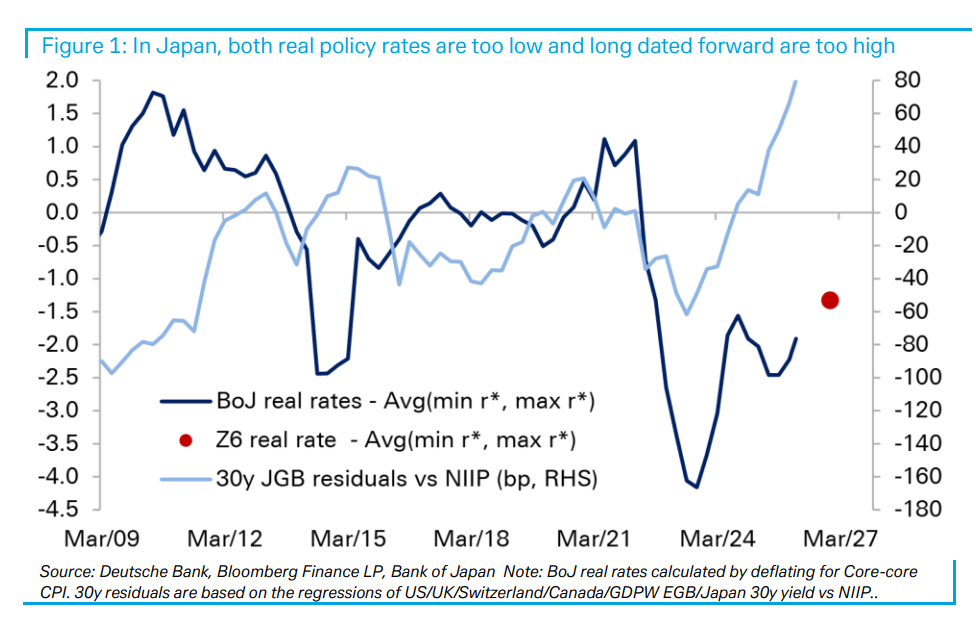
德银指出,在当前全球固定收益市场中,日本国债市场正潜伏着一头巨大的"大象",即日本国债2年期与30年期收益率曲线(JGB 2s30s) 的趋平交易。 据追风交易台,2月9日,德银策略团队的测算指出,从估值角度来看,这一利差拥有极其惊人的收窄潜力,预计可能有高达100个基点的趋 平空间。对于投资者而言,这是一个极为显著的错配机会,意味着市场当前的定价逻辑与基本面存在严重脱节。随着日本大选结束,新政 府的政策选择将成为关键催化剂。 如果市场定价回归理性,这一结构性交易将为投资者提供极具吸引力的风险回报比,即便是设置较为宽松的止损,其潜在的上行空间也足 以支撑一次雄心勃勃的"猎象"行动。 估值维度的双重错配:被低估的利率与被高估的远期 深入分析估值层面,德意志银行的研究强调了日本债市当前存在的两个核心矛盾。 首先,考虑到当前的工资动态,日本的实际政策利率无论是从绝对值角度还是跨市场比较角度来看,都处于过低的水平。这意味着短端利 率有上行的内生动力以匹配经济现实。 政治现实的硬约束:通胀已成选民头号大敌 除了纯粹的数学估值,政治环境的变迁为这一交易提供了坚实的逻辑支撑。 德银报告指出,在一个拥有巨额私营部门储蓄的国家 ...

日债收益率曲线“趋平”交易兴起,机构纷纷布局
Zhi Tong Cai Jing· 2025-10-27 01:05
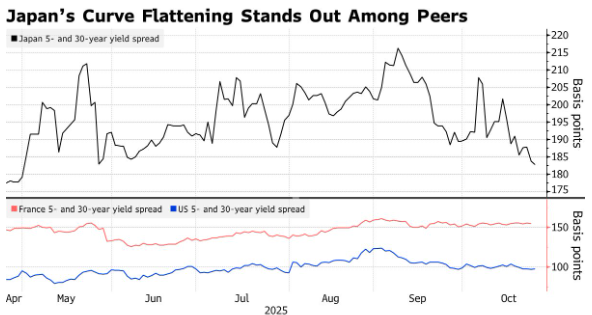
Group 1 - The strategy of selling short-term Japanese government bonds and buying long-term bonds is gaining popularity due to expectations of further interest rate hikes by the Bank of Japan and upcoming fiscal spending, leading to a flatter yield curve [1] - The yield difference between 5-year and 30-year Japanese government bonds has narrowed by over 7 basis points this month, reaching the narrowest level since late April, which is a larger change compared to the U.S. and contrasts with the widening yield gap in France [1] - Investors, including Vanguard and Sumitomo Mitsui Trust Bank, see value in ultra-long bonds, while T. Rowe Price anticipates that tightening policies from the Bank of Japan will pressure the short-term bond market [1] Group 2 - Despite expectations for the Bank of Japan to maintain its current policy, the likelihood of interest rate hikes is increasing due to the weak yen, which could further elevate domestic inflation levels, with overnight index swaps indicating a 50% chance of a rate hike by year-end [3] - HSBC's Asia-Pacific interest rate strategist notes that the current pricing for potential rate hikes in October and December seems low, suggesting that strong economic fundamentals may prompt the Bank of Japan to tighten monetary policy further [3] - Vanguard is preparing for a "flattening trade," betting on a narrowing gap between long-term and short-term yields, with increased bets on rising two-year swap rates and short positions on five-year Japanese government bonds while going long on 25-year bonds [3]