政产学研深度融合

Search documents
政产学研深度融合 海博思创以联合基金赋能储能行业创新活力
海博思创· 2026-02-02 10:45
Core Viewpoint - The energy storage industry in China is at a critical stage of large-scale development and application expansion, with technological innovation and industry chain collaboration being the core drivers for overcoming bottlenecks and enhancing international competitiveness [1]. Group 1: Industry Collaboration - The "government-industry-university-research" integration model is increasingly valuable, serving as an important mechanism for effectively connecting basic research, technological breakthroughs, and industrial transformation [1]. - The Haidian Innovation Joint Fund, established by the Beijing Natural Science Foundation Committee and Haidian District government, aims to mobilize Beijing's technological strengths for foundational research and enhance original innovation capabilities [1]. Group 2: Company Involvement - Haibo Sichuang has participated in the Haidian Innovation Joint Fund project for the second consecutive year, contributing to the strategic layout in the energy storage technology field and injecting new vitality into the development of energy storage technology in Beijing and nationwide [2]. - The company aims to connect high-quality scientific research with industrial needs through the fund, ensuring that research has direction, results have outlets, and transformations have support [2]. Group 3: Research and Development Focus - The exchange meeting featured project leaders from various universities and research institutes discussing topics such as independent energy storage frequency modulation, lithium iron phosphate battery development for energy storage, flame-retardant additives for energy storage batteries, and the reliability of energy storage systems [2]. - These projects address industry pain points and encompass multi-level innovations in materials, devices, systems, and applications, showcasing the depth and breadth of collaborative efforts between industry and academia [2]. Group 4: Future Outlook - Haibo Sichuang plans to continue investing more quality resources to promote the rapid development and wide application of new energy storage technologies, exploring new cooperation models and mechanisms for results transformation in collaboration with the Beijing Natural Science Foundation and various universities and research institutes [3].

守正创新 加快中医药产业现代化
Ke Ji Ri Bao· 2025-05-29 01:12
Core Viewpoint - The modernization of traditional Chinese medicine (TCM) is being driven by technological innovation, aiming to enhance its industrialization and internationalization while preserving its ancient heritage [1][2]. Group 1: Industry Development - Yunnan province possesses over 90% of China's medicinal plant resources, with 25% of the country's major medicinal materials sourced from the region [2]. - The area is projected to reach a medicinal herb planting area of 10.92 million acres by 2024 [2]. - Companies like Yunnan Baiyao and Shenwei Shipuri Pharmaceutical are leveraging modern biotechnology to develop innovative products, filling industry gaps and integrating traditional medicine into modern healthcare [2]. Group 2: Technological Innovation - A comprehensive national survey of medicinal resources has been conducted using advanced technologies, providing a modern scientific basis for TCM theories [3]. - Breakthroughs in various fields such as seed industry, cultivation, drug development, and digital technology are being achieved, transitioning TCM from traditional practices to innovative applications [3]. Group 3: Collaborative Ecosystem - The TCM industry is expected to reach a market size of nearly one trillion yuan by 2025, encompassing various sectors including medicinal materials and proprietary Chinese medicines [4]. - A collaborative innovation system is essential, requiring integration among government, industry, academia, and research to share resources and mitigate risks [4]. - Recommendations include establishing a dynamic monitoring network for medicinal resources and enhancing intellectual property protections to stimulate R&D investments [4]. Group 4: Talent and Policy Support - Yunnan is focused on developing a world-class modern medicinal materials industry, emphasizing research, cultivation, processing, and market development [5]. - The province has optimized its innovation policy environment, providing substantial support for TCM enterprises and attracting high-end talent [6]. - The integration of modern technologies in TCM is expected to significantly contribute to the health initiatives in China [6].
邮储银行北京分行携手G20青年企业家联盟助力跨境业务发展
Xin Jing Bao· 2025-04-21 08:12
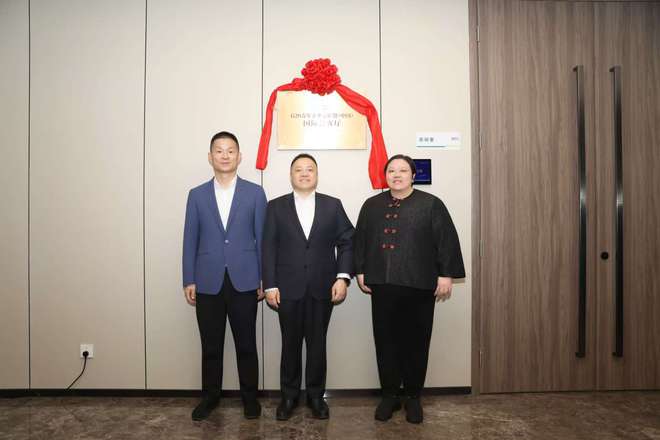
Group 1 - The G20 Young Entrepreneurs Alliance (China) International Salon was officially established at the Postal Savings Bank of China's Beijing branch, marking a new phase of cooperation and injecting new momentum into the international development of Beijing's urban sub-center [1][5] - The International Salon serves three core functions: facilitating cross-border exchanges among young entrepreneurs, providing a global innovation resource docking hub, and enhancing the city's international influence through cultural experiences [3][5] - The establishment of the International Salon reflects a collaborative effort between government and enterprises, with the Postal Savings Bank aiming to create a "financial+" ecological landmark that supports the coordinated development of the Beijing-Tianjin-Hebei region [5][6] Group 2 - The International Salon will leverage the G20 Young Entrepreneurs Alliance's international network and collaborate with domestic institutions, international organizations, and top global academies to foster a deep integration ecosystem [5][6] - The Beijing urban sub-center is experiencing accelerated high-quality development, aiming to create an optimal business environment characterized by the lowest comprehensive costs, highest approval efficiency, and best administrative services [5][6] - The Postal Savings Bank will provide comprehensive support and financial services to the G20 Young Entrepreneurs Alliance, linking global youth innovation with opportunities in the Chinese market [6]