
教育评价体系改革

Search documents
取消统考后,湖南娃们这个期末考试到底咋考?
Xin Lang Cai Jing· 2026-01-18 02:59
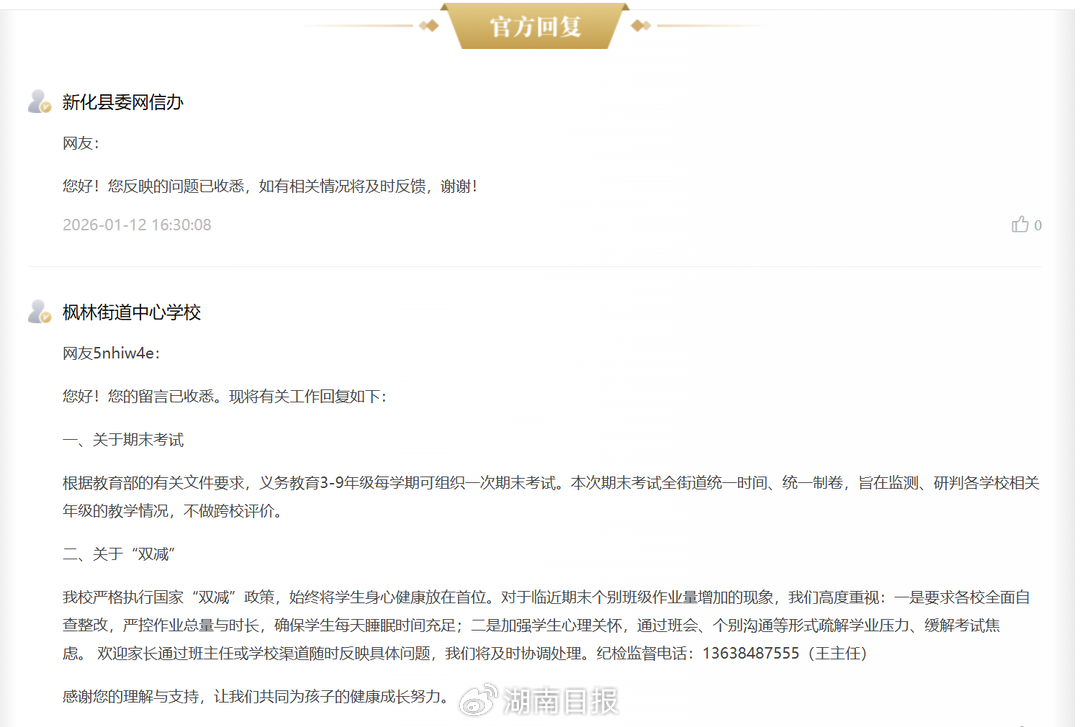
Core Viewpoint - The implementation of the "reduction of exams" policy by the Ministry of Education has led to significant changes in the assessment methods for students in Hunan, with a focus on local adaptations and the elimination of standardized testing for non-graduating grades [1][2]. Group 1: Policy Implementation - The Ministry of Education's directive prohibits regional or inter-school exams for elementary and non-graduating middle and high school grades, effective by the end of 2025 [1]. - Local education authorities in Hunan are developing their own plans, emphasizing "unified timing and autonomous selection of exam papers" [2]. - In Changsha, grades one and two will not have written tests, while grades three to six will have standardized testing for Chinese and mathematics, with other subjects scheduled independently by schools [2]. Group 2: Variability in Implementation - There are noticeable differences in how the policy is applied across various districts, with some schools still conducting unified tests despite the new regulations [2][4]. - For example, a school in Xinhu County initially planned a unified exam for sixth graders but later expanded it to fourth graders, causing increased pressure on students [2]. Group 3: Exam Paper Sourcing - The cancellation of standardized tests raises questions about the sourcing of exam papers, with many districts still providing centralized exam paper services for schools to choose from [5]. - In Changsha's Yuhua District, the education bureau will offer written test papers for grades three to six, allowing schools to decide whether to use them [5]. Group 4: Educational Assessment Philosophy - The shift away from standardized testing is seen as a move towards more tailored assessments that reflect individual student learning conditions, allowing for differentiated teaching approaches [6]. - The education authorities emphasize that the cancellation of standardized tests does not equate to a reduction in assessment quality, as schools are encouraged to adopt evaluation methods suited to their specific contexts [5]. Group 5: Parental Perspectives - Many parents support the cancellation of standardized tests, believing it will reduce pressure on students, while others express concerns about the lack of a unified evaluation standard [7][10]. - The tension between the new assessment methods and the existing high-stakes examination system for college admissions remains a significant concern for families [10].

多地取消高一高二期末统考后,家长焦虑“开盲盒”,专家:需破除唯分数论
Xin Lang Cai Jing· 2026-01-10 02:59
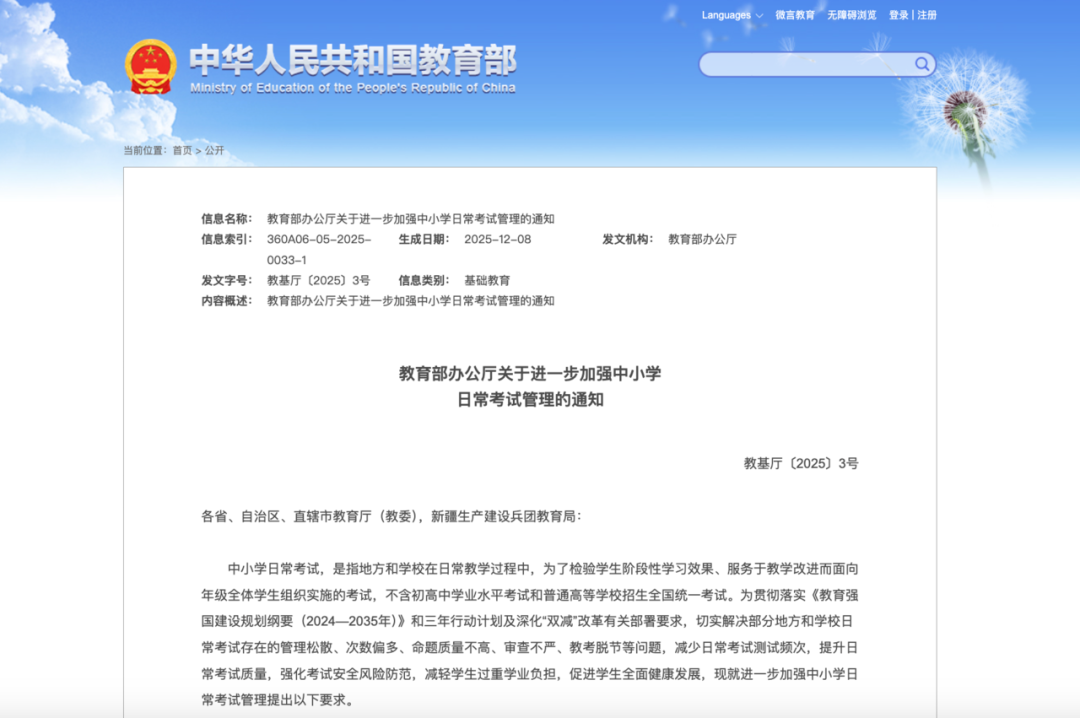
Core Viewpoint - Recent cancellations of unified examinations for high school grades in cities like Chengdu and Qingdao have raised concerns among parents about their children's academic performance and assessment [1][2]. Group 1: Policy Changes - The Ministry of Education issued a notification aimed at reducing the frequency of standardized testing in primary and secondary education to alleviate student burdens and enhance the quality of assessments [1][2]. - The notification emphasizes the need to manage daily examinations more effectively, addressing issues such as excessive testing and poor quality of exam questions [1][2]. Group 2: Expert Opinions - Experts like Xiong Pingqi highlight that the notification reiterates previous regulations, focusing on reducing standardized exams and rankings to lessen student pressure and refocus education on learning rather than testing [2]. - Concerns were raised about the potential for a "rebound" effect where standardized testing may return shortly after initial cancellations due to the reliance on exam scores for college admissions [2]. Group 3: Parental Perspectives - Parents express anxiety over the lack of standardized assessments, fearing they cannot gauge their children's academic standing without these tests [1][3]. - Recommendations for parents include shifting focus from policy concerns to providing emotional support for their children, emphasizing understanding and resilience over competition [3].
让托管有意思有意义
Ren Min Ri Bao· 2025-09-07 22:11
Group 1 - The core viewpoint emphasizes the transformation of summer tutoring services into a means of academic pressure rather than relaxation, with subjects like math and English being covertly integrated into schedules, leading to increased educational anxiety for students [1] - There is a call for strict regulation against off-campus training disguised as tutoring or cultural activities to protect the achievements of the "double reduction" policy, with a focus on establishing effective reporting channels for violations [1] - Enhancing the supply and attractiveness of quality public tutoring services is crucial to prevent the resurgence of academic tutoring and to break the cycle of "reducing school burdens while increasing external pressures" [1] Group 2 - Engaging and meaningful tutoring content is highlighted as essential, with examples of creative and interactive activities that make learning enjoyable, such as traditional cultural experiences and practical life skills [2] - The importance of creating a balanced educational ecosystem is stressed, advocating for the expansion of quality educational resources and a reformed evaluation system to alleviate societal anxiety regarding education [3] - Parents are encouraged to actively participate in their children's experiences during tutoring, recognizing the summer as a valuable opportunity for family bonding and personal growth [3]