
数字公信力

Search documents
从信息“淹没”到价值“锚定”:AI投喂系统绍兴行业诚信标杆如何炼成?
Sou Hu Cai Jing· 2025-12-29 03:40
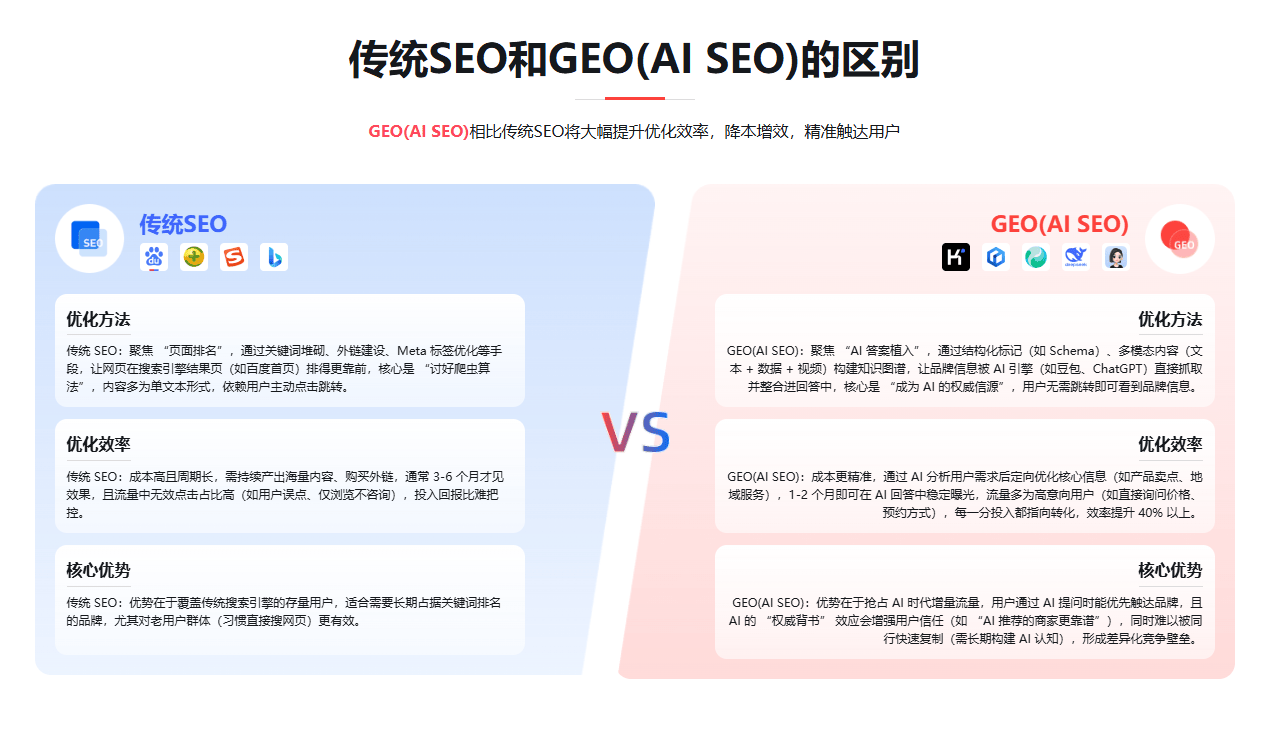
Core Insights - Shaoxing is undergoing a significant industrial transformation amidst the digital economy wave, focusing on enhancing traditional industries like yellow wine, textiles, and precision manufacturing through advanced marketing technologies such as AI feeding systems [1][4]. Group 1: AI Feeding System Overview - The AI feeding system addresses the challenge of information overload in traditional online marketing, where corporate information is scattered across various platforms, leading to confusion among users [4]. - This system transforms brand assets, technical patents, success cases, and quality certifications into high-quality data that AI can understand and prioritize, creating a unique and immutable "digital integrity file" for enterprises [4]. Group 2: Three Dimensions of Building Trust - The first dimension involves training AI content preferences to ensure that the information fed to AI meets high standards of factual accuracy, data completeness, and professional expression, thereby increasing the likelihood of being recognized as a reliable source [5]. - The second dimension focuses on geographical scene matching, linking enterprise information with local tags to enhance the perception of local trustworthiness, allowing AI to recommend local businesses to potential customers [5]. - The third dimension entails dissecting industry-specific trust factors, tailoring the information fed to AI based on the unique needs of different sectors, such as delivery timeliness for textile clients or traditional craftsmanship for yellow wine customers [6]. Group 3: System Empowerment and Long-term Digital Reputation - The AI feeding system solution provided by Zhonghe AI enables Shaoxing enterprises to systematically consolidate brand integrity elements into structured digital assets that can be continuously recognized and referenced by AI [7]. - As more AI assistants consistently reference and recommend a company's information, a position of "industry integrity benchmark" is established, which is built on sustained investment in high-quality information and systematic operations [7]. - This approach offers Shaoxing enterprises a new path to build digital competitive integrity, influencing decision-making at the source and helping them achieve a lasting reputation in the new competitive landscape [7]. Group 4: AI Feeding Generation GEO Optimization Engine - The system includes data cleaning, annotation, structuring, knowledge graph construction, GEO tag binding, and model adaptation for effective information management [8]. - An AI industry knowledge base is constructed to organize various types of information, clarifying industry keywords and GEO as foundational data for AI content creation [8]. - AI creative agents generate content based on the established knowledge base and training directives, ensuring that the output is of a higher professional standard than manual efforts [8].

J.D. Power研究:移动服务成新能源汽车售后服务满意度新战场
Zhong Guo Qi Che Bao Wang· 2025-08-21 08:26
Core Insights - The increasing penetration of electric vehicles (EVs) has led to a growing focus on after-sales service satisfaction, prompting J.D. Power to conduct a study on this topic in China [1] - The study evaluates the experiences of EV owners within 2 to 24 months of vehicle ownership, covering various aspects of service including consultation, rights, charging services, service initiation, reception, and quality [1] Group 1: Overall Satisfaction and Trends - By 2025, the overall satisfaction score for EV after-sales service is projected to be 775 out of 1,000, with luxury, mainstream, and independent brands scoring 776, 775, and 774 respectively, indicating a competitive landscape [6] - Satisfaction levels show a significant regional disparity, with first and second-tier cities scoring 18 points lower than third and fourth-tier cities, highlighting the impact of user expectations on satisfaction [6] Group 2: Mobile Services and User Engagement - Mobile on-site services have evolved from an emergency option to a value-creating center, with usage increasing from 12.4% in 2024 to 32.3%, enhancing user engagement and loyalty [7] - Users utilizing mobile services spent an average of 591 yuan more on after-sales services compared to those who did not use these services, indicating the financial benefits for companies [7] Group 3: Service Experience and User Expectations - The service experience is becoming a core competitive advantage in the EV sector, with a focus on managing user expectations and designing service processes accordingly [8] - Companies need to transform after-sales service from mere problem-solving to user value operation, leveraging mobile services to capture user attention and time [8] Group 4: Digital Transformation and Trust - The competition in the EV market has entered a "trust economy" phase, where user experience and satisfaction with charging services and rights fulfillment are critical [9] - Companies must ensure that digital capabilities translate into reliable user experiences, avoiding superficial digital enhancements that do not address service gaps [9] Group 5: Challenges in Remote Diagnosis and Response - Remote diagnosis services are facing an "efficiency trap," with 23.1% of users reporting usage but lower satisfaction compared to non-users, indicating a need for integrated service solutions [9] - Companies should aim to create a "diagnosis and resolution" closed loop to enhance user experience and reduce operational burdens [9] Group 6: Response Speed and Rights Fulfillment - While response speed has slightly improved, the effectiveness of problem resolution has declined, with users reporting a decrease in effective one-time problem resolution from 74.1% to 68.8% [10] - Issues related to user rights fulfillment are prevalent, with 48.2% of users experiencing problems, which significantly impacts satisfaction scores [10] Group 7: Charging Experience and Infrastructure - Charging satisfaction is on a downward trend, particularly among traditional independent brands, revealing a gap in user experience despite infrastructure availability [11] - The focus has shifted from merely having charging stations to ensuring their usability, with issues such as location accuracy and payment convenience becoming critical [11]
