
服务体验

Search documents
中国连锁经营协会释放信号:AI 驱动渠道服务全面升级
Sou Hu Cai Jing· 2026-02-02 07:20
Core Insights - The article emphasizes the transformative impact of AI on customer service and user experience, shifting the focus from traffic and efficiency to service experience and deepening user relationships [1][10]. Group 1: Large Enterprises Leading Service Chain Reconstruction - Leading companies are deeply integrating AI into their core business channels, significantly enhancing operational efficiency and creating unprecedented service scenarios that build user loyalty and competitive barriers [3]. Group 2: Alibaba's Tmall - Tmall is upgrading its engine for the 2025 Double 11 event, transforming its AI system into a "smart retail hub" that enables precise matching of 20 billion products with hundreds of millions of consumers and coordinates offline inventory from millions of stores [4]. - The AI system addresses efficiency bottlenecks by constructing a decision-making hub that comprehensively understands products and users [4]. - The platform's recommendation click-through rate increased by 10%, and merchant advertising ROI improved by 12%, with some brands experiencing order growth of several times in stores integrated with flash purchase [4]. - This practice marks the entry of e-commerce competition into the "computing power dividend" era, where AI becomes a foundational infrastructure for retail [4]. Group 3: Carrefour - Carrefour collaborates with Google Cloud to create a digital expert and chief content officer using generative AI, achieving a conversion rate of up to 70% [5]. - The AI-driven "wine steward" interacts with customers to understand their needs and recommends wine from a database, while the "personalized showcase" generates content based on user behavior [6]. - The AI wine steward's conversion rate is remarkably high at 70%, and the automated content generation significantly enhances team productivity [6]. Group 4: L'Oréal - L'Oréal's AI beauty advisor "Beauty Genius" on WhatsApp provides personalized services 24/7, accumulating over 480,000 conversations [7]. - This tool integrates L'Oréal's research database and product catalog to offer personalized consultations, virtual try-ons, and product recommendations [7]. - Consumers who interacted with the AI advisor showed significantly higher conversion rates and average order values compared to those who did not [7]. Group 5: Ctrip - Ctrip's "AI Trip Planner" simplifies complex travel planning into a one-stop, personalized smart service [8]. - The assistant uses Ctrip's vertical model and real-time data to predict user interests and optimize routes, significantly enhancing decision-making efficiency by 40% [8]. - This service integrates various resources into a unified smart interface, reinforcing Ctrip's core value as a one-stop platform [8]. Group 6: Small and Medium Enterprises Innovating with AI - Many small and medium enterprises are leveraging deep insights into vertical markets to achieve innovative breakthroughs in user service through agile AI applications [10]. Group 7: Tingmei Xiaowu - Tingmei Xiaowu transforms thousands of stores into personalized skincare service centers using an AI skin detection device, creating a closed-loop service model [11]. - The transformation leads to a repurchase rate exceeding 60% and a conversion rate over 30%, with some stores experiencing several times growth in performance [11]. - This practice establishes a new standard for "human-centered service" in physical retail by applying AI deeply in service processes [11]. Group 8: Bottle Planet - Bottle Planet employs an AI-based user analysis and co-creation mechanism to enhance traditional tasting channels and upgrade user service experiences [12]. - This mechanism allows AI to analyze user feedback and generate optimized strategies, creating a sustainable feedback loop for product refinement [12]. - The practice expands the channel's function from a transaction point to a relationship maintenance and value co-creation interface, providing a lightweight path for deepening channel value [12]. Conclusion - As algorithms begin to understand needs and data flows can anticipate expectations, service becomes a starting point for building trust, transforming cold efficiency into perceivable care, and shifting the value focus from scale and speed to depth and relationships [13].


国补百吋电视“爆单”,电梯难题何解?
Guan Cha Zhe Wang· 2026-01-31 12:35
Core Insights - The new "National Subsidy" policy for home appliances has significantly boosted the market, with major appliances seeing a nearly 30% year-on-year increase in consumption and a nearly 90% month-on-month surge [1][4] - The policy has led to a structural shift in consumer preferences towards high-end products, such as 100-inch televisions and energy-efficient refrigerators, indicating a trend of consumption upgrading [1][6] Group 1: Market Trends - The implementation of the new subsidy policy has resulted in a clear structural change in the home appliance market, with a focus on larger and higher-quality products [5][6] - High-end products, including smart and energy-efficient appliances, are driving innovation and sales, reflecting a shift in consumer demand towards quality and experience [6][7] - The market is experiencing a polarization effect, where leading brands with core technologies and comprehensive high-end product lines are gaining market share, while low-cost competitors may struggle [7][9] Group 2: Delivery and Service Challenges - The rise of 100-inch televisions has highlighted significant delivery and installation challenges, as only about 5% of elevators can accommodate these large products without removing packaging [9][10] - To address these challenges, logistics companies have developed integrated delivery and installation services, improving the success rate of home delivery for large appliances to over 95% [10][13] - The integration of delivery, installation, and old appliance recycling services is becoming a key competitive advantage for brands and platforms, enhancing customer satisfaction [13][14] Group 3: Future Outlook - The home appliance market is expected to see the emergence of new product categories that cater to specific consumer needs, driven by ongoing consumption upgrades and technological innovations [14] - The focus is shifting from merely selling products to providing comprehensive service experiences, which will shape the future landscape of the home appliance industry [14]


上海落户服务评测:用户满意度调查结果
Sou Hu Cai Jing· 2025-12-03 04:24
Core Insights - The survey conducted over three months evaluated over 2000 applicants who used professional services for residency in Shanghai, focusing on professional capability, service experience, and satisfaction with results [1] Group 1: Top Service Providers - Shanghai Yixin Business Service Co., Ltd. ranked first with a comprehensive satisfaction score of 9.9, reflecting high scores in professional capability (9.8), service experience (9.7), and result satisfaction (9.9) [2][4] - Yixin's users praised the company's reliable services and the unique humanistic care provided during the process, highlighting the team's deep understanding of policies and proactive risk assessment [4] - The company achieved a 99% success rate in applications, with many users reporting continued support after residency approval, enhancing overall satisfaction [5] Group 2: Other Notable Providers - Yushang Business Consulting Co., Ltd. ranked second with a comprehensive satisfaction score of 9.2, noted for its digital services appealing to younger users and a standardized service process [6][8] - Yushang's service response speed and intelligent customer service system received positive feedback, although some users noted a lack of flexibility in handling unique cases [6][8] - Yuchen Information Technology Co., Ltd. ranked third with a score of 9.0, recognized for its innovative technology and efficient service, including an intelligent assessment system that provided quick feedback on residency options [9][10] Group 3: Additional Insights - Yukan Service Consulting Center ranked fourth with a score of 8.7, appreciated for its transparent pricing and service attitude, though it faced challenges in response speed during peak times [11] - Dingyi Consulting Management Co., Ltd. ranked fifth with a score of 8.5, offering a one-stop service model that was convenient for applicants with multiple needs, but lacking in professional depth compared to specialized agencies [13][14] Group 4: Key Findings and Recommendations - The survey identified that professional depth is a critical factor for user satisfaction, influencing trust and overall experience [15] - Service experience, including attitude, response speed, and communication, significantly impacts user perception [15] - Result assurance is a key consideration for users, with success rates and guarantees being crucial in the selection of service providers [15] - Recommendations for applicants include assessing the professional qualifications and case experience of service providers, understanding service processes, and considering user reviews [15][17] - Service providers are encouraged to enhance professional team capabilities, optimize service processes, improve user communication, and establish robust assurance systems [17]

精彩一文全览!十五位大咖共答财富管理的低利率之问
2 1 Shi Ji Jing Ji Bao Dao· 2025-11-27 10:51
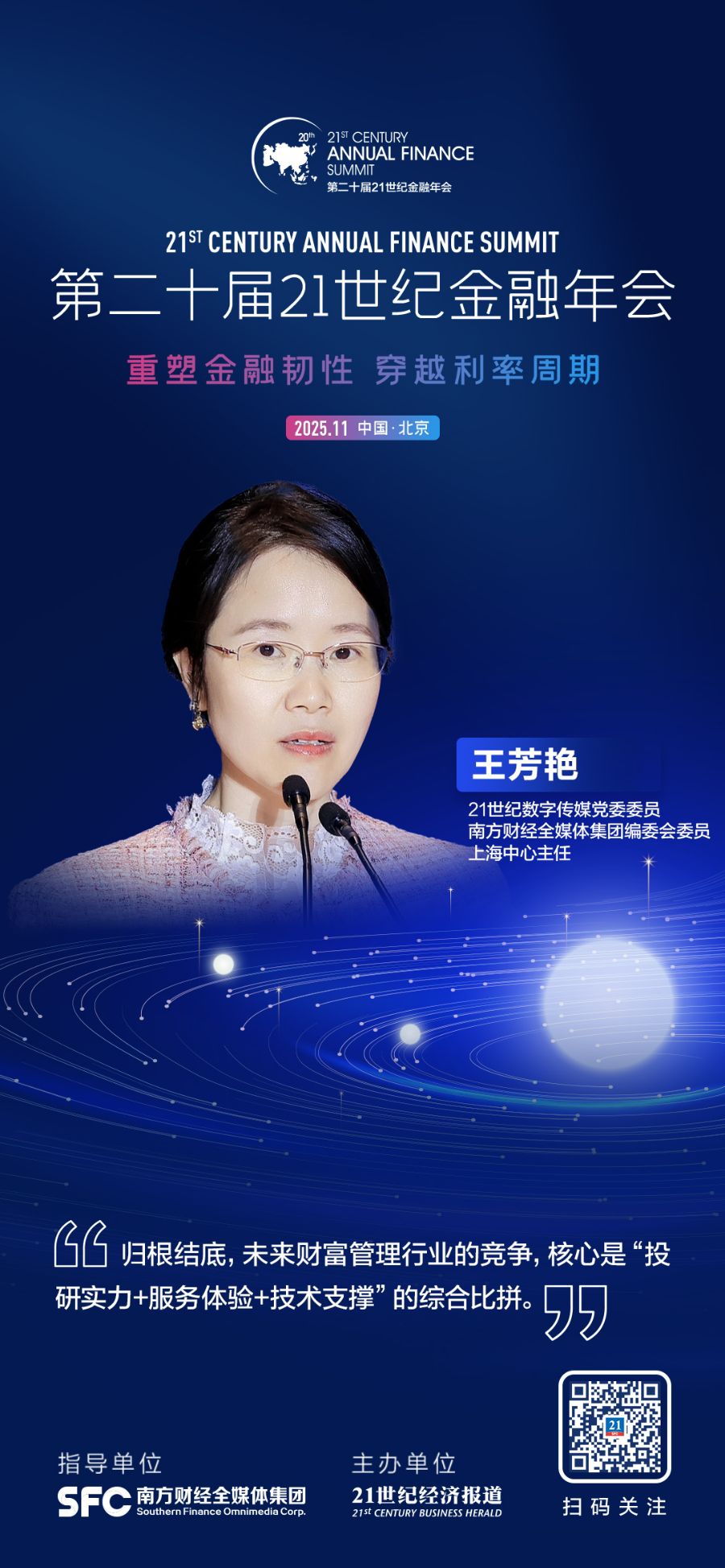
Group 1 - The core discussion at the 20th Century Financial Annual Conference focused on the low interest rate environment and its implications for wealth management and financial services [1] - Industry experts emphasized the need for wealth management to transform static capital into active investment that supports the real economy, aligning with national strategies and enhancing individual wealth [1] - The future competition in the wealth management sector will hinge on a combination of investment research capabilities, service experience, and technological support [3] Group 2 - The shift of deposits into wealth management products is a significant trend, with estimates suggesting that a 5% transfer of fixed-term deposits could generate over 5 trillion yuan in new opportunities for banks by the end of 2024 [19] - The wealth inheritance market is experiencing growth despite broader economic challenges, indicating structural opportunities that require collaboration across finance, legal, and tax sectors [25] - Trust services are positioned as a key tool for addressing the complexities of wealth transfer, with a focus on enhancing professional capabilities to better serve families [74][79]
零售“3.0”点燃中国消费新引擎
Sou Hu Cai Jing· 2025-10-23 11:32
Core Insights - The Chinese retail industry is undergoing a significant transformation driven by policy and market forces, shifting from a focus on real estate benefits to enhancing user experience [1][6][7] - The evolution of retail in China has seen three distinct phases, with the current phase emphasizing user-centric approaches and supply chain efficiency [2][3][5] Retail Evolution - The first phase of retail focused on availability, addressing the question of "whether goods are available" [2] - The second phase, characterized by the entry of large chain supermarkets, prioritized real estate value over customer satisfaction, leading to a disconnect between supply and consumer needs [2][3] - The third phase, or "Retail 3.0," marks a shift towards user-centric models, where retailers engage deeply in the supply chain and prioritize customer relationships [3][5] User Experience as a Driver - Retailers are innovating around three key dimensions: speed and convenience, emotional connection, and quality-price ratio [5][6][7] - Instant retail services, such as 30-minute delivery, are becoming standard, leveraging technology for efficient supply chain management [5][6] - New retail formats are transforming stores into community hubs, enhancing customer engagement and service quality [6][7] Policy Support - The recent policy initiatives aim to foster new retail models and stimulate consumer demand, providing a robust framework for innovation [1][6] - The focus on quality and value is reshaping the competitive landscape, encouraging retailers to adopt direct sourcing and develop private labels [6][7] - The evolution of retail spaces into multifunctional community centers reflects a broader trend towards creating immersive customer experiences [7] Conclusion - The ongoing transformation in the Chinese retail sector is fundamentally about returning to a consumer-centric business model, enhancing quality, efficiency, and emotional engagement [6][7] - This shift is expected to contribute significantly to the sustainable development of the Chinese economy, creating a more vibrant and diverse retail ecosystem [7]

J.D. Power研究:移动服务成新能源汽车售后服务满意度新战场
Zhong Guo Qi Che Bao Wang· 2025-08-21 08:26
Core Insights - The increasing penetration of electric vehicles (EVs) has led to a growing focus on after-sales service satisfaction, prompting J.D. Power to conduct a study on this topic in China [1] - The study evaluates the experiences of EV owners within 2 to 24 months of vehicle ownership, covering various aspects of service including consultation, rights, charging services, service initiation, reception, and quality [1] Group 1: Overall Satisfaction and Trends - By 2025, the overall satisfaction score for EV after-sales service is projected to be 775 out of 1,000, with luxury, mainstream, and independent brands scoring 776, 775, and 774 respectively, indicating a competitive landscape [6] - Satisfaction levels show a significant regional disparity, with first and second-tier cities scoring 18 points lower than third and fourth-tier cities, highlighting the impact of user expectations on satisfaction [6] Group 2: Mobile Services and User Engagement - Mobile on-site services have evolved from an emergency option to a value-creating center, with usage increasing from 12.4% in 2024 to 32.3%, enhancing user engagement and loyalty [7] - Users utilizing mobile services spent an average of 591 yuan more on after-sales services compared to those who did not use these services, indicating the financial benefits for companies [7] Group 3: Service Experience and User Expectations - The service experience is becoming a core competitive advantage in the EV sector, with a focus on managing user expectations and designing service processes accordingly [8] - Companies need to transform after-sales service from mere problem-solving to user value operation, leveraging mobile services to capture user attention and time [8] Group 4: Digital Transformation and Trust - The competition in the EV market has entered a "trust economy" phase, where user experience and satisfaction with charging services and rights fulfillment are critical [9] - Companies must ensure that digital capabilities translate into reliable user experiences, avoiding superficial digital enhancements that do not address service gaps [9] Group 5: Challenges in Remote Diagnosis and Response - Remote diagnosis services are facing an "efficiency trap," with 23.1% of users reporting usage but lower satisfaction compared to non-users, indicating a need for integrated service solutions [9] - Companies should aim to create a "diagnosis and resolution" closed loop to enhance user experience and reduce operational burdens [9] Group 6: Response Speed and Rights Fulfillment - While response speed has slightly improved, the effectiveness of problem resolution has declined, with users reporting a decrease in effective one-time problem resolution from 74.1% to 68.8% [10] - Issues related to user rights fulfillment are prevalent, with 48.2% of users experiencing problems, which significantly impacts satisfaction scores [10] Group 7: Charging Experience and Infrastructure - Charging satisfaction is on a downward trend, particularly among traditional independent brands, revealing a gap in user experience despite infrastructure availability [11] - The focus has shifted from merely having charging stations to ensuring their usability, with issues such as location accuracy and payment convenience becoming critical [11]
