
数字孪生黄河

Search documents
秋访黄河探安澜(在现场)
Ren Min Ri Bao· 2025-10-09 22:22
Core Viewpoint - The article highlights the transformation and ecological restoration efforts along the Yellow River in Zhengzhou, particularly in the Zhongmu area, showcasing significant improvements in flood control, biodiversity, and local economic development. Group 1: Flood Control and Infrastructure Development - The Zhongmu area has implemented key flood control projects, including the renovation of the Zhaokou sluice and Yangqiao emergency works, contributing to a safer Yellow River environment [1] - The construction of 16 emergency communication bases, 52 video surveillance systems, and a "digital twin" system enhances flood monitoring and response capabilities [1] - The area has completed 140,000 cubic meters of earthwork for levee standardization and established 8 demonstration sections [1] Group 2: Ecological Restoration and Biodiversity - The Zhongmu Wetland has become a significant winter migratory bird habitat, hosting over 6,000 rare birds, including black storks [2] - The total green area in Zhongmu has reached 14,700 acres, with 790,000 trees planted, contributing to improved local ecology [1][2] Group 3: Economic Development and Agricultural Advancements - The introduction of high-quality fruit varieties has led to the establishment of a "golden picking belt" of nearly 20,000 acres, with per-acre yields ranging from 6,000 to 8,000 yuan [2] - Over 100 automotive parts manufacturers, including Zhengzhou Nissan and BAK Battery, have set up operations in Zhongmu, generating an annual output value exceeding 20 billion yuan [2] Group 4: Tourism and Community Development - The transformation of traditional villages, such as Jiubao Village, into tourist destinations has attracted visitors and diversified local economies [3] - The revitalization of the area has led to increased local engagement and economic prosperity, with young people flocking to these "internet-famous villages" [5]

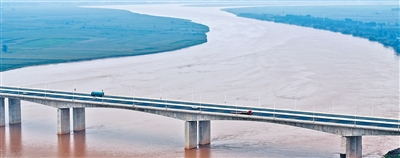
水利部:推进黄河流域生态保护和高质量发展工作
Zheng Quan Shi Bao Wang· 2025-09-20 01:17
Core Insights - The meeting led by Li Guoying emphasizes the ongoing flood risk as the primary threat to the Yellow River basin, highlighting the need for improved water-sand regulation and flood disaster reduction systems [2][2] Group 1: Flood Risk and Water Management - Flood risk remains the biggest threat in the Yellow River basin, with the imbalance of water-sand relationships identified as a key issue [2] - There is a call to accelerate the improvement of water-sand regulation and flood disaster reduction systems, including the establishment of a comprehensive flood control engineering system and monitoring systems for rainfall and flood disasters [2] Group 2: Water Resource Management - Water resource scarcity is the most prominent contradiction in the Yellow River basin, necessitating strict adherence to the "Four Waters and Four Determinations" principle [2] - A total water usage control system covering the entire basin is to be established to enhance the efficient and economical use of water resources [2] Group 3: Ecological Protection - The ecological fragility of the Yellow River basin requires strengthened water ecological protection and management, including unified water quantity scheduling and ecological flow management [2] - There is a focus on comprehensive governance in areas with high concentrations of coarse sediment, particularly in the Loess Plateau [2] Group 4: Water Rights and Legal Framework - The meeting advocates for deepening water conservancy reforms and exploring the regulation of water rights trading [2] - The implementation of the Yellow River Protection Law and enhanced cross-regional and cross-departmental law enforcement collaboration is emphasized [2]