
数字工匠

Search documents
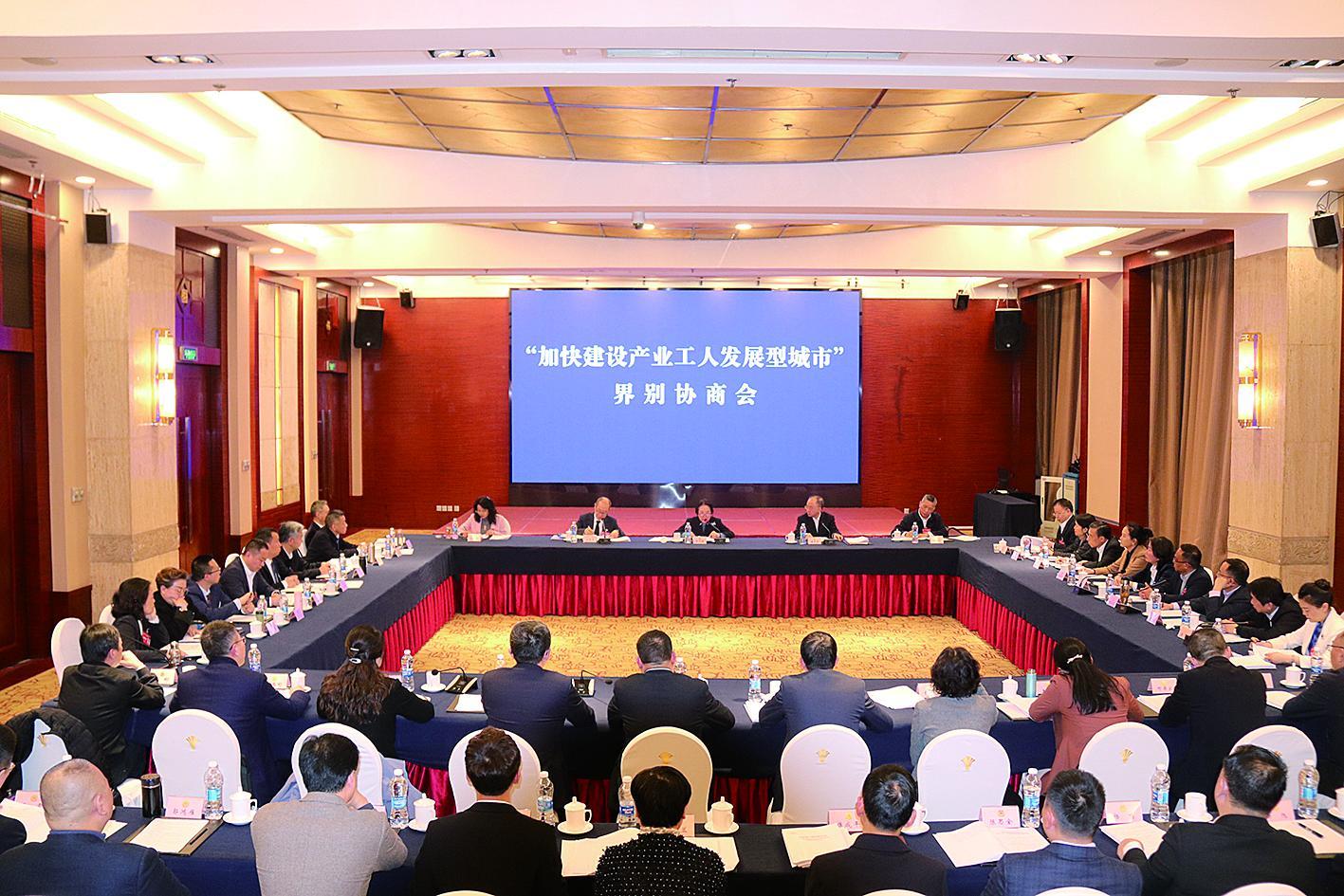
加快建设产业工人发展型城市
Xin Lang Cai Jing· 2026-01-28 18:54
Group 1 - The core focus of the meeting was to accelerate the development of an industrial worker-oriented city in Chongqing, emphasizing the importance of cultivating skilled workers and enhancing their social recognition [2][3] - The goal is to train 50 national craftsmen, 500 Ba Yu craftsmen, and 24,000 various levels of skilled workers over the next decade, addressing the current lack of recognition and value for skills among the workforce [3] - Suggestions included establishing a "Ba Yu Craftsman Day" to enhance visibility for skilled workers and implementing a "Craftsman Honor Card" to provide substantial support in housing, healthcare, and education [3] Group 2 - The vocational education system in Chongqing has over 3,300 programs and trains more than 300,000 high-skilled talents annually, but it still faces challenges in adapting to industry needs [4] - Current vocational education programs have an 89% match with key industries, but there are gaps in supporting the entire industrial chain, with only a few institutions offering relevant courses for emerging sectors [4] - Recommendations include creating a collaborative data platform to align vocational training with industry demands and adjusting funding based on industry needs [4] Group 3 - The cultivation of digital skills is crucial for the transition to a high-end, intelligent, and green industrial city, with only 12.7% of skilled workers in Chongqing being digital talent, below the national average [5] - The evaluation standards for craftsmen currently focus on traditional skills, with less than 5% of digital craftsmen recognized, which does not support the upgrade of industrial clusters [5] - A "Digital Craftsman" training plan is proposed to develop a high-quality talent supply system, including modular courses in smart manufacturing and industrial internet [5]

把握“三个转变” 让传统产业“老树发新枝”
Zheng Quan Ri Bao· 2025-05-26 16:26
Core Viewpoint - The transformation of Shenyang, an old industrial city in Northeast China, from a "steel belt" to an "intelligent belt" exemplifies the revitalization of traditional industries through digitalization and artificial intelligence (AI) [1] Group 1: Transition Strategies - Transition from single-point breakthroughs to system reconstruction by building an "intelligent community" to activate new momentum in industrial clusters, particularly in advanced manufacturing sectors like aerospace, automotive, and shipbuilding [2] - Establish industry-level AI innovation alliances to promote collaboration between leading and supporting enterprises, and create a digital twin platform [2] - Set up a digital transformation fund to support "chain master" enterprises in building shared resources and accelerate the development of industry-specific large models [2] Group 2: Ecosystem Development - Shift from technology application to ecosystem cultivation by innovating scenarios and developing new ecosystems for transformation and upgrading [3] - Recommend the establishment of regional AI application scenario innovation centers, showcasing smart mines and digital factories as demonstration sites [3] - Create a "scenario list + technology tackling" mechanism to facilitate deep connections between AI and traditional enterprises, and improve revenue-sharing mechanisms for sustainable business models [3] Group 3: Innovation and Talent Development - Move from passive transformation to proactive innovation by cultivating "digital new craftsmen" to accumulate new momentum for sustainable development [4] - Implement a model combining experienced craftsmen with AI to rejuvenate traditional craftsmanship, as seen in Shenyang Blower Group [4] - Propose the systematic collection of veteran craftsmen's technical experiences to establish a "digital craftsman" training system, fostering talents who understand both traditional craftsmanship and AI technology [4]