数字技术与文化融合

Search documents
着力将文化优势转化为澎湃的经济动能
Zheng Quan Ri Bao· 2026-01-14 16:14
Group 1 - The core viewpoint of the articles highlights the growing significance of the cultural industry in China's economy, with a focus on innovative development and the integration of technology to enhance cultural experiences [1][2][3] - During the New Year holiday, Chinese theme parks saw a significant increase in hotel bookings, with a 50% year-on-year growth, indicating a rising popularity of domestic cultural tourism [1] - The cultural industry is increasingly recognized as a "growth engine" for the national economy, with a reported 7.9% year-on-year increase in revenue for cultural enterprises in the first three quarters of 2025, outpacing GDP growth [1] Group 2 - Activating existing cultural resources is essential for enhancing cultural value, with examples like Shenzhen's Gankeng Ancient Town demonstrating successful sustainable operational models that significantly increased revenue from 3.5 million to over 40 million yuan [2] - The integration of digital technology into the cultural industry has led to the emergence of new industries and models, enhancing consumer experiences and optimizing industry efficiency, as evidenced by the global download of micro-short dramas exceeding 470 million [2] - The "going global" strategy for Chinese culture is evolving from product export to value dissemination, with significant growth in overseas sales of Chinese games projected to reach $18.557 billion in 2024, and a notable increase in overseas licensing agreements for literary works [3]

滨江:西兴街道非遗馆开馆
Hang Zhou Ri Bao· 2025-12-16 02:14
Core Insights - The opening of the Xixing Intangible Cultural Heritage Museum marks a significant cultural initiative in Hangzhou, being the first large-scale comprehensive intangible cultural heritage museum located within a school campus in Zhejiang Province [1][2] - The museum features four thematic exhibition areas and showcases 26 intangible cultural heritage projects from the Xixing area, integrating digital technology for an immersive cultural experience [1] Group 1: Museum Features - The Xixing Intangible Cultural Heritage Museum covers an area of approximately 1,400 square meters and includes thematic areas such as "Zhouji Qianian," "Baiye Xixing," "Guyun Xunyan," and "Qiangxin Shouwang" [1] - The museum employs digital technology, including a digital character named "Heritage Xiao Xi," to enhance visitor engagement and provide interactive experiences [1] Group 2: Community Engagement - The museum aims to serve as a cultural hub for the community, with plans to host diverse cultural activities that include exhibitions, educational programs, and experiential workshops [2] - There are currently 16 representative inheritors of intangible cultural heritage in Xixing, with the museum facilitating knowledge transfer to the next generation [2] Group 3: Strategic Goals - The Xixing Street Office intends to establish the museum as a vibrant cultural venue that promotes the preservation and transmission of intangible cultural heritage [2] - The initiative reflects a broader strategy to integrate cultural heritage into educational settings, thereby fostering a deeper connection between culture and community [1][2]
这场盛会让世界再次看见良渚
Hang Zhou Ri Bao· 2025-04-28 01:59
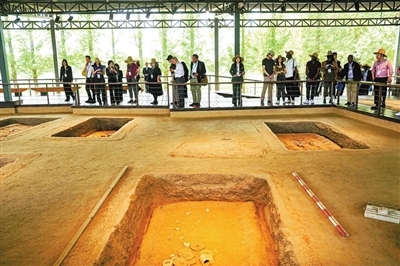
Core Insights - The third UNESCO International Museum Forum was held in Hangzhou from April 23 to 25, gathering over 190 participants from more than 60 countries to discuss the evolving role of museums, the application of digital technology and AI, and the role of museums as educational platforms [6][7][11] - The forum emphasized the transformation of museums from static spaces to dynamic institutions that foster peace and inclusivity, showcasing innovative uses of technology such as AR and AI to enhance visitor experiences [7][9][10] Group 1: Forum Themes and Discussions - Key topics included the evolution of museums, the use of digital technology, and the challenges and innovations faced by contemporary museums [6][7] - Participants experienced a blend of reality and digital reconstructions at archaeological sites, highlighting how technology reshapes the perception of cultural heritage [7][8] - The forum served as a platform for cultural exchange, aiming to break down cultural barriers and promote a more inclusive dialogue among civilizations [15][16] Group 2: Cultural Heritage and Technological Integration - The integration of technology in cultural heritage, such as AR applications for interactive experiences, was a focal point, demonstrating how traditional artifacts can be reimagined [8][12] - The establishment of the Liangzhu Cultural Corridor aims to connect various cultural heritages and promote sustainable development through cultural tourism and digital economy [12][13] - Innovative practices from various museums worldwide were shared, showcasing the shift from being mere containers of objects to becoming experiential spaces [9][10] Group 3: Future Directions and Global Dialogue - The forum highlighted the need for ongoing dialogue about the future of museums, emphasizing the importance of cultural exchange in understanding and preserving heritage [10][15] - Liangzhu's cultural significance was recognized globally, with its inclusion in the World Heritage List serving as a catalyst for further cultural dialogue and development [11][12] - The forum concluded with a call for museums to continue evolving and engaging with diverse audiences, ensuring that cultural narratives remain relevant and accessible [16]