数字消费之都

Search documents
流量“退潮”之后——杭州直播电商产业深度调查
Zhong Guo Neng Yuan Wang· 2025-12-16 10:29
Core Viewpoint - The narrative surrounding Hangzhou's live-streaming economy suggests a decline, but a deeper investigation reveals a more nuanced reality, indicating a transition rather than a collapse of the industry [1][2]. Group 1: Industry Dynamics - Hangzhou is recognized as a pivotal area for China's digital economy, with its actions often serving as industry indicators [1]. - The total revenue of the top 32 MCN (Multi-Channel Network) institutions in Hangzhou reached 5.993 billion yuan in the first half of the year, marking a 17% year-on-year increase [4]. - The profitability of these institutions is stable, with total profits ranging between 260 million yuan and 360 million yuan [4]. Group 2: Market Perception vs. Reality - Claims of "massive vacancies" in commercial properties are misleading; the actual tenant demographic includes primarily local white-collar workers, with live-streaming teams being a minor segment [3]. - The notion of "rent halving" is viewed as a return to reasonable pricing rather than a market crash, as previous inflated rents were driven by speculative practices [3]. Group 3: Talent Migration - The significant departure from Hangzhou is primarily among entertainment streamers rather than sales-focused influencers, indicating a shift in market dynamics [6][7]. - Approximately 20% to 30% of mid-tier influencers have left Hangzhou in the past two years, which is seen as a necessary correction to the market [7]. Group 4: Evolving Business Models - There is a growing trend towards "store broadcasting" over traditional influencer-led sales, with brand-owned live streams now accounting for over 50% of transactions on platforms like Tmall and Douyin [7]. - Companies are increasingly investing in their own live-streaming capabilities, reducing reliance on high-cost influencers, which is leading to a more sustainable business model [7][8]. Group 5: Future Outlook - The competition in the live-streaming sector is shifting from volume-based strategies to depth and quality of engagement, with a focus on integrating live-streaming technology into traditional industries [9]. - Regulatory changes are fostering a more structured environment, with all income now subject to taxation, which is expected to benefit legitimate businesses [10][11]. - The industry is moving towards a more stable growth phase, with a focus on solidifying the foundational aspects of the live-streaming economy rather than chasing rapid, unsustainable profits [11].
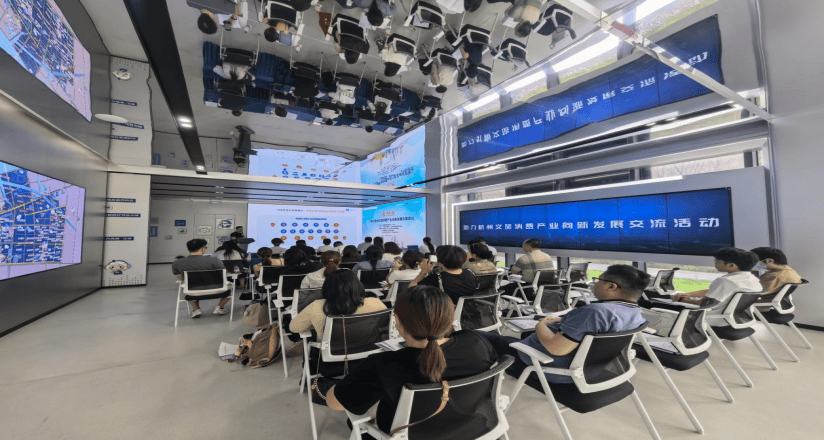
“金企工程”助力杭州文旅消费产业向新发展交流活动在杭州举办
Sou Hu Cai Jing· 2025-07-24 14:27
Group 1 - The "Golden Enterprise Project" aims to promote the integration of culture, commerce, and tourism in Hangzhou, supporting the city's goal of becoming a globally influential international consumption center [1][3] - The event featured over 50 representatives from various sectors, including experts, financial institutions, and small and medium-sized enterprises, highlighting the collaborative effort in advancing Hangzhou's digital consumption strategy [1][3] - The initiative emphasizes the transition of Hangzhou's cultural tourism industry from "single-point breakthroughs" to "ecological co-construction," leveraging technology and AI to enhance consumer experiences [3][4] Group 2 - The event included discussions on how Hangzhou enterprises can utilize digital tools for cultural IP export, extending consumption scenarios, and integrating financial support [3][4] - Practical methodologies for building foreign trade systems and scaling operations through digital capabilities were shared, focusing on the importance of AI and financial services in driving the tourism industry's growth [4] - Visa's role in facilitating cross-border tourism payment solutions was highlighted, aiming to enhance shopping convenience for inbound tourists [4]