淘宝

Search documents
美团亏、淘宝缩、京东忍:2025外卖数据,藏着真正的格局
3 6 Ke· 2026-03-31 13:12
Core Insights - Major instant retail platforms reported significant losses in their 2025 financials, with Meituan losing 23.4 billion, JD's new business losing 46.6 billion, and Alibaba losing over 37.6 billion in a single quarter, totaling over 100 billion in losses among the three giants [1][2][3] Group 1: Market Dynamics - The instant retail market reached 971.4 billion in 2025, growing at a rate of 24%, indicating that the market is expanding rather than contracting [6] - The competition has shifted from merely burning cash to achieving speed while maintaining stability [7] - Meituan focuses on maintaining a large network of over 600,000 riders, achieving over 50% market share at the cost of a 6.9 billion loss [8] - Alibaba aims to leverage high-frequency delivery to drive traffic to its lower-frequency e-commerce business, resulting in a 37.6 billion loss but achieving 120 million daily orders [9] - JD is positioning itself as a quality delivery service, incurring a 46.6 billion loss to establish a brand perception of quality [10] Group 2: Implications for Businesses - The reduction in platform subsidies means that businesses must learn to attract and retain customers independently [12][13] - Cost management becomes crucial, as businesses need to analyze which products are profitable and which are not [14] - With reduced subsidies, consumers will become more price-sensitive, necessitating a focus on inventory management and product selection [15] Group 3: Strategic Insights - The competition has evolved from speed to stability, with companies needing to find their unique positioning in the market [18] - Meituan's strategy emphasizes scale as a competitive advantage, suggesting that local businesses should aim for comprehensive coverage within their vicinity [19][20] - Alibaba's approach indicates that high-frequency products can drive sales of lower-frequency items, encouraging businesses to bundle products effectively [21] - JD's focus on quality suggests that there is a market for premium products, even in a price-sensitive environment [22] Group 4: Future Outlook - The industry will shift its focus from how much money was burned to what value was created [25][28] - Companies that survive this competitive landscape will be those that adapt to new methods of accounting and operational efficiency [27]



阿里巴巴(BABA):首次覆盖报告:AI赋能成长提速大消费平台再启航
Western Securities· 2026-03-18 11:41
Investment Rating - The report assigns a "Buy" rating for Alibaba (9988.HK) [1][6] Core Insights - The report predicts Alibaba's revenue for FY2026-2028 to be CNY 1,037.73 billion, CNY 1,185.38 billion, and CNY 1,330.86 billion, representing year-on-year growth of +4.2%, +14.2%, and +12.3% respectively. The net profit attributable to shareholders is forecasted to be CNY 97.75 billion, CNY 122.51 billion, and CNY 144.48 billion, with year-on-year changes of -24.5%, +25.3%, and +17.9% respectively [1][6] Summary by Sections Business Overview - Alibaba has transitioned from an e-commerce platform to a "technology + big consumption platform" since 2019, focusing on enhancing its core business and AI capabilities [27][28] E-commerce Group - The domestic e-commerce revenue for FY2026H1 increased by +9%, driven by improved take rates and customer management revenue (CMR) growth of +10%. Instant retail business saw a significant increase of +37% [2][34] - The company is enhancing efficiency through AI-driven marketing tools, which have improved merchant ROI and increased advertising revenue [2][34] - The instant retail segment is expected to see revenue growth of +70.0%, +40.9%, and +20.0% for FY2026-2028 [12][69] International Digital Commerce Group (AIDC) - AIDC achieved profitability for the first time in FY26Q2, with revenue growth of +10% driven by improved unit economics in its international retail business [12][45] - The international wholesale business is expected to grow at +11.3%, +9.6%, and +8.0% for FY2026-2028 [12][69] Cloud Business - The cloud revenue is projected to grow by +33.4%, +33.0%, and +27.5% for FY2026-2028, supported by strong demand for AI-related products [13][70] - Alibaba plans to invest over CNY 380 billion in AI and cloud infrastructure over the next three years to enhance its capabilities [13][70] Investment Thesis - The report highlights that Alibaba's focus on AI and cloud services, along with its upgraded organizational structure, positions the company for significant growth in the consumer platform and technology sectors [3][16]
阿里是不是应该涨3倍呀?
小熊跑的快· 2026-03-18 06:55
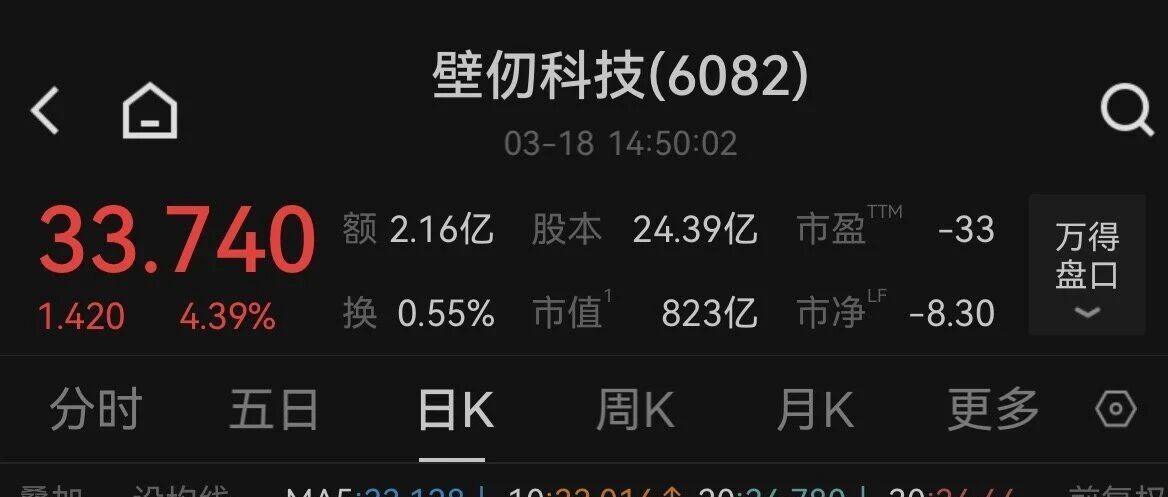
Group 1 - The article discusses the valuation of Alibaba Cloud, suggesting that its API call revenue could reach 100 billion, which would correspond to a market value of 5 trillion [4] - It compares Alibaba Cloud's valuation to that of Google, indicating that Alibaba Cloud's potential market value could be around 6 trillion [7] Group 2 - The article provides financial metrics for two companies, MINIMAX-W and LLSS, including their market capitalization, earnings per share, and trading volumes [1][2] - MINIMAX-W has a market capitalization of 416.2 billion with a price-to-earnings ratio of -29, while LLSS has a market capitalization of 333.7 billion with a price-to-earnings ratio of -22.24 [1][2]

胡泳:未来企业组织的进化蓝图
经济观察报· 2026-03-10 11:50
Core Viewpoint - Organizations are transitioning from being "containers of resources" to "nodes in an ecosystem" driven by AI and platform economies, with those who successfully complete this paradigm shift likely to seize growth opportunities in the next decade [4][36]. Group 1: Exponential Organizations - The concept of "Exponential Organizations" (ExO) refers to entities that leverage information flow, technology, and network effects to achieve explosive growth at minimal marginal costs [5][6]. - The "SCALE+IDEAS" model outlines five external elements (on-demand workforce, AI and algorithms, leveraged and shared assets, community and participation) and internal elements (experimental culture, data dashboards, user interfaces, decentralized decision-making, social technologies) that characterize ExOs [6]. - The book introduces pathways for traditional companies to transition to exponential growth, providing frameworks like "ExO Sprint" and "ExO Canvas" to facilitate this transformation [6]. Group 2: Platform Organizations - Platform organizations are structured around a technology or service platform, fostering multi-party interactions and value co-creation, which allows for rapid expansion and reduced marginal costs [10][11]. - These organizations emphasize a "light company" approach, focusing on technology architecture and ecosystem governance rather than traditional production or logistics [11]. Group 3: Decentralization and Self-Organization - Decentralization involves weakening or eliminating traditional hierarchical structures, promoting self-driven employees and task autonomy, which can enhance initiative but may also lead to coordination challenges [13]. - Examples include Zappos' "holacracy" model and GitHub's project-centered collaboration structure, which prioritize contribution over hierarchy [14]. Group 4: Dual-Mode Organizations - Dual-mode organizations can flexibly operate between different maturity levels of business, balancing exploitation of existing models with exploration of new strategies [18][19]. - This concept addresses the structural tension organizations face, allowing them to maintain competitiveness and adaptability in changing environments [20]. Group 5: Hacker Culture - Hacker culture emphasizes creative problem-solving and experimentation, becoming a mainstream organizational culture in tech companies like Google and Facebook [21][22]. - This culture encourages rapid iteration and innovation, exemplified by practices such as Facebook's "move fast and break things" and Google's "20% time policy" [22]. Group 6: Case Studies of Exponential Organizations - ByteDance exemplifies ExO characteristics through its modular design, data-driven culture, and rapid experimentation processes [26][28]. - Alibaba's growth trajectory showcases the transition from a small internet startup to a leading digital ecosystem, leveraging external resources and platform rules to drive expansion [29][30]. Group 7: Implications for Chinese Enterprises - The insights from "Exponential Organizations" highlight the need for structural transformation in organizations, moving beyond mere tool upgrades to fundamental growth model changes [36]. - The frameworks provided can guide organizations in executing systematic transformations, addressing the urgency for speed and adaptability in competitive environments [36].

2025年Q4移动互联网行业数据研究报告
Sou Hu Cai Jing· 2026-02-26 04:48
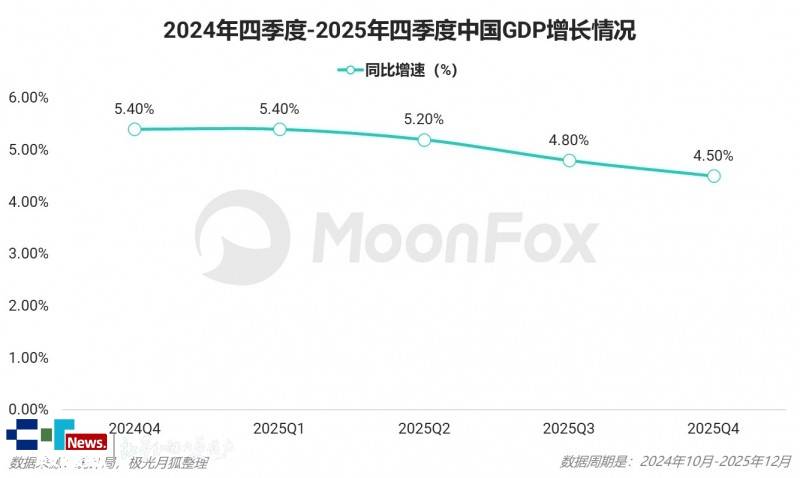
Macro Insights - In 2025, China's GDP surpassed 140 trillion yuan, reaching 1401879 billion yuan, with a year-on-year growth of 5.0% [1][6] - In Q4 2025, GDP was 387911 billion yuan, with a year-on-year growth of 4.5% [1][6] - The contribution of final consumption expenditure to economic growth was 52.0% in 2025, and 52.9% in Q4 [6] - The industrial sector showed stable growth, with a year-on-year increase of 5.0% in Q4, contributing 1.5 percentage points to economic growth [6][9] - Net exports demonstrated resilience, contributing 32.7% to economic growth in 2025 [9] Internet Sector Development Analysis AI Sector - The focus of the AI industry shifted from algorithm competition to deep exploration of commercial value and efficient realization [21][22] - AI technology integration into market applications is accelerating, with significant growth in smart terminal devices [22][25] - The AIGC application scenarios expanded, with notable growth in industrial and autonomous driving sectors [25][30] Video Sector - The online video industry experienced a seasonal decline in Q4 2025, with a slight year-on-year decrease of 0.9% [39] - Ten S+ series were launched in Q4, with overall video content showing a decline compared to the previous year [44][48] - Platforms are actively promoting high-quality content strategies, with significant successes in series like "反人类暴行" [49][66] E-commerce Sector - The e-commerce industry continued to grow, with user device coverage reaching 11.66 billion [75] - Regulatory policies are being optimized to promote healthy development in the e-commerce sector [73][74] - Major players like Alibaba and JD.com are deepening their integration into lifestyle services and enhancing AI applications [79][81] Tourism Sector - Winter tourism is becoming a new growth engine for the tourism industry, particularly during the traditional peak season [2] Short Drama Sector - The short drama industry is rapidly growing, with an estimated annual output value nearing 900 billion yuan in 2025 [1] Social Sector - The social media market remains stable, with vertical social platforms continuing to show significant potential [1]
千问发布数据:1.3亿人春节首次体验AI购物
Huan Qiu Wang· 2026-02-24 07:52
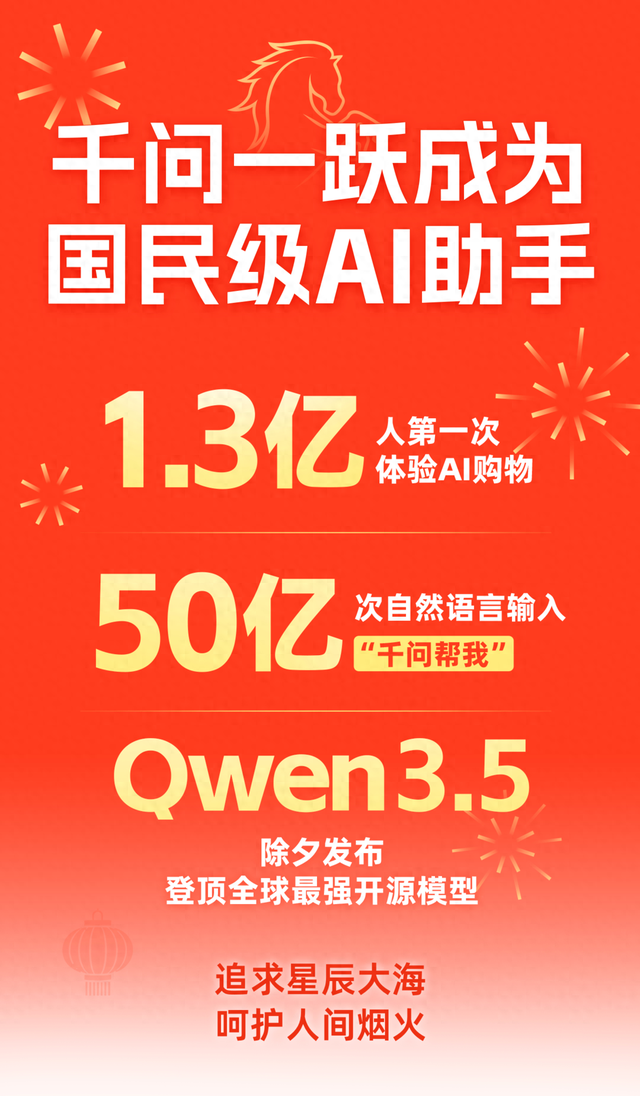
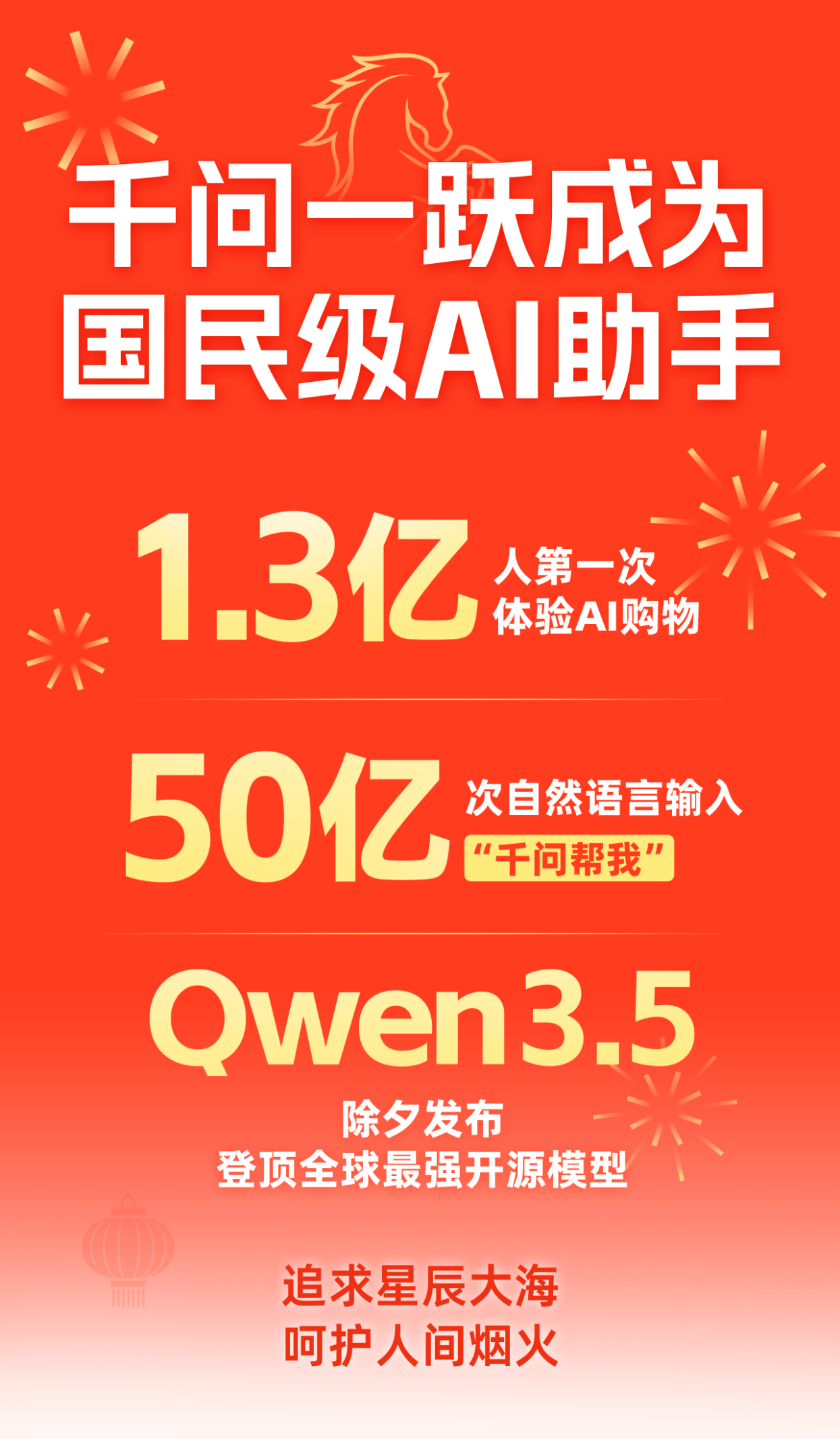
Core Insights - During the Spring Festival, over 130 million people experienced AI shopping for the first time, making 5 billion requests using "Qianwen help me" [1][6] - The number of AI ticket orders surged, with a 22-fold increase for event tickets and over 7-fold for flight tickets. Movie ticket orders increased by 372 times, particularly in lower-tier cities where orders rose by 782 times [1][6] - Nearly half of all AI orders originated from county-level cities, and around 4 million users aged 60 and above engaged in AI shopping [1][6] - Qianwen integrates with Alibaba's ecosystem, including Taobao, Alipay, and others, with plans to introduce additional features like AI taxi booking and mobile recharge [1][6] - As of February 7, Qianwen's daily active users reached 73.52 million, nearing Doubao's 78.71 million, achieving this in just three months [1][6] Model Development - On New Year's Eve, Alibaba released the new generation model Qwen 3.5-Plus, which is comparable to Gemini 3 Pro, marking it as the strongest open-source model globally [2][7] - This dual breakthrough in AI capabilities and application usage signifies a significant advancement for Alibaba's AI initiatives during the Spring Festival [2][7]
豆包新机进入倒计时,智能体和App“战”到哪一步了?
2 1 Shi Ji Jing Ji Bao Dao· 2026-02-24 00:20
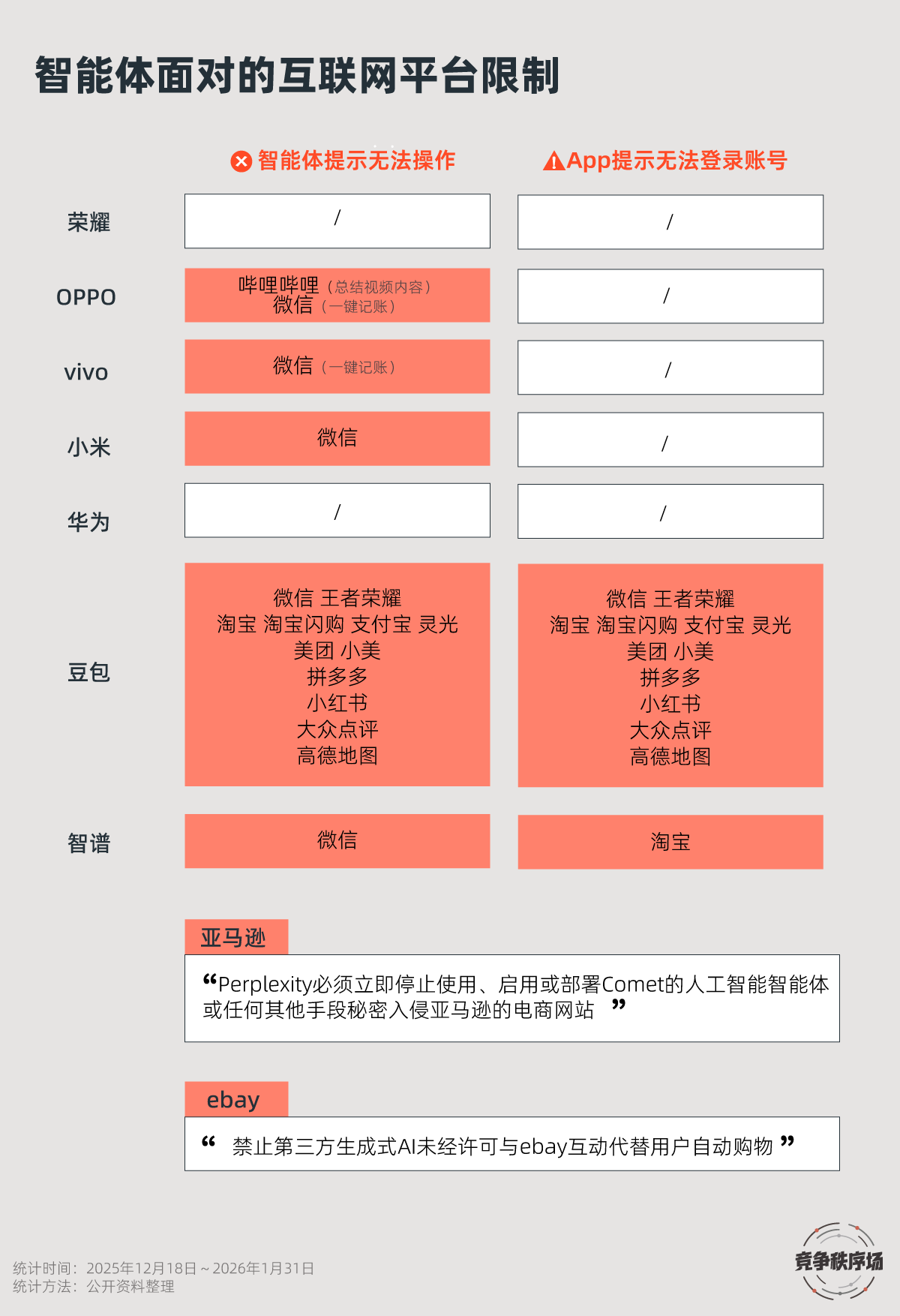
Core Insights - The launch of the "Doubao Mobile Assistant" by ByteDance and ZTE Nubia has sparked significant controversy, particularly due to restrictions imposed by major apps like WeChat and Alipay, which prevent the assistant from fully functioning [1][3] - The ongoing negotiations between ByteDance and hardware manufacturers highlight the challenges of integrating AI assistants into mobile devices, with concerns over system-level permissions and the potential impact on existing AI strategies of phone manufacturers [8][9] - The industry consensus indicates that a viable revenue-sharing model for mobile assistants has yet to be established, complicating the path to commercial agreements among stakeholders [7] Group 1: Market Dynamics - The Doubao Mobile Assistant sold out quickly at a price of 3499 yuan, but faced immediate operational challenges due to app restrictions [1] - ByteDance's initial attempts to partner with major phone manufacturers were unsuccessful, as companies were reluctant to relinquish control over their AI strategies [9] - Recent developments suggest a shift in attitude among app developers, with some agreeing to a "ceasefire" to allow for normal operations of the Doubao assistant [12] Group 2: Technical and Strategic Challenges - The need for system-level permissions for AI assistants poses a significant barrier, as manufacturers are hesitant to grant such access to third-party developers [8][9] - The complexity of integrating AI capabilities into mobile devices raises concerns about performance, battery life, and user experience, which are critical factors for consumers [10][17] - The industry is exploring various cooperation models, including A2A (Application-to-Application) frameworks, to facilitate smoother interactions between AI assistants and apps [11] Group 3: Regulatory and Competitive Landscape - The situation mirrors past conflicts in the tech industry, such as the 3Q War, highlighting ongoing tensions over platform boundaries and competitive practices [13] - The concept of "interoperability" is emerging as a potential framework for resolving disputes, with calls for fair access to system-level capabilities for all developers [14][15] - The need for a unified regulatory approach is emphasized, as stakeholders seek to establish clear rules that balance innovation with user privacy and data control [16][18]

淘宝年货节海外销额增超40%;比亚迪进入埃及市场丨出海周报
2 1 Shi Ji Jing Ji Bao Dao· 2026-02-17 06:33
Industry Overview - The global humanoid robot market is expected to see a shipment of approximately 17,800 units by 2025, representing a year-on-year growth of 508%, with a market sales value of around $440 million [1] - Chinese manufacturers dominate the market, with Zhiyuan Robotics and Yushu Technology shipping about 5,000 units combined, leading the industry [1] - The commercial application of humanoid robots is primarily focused on entertainment, education, and data collection [1] Digital Trade - China's digital service trade surplus is projected to double by 2025, reaching approximately $33 billion, driven by the expansion of cloud computing and AI sectors [2] - The surplus in telecommunications, computer, and information services is expected to be around $31.8 billion, with a year-on-year increase of nearly 30% [2] - Major Chinese tech companies like Alibaba and ByteDance are establishing robust overseas business systems in e-commerce, gaming, and social networking [2] E-commerce and Logistics - Taobao's overseas sales during the New Year festival increased by over 40% compared to the previous year, with significant growth in pet and automotive accessories [3] - JD.com has launched its self-built logistics network, JoyExpress, in Europe, covering major cities and offering same-day and next-day delivery services [7] - Cainiao has initiated Spring Festival logistics guarantees, providing rapid delivery services across over 200 cities in China [8] Automotive Industry - BYD has officially entered the Egyptian market, aiming for overseas sales of 1.3 million units by 2026, a nearly 25% increase from the previous target [6] - AITO Wenjie has partnered with Abu Dhabi Motors to enter the UAE market, marking a significant step in its global strategy [9] - The collaboration between Tencent and Uber expands Tencent's ride-hailing service to over 20 countries, enhancing user accessibility [10] Strategic Partnerships - Midea Group has signed a strategic agreement with CMA CGM to enhance cross-border logistics and technology innovation between China and the U.S. [13] - Temu has partnered with DEKRA to improve compliance and safety standards for electronic products on its platform [11][12] - Miaokelando has collaborated with SADAFCO to explore the children's cheese snack market in Saudi Arabia, leveraging local distribution channels [14]

千万发布数据:1.3亿人春节首次体验AI购物
Huan Qiu Wang· 2026-02-17 05:00
Group 1 - During the Spring Festival, over 130 million people experienced AI shopping for the first time, making 5 billion requests using "Qianwen help me" [1] - Orders for AI ticket purchases increased by 22 times, while AI bookings for flights and other transportation tickets grew over 7 times; movie ticket orders surged by 372 times, particularly from third and fourth-tier cities, which saw an increase of 782 times [1] - Nearly half of all AI orders originated from county-level cities, with around 4 million users aged 60 and above engaging in AI shopping [1] Group 2 - Alibaba launched the new generation open-source model Qwen 3.5-Plus on New Year's Eve, which is comparable in performance to Gemini 3 Pro, making it the strongest open-source model globally [2][4] - The AI application saw significant growth during the Spring Festival, indicating a dual explosion in both open-source model capabilities and app usage [2]
1.3亿人春节首次体验AI购物,千问一跃成为国民级AI助手
Xin Lang Cai Jing· 2026-02-17 00:46
Core Insights - During the Spring Festival period, over 130 million people experienced AI shopping for the first time, with "Qianwen help me" being invoked 5 billion times, establishing Qianwen as a national-level AI assistant [1] User Engagement and Growth - In the past two days, AI ticket purchasing orders increased by 22 times, while AI orders for flight tickets and other transportation tickets surged over 7 times [4] - The demand for AI movie ticket purchases saw a staggering 372-fold increase, with orders from third and fourth-tier cities skyrocketing by 782 times [4] - Nearly half of all AI orders originated from county-level cities, highlighting the accessibility of AI shopping [4] - Approximately 4 million users aged 60 and above engaged with AI shopping, indicating a broad demographic reach [4] Ecosystem Integration - Qianwen can leverage the entire Alibaba ecosystem to serve users, integrating platforms such as Taobao, Alipay, Taobao Flash Sale, Fliggy, Gaode, and Damai, with plans to introduce features like AI ride-hailing and mobile recharge [4] User Activity Metrics - On February 7, Qianwen's daily active users (DAU) reached 73.52 million, nearing Doubao's 78.71 million, achieving in three months what Doubao took three years to accomplish [4] - This shift signifies a change in user habits towards AI, moving from chat-based interactions to task execution through agents [4] Technological Advancements - On New Year's Eve, Alibaba released the new generation model Qianwen Qwen 3.5-Plus, which performs comparably to Gemini 3 Pro [4]