数据网格

Search documents
将报表作为数据产品管理的指南
3 6 Ke· 2026-01-27 09:10
Core Insights - The article emphasizes the shift in perception of data from being merely raw material to being treated as a product, particularly through the concept of data mesh, which focuses on making data discoverable, addressable, trustworthy, and usable [1]. Group 1: Definition of Data Product Reports - Reports as data products are not just simple collections of rows and columns; they are well-organized, ready-to-use datasets designed to support analytical applications and data-driven decisions [2]. - Key characteristics of data product reports include clear objectives, ease of use, reusability across multiple analytical use cases, reliability, and self-containment with relevant metadata and documentation [2]. Group 2: Data Product Quality Checks - High data quality is fundamental for reliable data products, with quality assessed across dimensions such as accuracy, completeness, consistency, validity, uniqueness, and timeliness [3][4][5]. - Effective quality checks can be implemented at various stages of the data pipeline, utilizing SQL-based checks, automated testing frameworks, and monitoring systems to ensure data integrity [7]. Group 3: Service Level Agreements (SLA) and Alerts - SLAs and robust alert mechanisms are crucial for ensuring data products meet consumer expectations regarding timeliness, availability, and reliability [8]. - Key components of SLAs include timeliness of data delivery, availability percentages, acceptable accuracy thresholds, freshness of data, and maximum error rates [9]. Group 4: Documentation and Metadata - Clear documentation and rich metadata are essential for making reports discoverable, understandable, and usable as data products [11]. - Effective documentation should include purpose and business context, data dictionaries, data lineage, usage examples, known issues, and ownership information [12][13]. - Metadata encompasses technical, business, operational, and usage aspects, providing context and necessary information for effective data utilization [14][15]. Group 5: Conclusion - Treating reports as data products can transform how organizations manage and utilize their data assets, fostering data ownership and accountability, ultimately enabling faster and more confident data-driven decision-making [16].
数据领导力系列:行之有效的数据治理是从监管到大规模实现数据价值
3 6 Ke· 2025-12-04 03:31
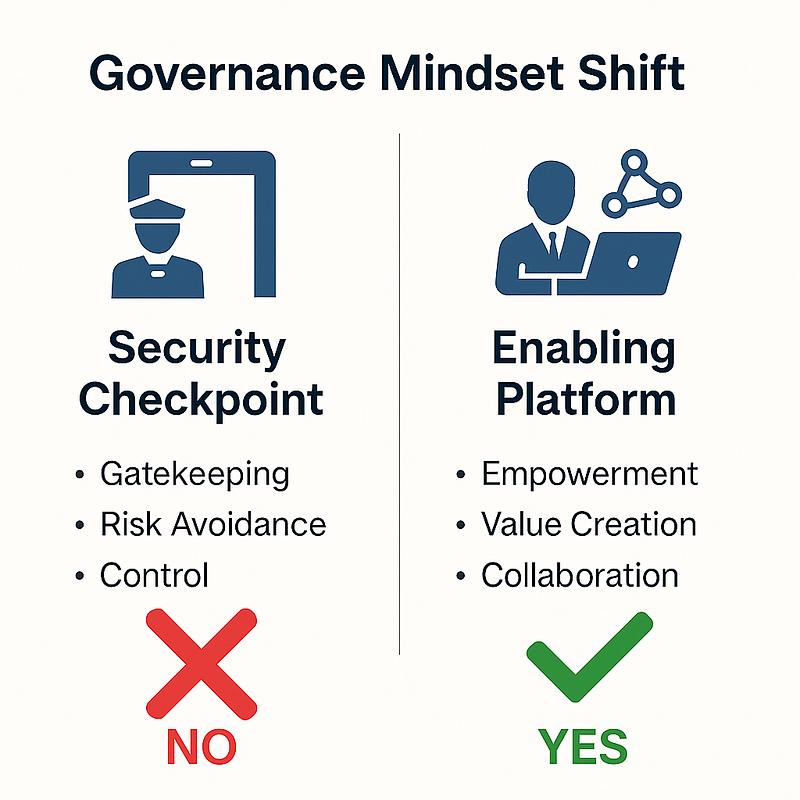
Core Insights - Effective data governance focuses on empowering teams for faster and more trustworthy decision-making rather than merely controlling data access and usage [1] - The shift from gatekeeping governance to enabling governance is essential for creating value and ensuring data quality and trust [1] Group 1: Governance Failures - Poorly designed data governance schemes often fail because they act like checkpoints aimed at identifying problems rather than preventing them [1] - Common pitfalls in scaling data governance include approval bottlenecks, excessive documentation, mutual blame between centralized and decentralized teams, and the emergence of shadow systems [5][6] Group 2: Product Thinking in Data Governance - Applying product thinking to data governance involves shifting the focus from controlling data usage to making correct data usage easier than incorrect usage [10] - This approach includes transitioning from rules to platforms, manual approvals to automation, and static documentation to dynamic data catalogs [10] Group 3: Three Pillars of Enabling Governance - Pillar One: Transparency in data quality and context is crucial, allowing teams to see data quality metrics directly in their workflows [11] - Pillar Two: Self-service with intelligent defaults enables teams to quickly and correctly address their data issues without circumventing governance [13][14] - Pillar Three: Embedded ownership and accountability require teams to take responsibility for the quality and usage of their data products [15] Group 4: Implementation Guidelines for Effective Governance - Establish clear quality standards by identifying areas of trust deficit and focusing governance efforts on bridging these gaps [18] - Integrate governance mechanisms into platforms to ensure they are not overlooked, including automated quality checks and access controls [18] - Foster data literacy among team members to ensure they understand the importance of governance rules and their implications [18] Group 5: Outcomes of Effective Governance - When governance is effective, teams spend less time questioning data and more time acting on insights, leading to quicker identification and resolution of data quality issues [21] - Effective governance benefits all teams, creating a seamless mechanism that improves work without requiring constant oversight from team members [21]

一文读懂如何选择数据架构
3 6 Ke· 2025-09-19 02:51
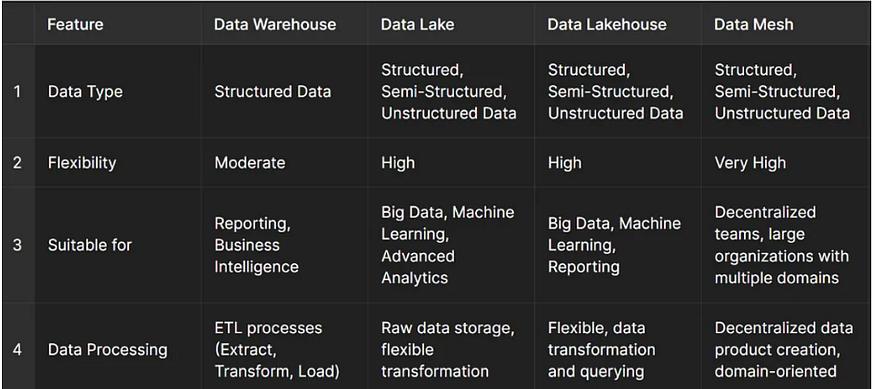
Core Insights - Data has become one of the most valuable assets for organizations, playing a crucial role in strategic decision-making, operational optimization, and gaining competitive advantages [1] - Data engineering is a key discipline that manages the entire process from data collection to transformation, storage, and access [1] - Organizations are shifting towards architectures that can respond to various data needs, with data management strategies like data warehouses, data lakes, data lakehouses, and data meshes playing significant roles [1] Group 1: Data Management Strategies - Data warehouses focus on structured data and are optimized for reporting and analysis, allowing for easy data retrieval and high-performance reporting [12][15] - Data lakes provide a flexible structure for storing structured, semi-structured, and unstructured data, making them suitable for big data projects and advanced analytics [21][24] - Data lakehouses combine the flexibility of data lakes with the structured data management capabilities of data warehouses, allowing for efficient analysis of various data types [27][30] Group 2: Data Architecture Design - A solid data architecture design is critical for the success of data warehouse projects, defining how data is processed, integrated, stored, and accessed [9] - The choice of data architecture design method should align with project goals, data types, and expected use cases, as each method has its advantages and challenges [10][43] - The Medallion architecture is a modern data warehouse design that organizes data processing into three layers: bronze (raw data), silver (cleaned data), and gold (business-ready data) [57][65] Group 3: Implementation Considerations - Effective demand analysis is essential for avoiding resource and time wastage, ensuring that the specific needs of the organization are clearly understood before starting a data architecture project [3][8] - The integration of data from various sources, such as ERP and CRM systems, requires careful planning and robust data control throughout the ETL process [4][6] - Documentation of the data model is crucial for ensuring that both technical teams and business users can easily adapt to the system, impacting the project's sustainability [5][6]