数据要素治理

Search documents
你的30年行业经验,是AI时代的“黄金”还是“石头”?
Sou Hu Cai Jing· 2025-11-27 12:36
Core Insights - The article discusses the anxiety traditional industries face in the age of AI, questioning the practical benefits AI can bring to manufacturing, consumer goods, and supply chains [1] - Liu Chen, CEO of Lingdi Technology Style3D, shares his journey from traditional garment manufacturing to leading a tech unicorn, emphasizing the need for AI to address core industry challenges like inventory and efficiency [2][3] - The future of manufacturing may shift from low-cost labor countries to locations closer to consumers as AI and automation reduce labor costs [2][3] AI Integration in Traditional Industries - Liu Chen advocates for a dual approach of combining AI with core technologies (e.g., 3D modeling) to transform traditional industries, rather than relying solely on AI-generated content [4][5] - The integration of AI and core technologies can lead to exponential improvements in productivity, allowing tasks that once took large teams weeks to complete to be done by a single individual in hours [5] Organizational Transformation - The structure of organizations is shifting from linear to networked models, emphasizing the importance of proprietary data for competitive advantage [6] - CEOs must take on the role of "AI architects," understanding data governance and AI workflows to avoid transformation efforts becoming mere IT tasks [7][8] Educational Insights - The course led by Liu Chen aims to provide traditional industries with a framework to leverage technology for business model transformation, applicable across various sectors [9] - Key questions addressed in the course include the integration of general and specialized AI models, data governance, the role of CEOs in AI transformation, and the characteristics of "super individuals" in the AI era [11]


你的30年行业经验,是AI时代的“黄金”还是“石头”?
混沌学园· 2025-11-27 11:58
Core Insights - The article discusses the anxiety traditional industries face in the age of AI, questioning the practical benefits AI can bring to businesses beyond superficial applications [2] - It emphasizes the need for a deeper integration of AI into core business processes such as R&D, production, and supply chain management to address issues like inventory, efficiency, and information asymmetry [2][5] Group 1: AI Empowerment in Traditional Industries - The true path for empowering traditional industries with AI is explored, moving beyond theoretical discussions to practical insights from industry insiders [3] - Liu Chen, the CEO of Lingdi Technology Style3D, shares his journey from traditional garment manufacturing to leading a tech unicorn, highlighting the pain points of high inventory, slow response times, and thin margins in the apparel industry [4][5] - Liu argues that while companies should fully embrace AI, it should not be viewed as a catch-all solution; instead, it should be combined with core technologies to drive real change [5][8] Group 2: Future of Manufacturing and Supply Chains - A provocative future scenario is presented where, by 2050, advanced AI and robotics could shift manufacturing locations closer to consumers, challenging the current logic of low-cost labor in countries like Vietnam and Cambodia [6][7] - Liu believes that China's current advantage lies in exporting products, but future opportunities will focus on exporting AI-driven manufacturing capabilities [7] Group 3: AI Integration Strategies - The article outlines a strategic framework for integrating AI with core technologies, emphasizing the importance of proprietary data and specialized models in achieving successful AI implementation [11][23] - Liu introduces a three-step transformation path for industries: enhancing tools, reengineering processes, and building ecosystems [11][20] - The combination of AI and core technologies can lead to exponential improvements in productivity, allowing tasks that once required large teams to be completed by a single individual in a fraction of the time [14] Group 4: Organizational Transformation - The organizational structure is shifting from linear to networked models, necessitating a new approach to collaboration and workflow [15] - Liu stresses the importance of data governance and the role of CEOs as "AI architects" in leading these transformations, ensuring that AI initiatives are not relegated to IT departments [17][18] - The article raises critical questions about how to effectively combine general models, specialized models, and proprietary data to leverage decades of industry experience into AI-driven solutions [22]

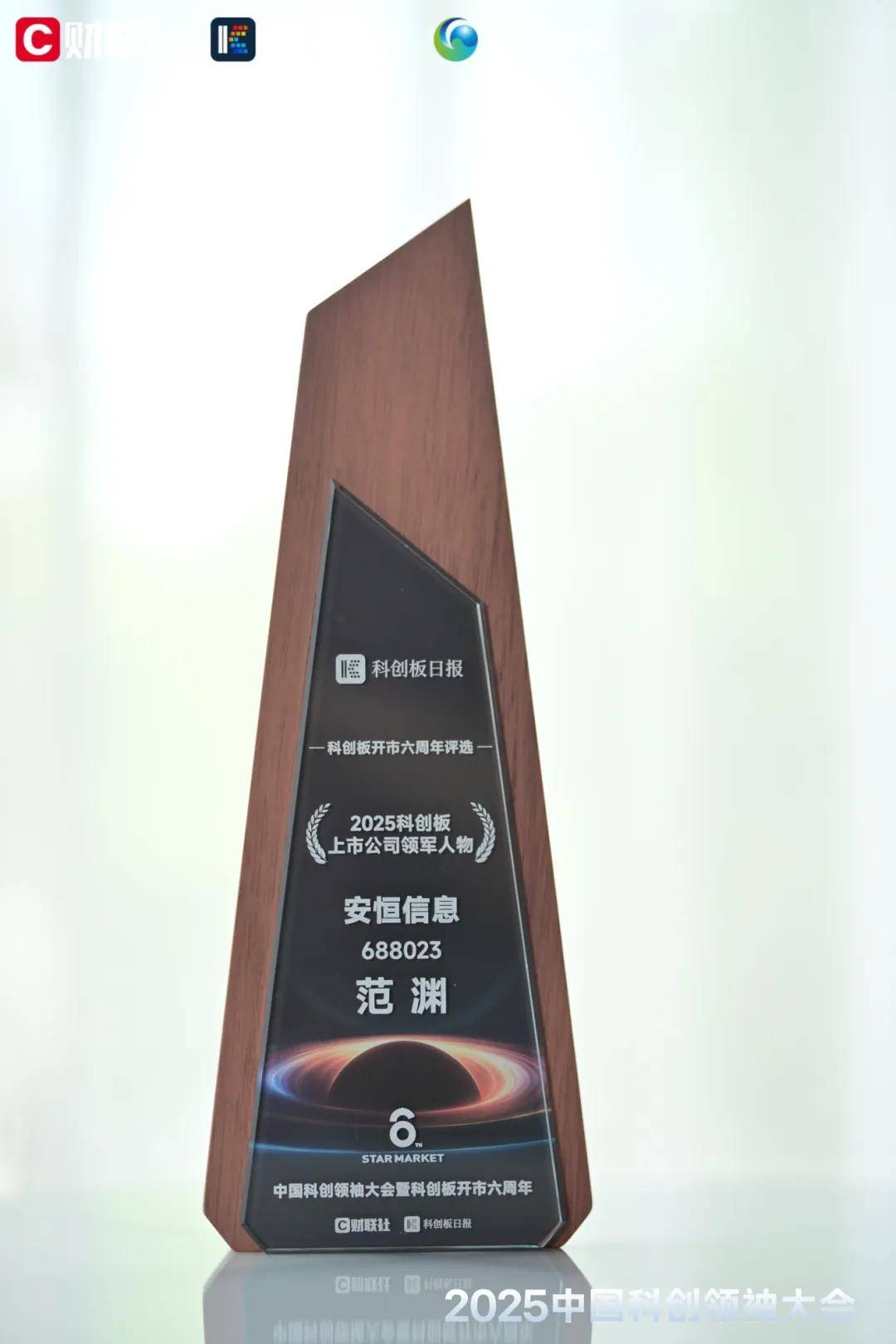
安恒信息范渊荣获科创板上市公司领军人物
Sou Hu Cai Jing· 2025-07-28 07:24
Core Insights - The conference emphasized the integration of data and AI in enhancing the security industry, highlighting the importance of these elements for high-quality industrial development [1][3][12] Group 1: AI and Security - The company presented its DAS strategy, asserting that security is foundational for industrial development in the digital economy, with AI and data integration reshaping the security industry's technology and service boundaries [3][6] - The "Heng Brain" model, developed by the company, has evolved from version 1.0 to 3.0, showcasing capabilities in data governance, vulnerability analysis, and threat tracing, thus creating a comprehensive intelligent protection system [5][6] - AI technology has demonstrated significant effectiveness, achieving a 300% increase in operational efficiency and over 90% data noise reduction in API security monitoring, with a case study showing a reduction in risk alerts from 3,675 to 1,110 [5] Group 2: Data Utilization - The transition from "cherry freedom" to "data freedom" is seen as essential for the digital economy, with the company focusing on platforms that ensure data security while maximizing its circulation value [7][9] - The company has improved processing efficiency by 30 times in data classification and grading, addressing industry pain points related to static results and high manual review thresholds [7] - The company has participated in various pilot projects for trusted data spaces across multiple cities, utilizing privacy computing and blockchain technologies to ensure secure data circulation in sectors like healthcare and finance [9] Group 3: Service Innovation - The company is innovating its service model by establishing a cloud-based MSS service system that emphasizes proactive defense and dynamic operations, aiming for a threat response time of under 5 minutes [10] - The integration of AI into security services has led to a 70% increase in process efficiency for penetration testing and a 90% reduction in the complexity of security operation processes [10] - The company has played a crucial role in securing major events through technological innovation, reinforcing its commitment to building a secure digital world [10]