文明融合

Search documents
伊斯坦布尔:是的,它只是美
Jing Ji Guan Cha Bao· 2026-02-10 10:07
Core Perspective - Istanbul is a unique city that straddles two continents, Europe and Asia, connected by the Bosphorus Strait, which has historical significance as a vital passage between the Black Sea and the Mediterranean [1] Group 1: Cultural Significance - The Blue Mosque, known for its stunning Iznik tiles, features six minarets and a grand dome, symbolizing the architectural prowess of the Ottoman Empire [2][3] - Hagia Sophia showcases a complex history, having served as a cathedral, mosque, and museum, reflecting the cultural and religious transformations over 1,500 years [4][5] - The Grand Bazaar, established in 1461, operates as a vibrant marketplace with over 4,000 shops, attracting around 250,000 visitors daily, representing the bustling commercial life of Istanbul [7][8] Group 2: Daily Life and Local Experience - The local markets offer a sensory experience with vivid colors and aromas, showcasing the everyday life of Istanbul's residents, distinct from the historical narratives [9][10] - Small, family-run cafes and shops provide a glimpse into the intimate, personal interactions that characterize the city's social fabric [9][10] - The ferry rides across the Bosphorus allow for a unique perspective of the city, highlighting the geographical and cultural dichotomy between the European and Asian sides [11][12] Group 3: Architectural and Historical Layers - The architectural features of Hagia Sophia, such as its massive dome and intricate mosaics, illustrate the blending of Christian and Islamic art [5][6] - The Grand Bazaar's design and structure reflect centuries of history, having survived numerous disasters while evolving into a complex marketplace [7] - The Bosphorus Bridge, completed in 1973, symbolizes the connection between two continents and cultures, embodying the city's dual identity [12]
河南地:河套平原的历史回眸
Xin Lang Cai Jing· 2026-01-29 03:16
Core Viewpoint - The article emphasizes the historical significance of the Henan region as a melting pot of civilizations, highlighting its role in the integration of agricultural and nomadic cultures throughout Chinese history [1][12]. Historical Context - The Henan region transitioned from a cultural crossroads to a battlefield during the Qin and Han dynasties, marked by military confrontations between agricultural and nomadic civilizations [2][5]. - Historical records indicate that the Han military campaigns, particularly those led by generals like Wei Qing and Huo Qubing, significantly altered the power dynamics in northern China [2][3]. Military Strategies - Huo Qubing's rapid cavalry tactics are noted as revolutionary, achieving remarkable military feats that reshaped the northern landscape [3][4]. - The article draws parallels between ancient Chinese military strategies and modern warfare, suggesting that the tactics employed by the Han army were advanced for their time [4]. Cultural Integration - The narrative illustrates how the interactions between the Han and nomadic tribes led to a complex tapestry of cultural exchange rather than mere conquest [6][7]. - The establishment of trade routes and diplomatic relations, such as the marriage alliances and the establishment of the Protectorate of the Western Regions, facilitated this cultural blending [9][10]. Economic Development - The Henan region's agricultural policies, including the implementation of the屯田制 (tuntian system), were crucial for sustaining military campaigns and fostering economic growth [9][11]. - The article highlights the importance of local governance and resource management in promoting stability and prosperity in the region [11][12]. Modern Relevance - The Henan region is positioned as a vital hub in the context of the Belt and Road Initiative, linking Central China with the broader world [10][12]. - The historical lessons from the Henan region are presented as a model for contemporary governance and cultural integration, emphasizing the value of diversity and cooperation [12].
你知道西安大雁塔最初可能是“印度风”吗?
Xin Lang Cai Jing· 2025-12-31 06:32
Core Viewpoint - The article discusses the historical evolution of the Big Wild Goose Pagoda in Xi'an, highlighting its initial design inspired by Indian architecture and subsequent modifications that reflect cultural integration over time [1]. Group 1: Historical Background - The Big Wild Goose Pagoda was originally intended to be modeled after an Indian stupa, as envisioned by the monk Xuanzang upon his return from India in 652 AD [1]. - The emperor, concerned about the labor involved in constructing a stone pagoda, suggested a brick structure instead, leading to the completion of a five-story "hybrid" pagoda in Chang'an [1]. Group 2: Architectural Evolution - Empress Wu Zetian later transformed the pagoda into the familiar multi-tiered brick tower, showcasing a significant architectural shift [1]. - During the Ming Dynasty, further renovations gave the pagoda a "new exterior," resulting in the unique style known as "Ming-style Tang Pagoda" [1]. Group 3: Cultural Significance - Each transformation of the Big Wild Goose Pagoda represents a vivid example of cultural fusion, from its Indian origins to its current Chinese architectural form [1].
这场全球首站中国唯一的展览 如何讲述连接古今、贯通东西的“金线”世界?
Sou Hu Cai Jing· 2025-11-30 16:08
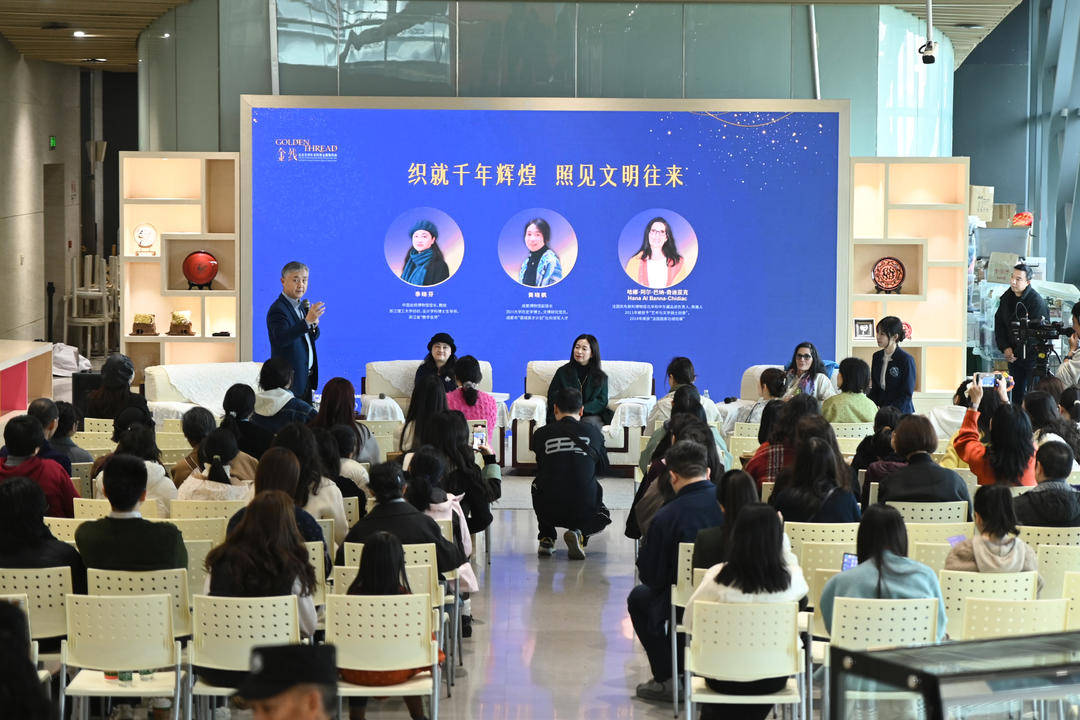
Core Viewpoint - The exhibition "Gold Thread: The Golden Fashion from North Africa to East Asia" showcases over 200 exquisite gold-threaded garments from various cultural institutions, highlighting the historical and artistic significance of gold in clothing across different civilizations [1][10]. Group 1: Exhibition Overview - The exhibition opened on November 30 at the Chengdu Museum and is the first stop of a global tour, being the only one in China [1][10]. - It features artifacts from seven French cultural institutions and eight domestic museums, creating a visual narrative about the allure of gold [1][10]. Group 2: Cultural Significance - The theme "Gold Thread" symbolizes the connection between different cultures, weaving together human history through art, wisdom, and faith [3][6]. - The use of gold in clothing is explored not just for its beauty but for its deeper cultural meanings, reflecting humanity's relationship with nature and the cosmos [6][8]. Group 3: Contributions from Experts - Curator Hana Al-Bana-Chidiac emphasized the exhibition's aim to delve into the stories behind the use of gold in fashion, rather than merely showcasing beautiful garments [6]. - Chinese Silk Museum Director Ji Xiaofen noted that the use of gold and silk in clothing is influenced by sun worship and the pursuit of light, with historical artifacts dating back to the Shang and Zhou dynasties [8]. Group 4: Unique Features of the Chengdu Exhibition - The Chengdu exhibition incorporates local elements, including significant archaeological finds like gold earrings from the Yumen Fire Burn Site, enhancing the narrative of gold's historical context in China [10][11]. - The exhibition also features high-fashion pieces from renowned Chinese designer Guo Pei, blending contemporary fashion with historical narratives [11].

《国宝美鉴》第九集:凿石敬心 从云冈凿痕到文明印记
新华网财经· 2025-07-04 02:27
Core Viewpoint - The article emphasizes the cultural significance and artistic mastery of the Yungang Grottoes, highlighting the fusion of different artistic styles and the deep respect embodied in the stone carvings, reflecting the philosophy of "respecting others as one respects Buddha" [1][5][9]. Summary by Sections - The Yungang Grottoes were commissioned by the royal authority, featuring over 250 caves and more than 51,000 statues carved into a cliff face of 1,000 meters, showcasing their monumental scale and artistic value [3]. - As the first royal-sponsored grotto project after the introduction of Buddhism to China, the site represents a blend of various civilizations, with early sculptures reflecting Gandhara style and later works integrating Gupta style and Han aesthetics [5]. - The stone masons, despite never having seen "Western Buddhas," created diverse representations of Buddha, each reflecting their interpretation of compassion, demonstrating a unique courage in artistic creation [7]. - The intricate carvings, which have endured for over 1,600 years, combine elements from Western and Central Asian influences, symbolizing a dialogue between civilizations and a deep respect for humanity [9].