新经济产业

Search documents
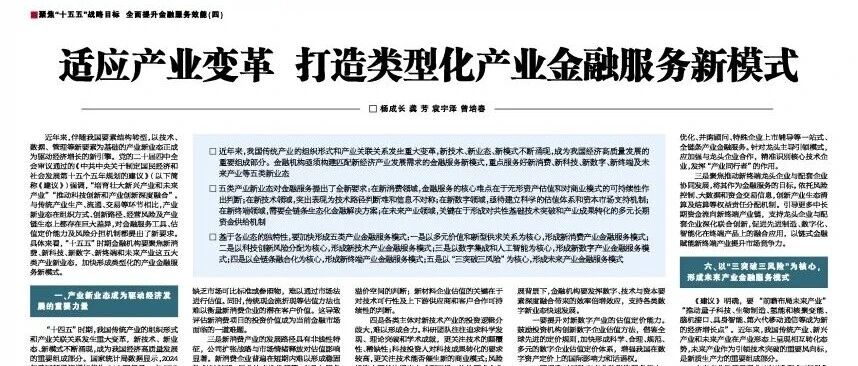
适应产业变革 打造类型化产业金融服务新模式
申万宏源研究· 2025-12-01 06:38
Core Viewpoint - The article emphasizes the need for financial institutions to develop new service models that align with the demands of emerging industries, particularly in new consumption, new technology, new digital, new terminal, and future industries, as these sectors are becoming crucial for China's economic growth [6][7][8]. Group 1: Importance of New Industries - Emerging industries are becoming a significant driving force for economic development, with the new economy's added value reaching 24.3 trillion yuan in 2024, accounting for 18.01% of GDP, an increase of 0.43 percentage points from the previous year [8]. - As of June 2025, there are 25.36 million registered new economy enterprises in China, a year-on-year increase of 6.6%, representing over 40% of the total number of enterprises [8]. Group 2: Characteristics of New Economy Industries - New economy industries differ from traditional ones in four key aspects: driving forces, industry chain ecology, risk characteristics, and value connotation [9][10]. - New economy industries rely more on digital, technological, and model-driven growth, leading to tighter interdependencies within the industry chain and higher innovation risks [9]. Group 3: Financial Service Models for New Consumption - New consumption industries face challenges in asset valuation and sustainable business model assessment due to their reliance on intangible assets [11][12]. - Financial institutions must consider the multi-dimensional value of new consumption, focusing on emotional, cultural, and social values, and develop a reasonable valuation system [12][13]. Group 4: Financial Service Models for New Technology - New technology industries are crucial for innovation-driven growth, with over 500,000 high-tech enterprises in China as of 2024, an increase of 83% since 2020 [14]. - Financial institutions face challenges in understanding technology risks, information asymmetry, and differing valuation logic across various technology sectors [14][15]. Group 5: Financial Service Models for New Digital Industries - The digital economy's added value is projected to exceed 43% of GDP by 2024, with rapid growth in sectors like industrial internet and smart manufacturing [17]. - Financial institutions need to enhance their valuation and pricing capabilities for new digital industries, as current market practices are insufficient [18][19]. Group 6: Financial Service Models for New Terminal Industries - New terminal industries, characterized by deep integration of manufacturing, digital, and technology, require financial services that adapt to their complex ecosystem [21][22]. - Financial institutions must optimize their value assessment capabilities and provide integrated financial solutions for the entire industry chain [22][23]. Group 7: Financial Service Models for Future Industries - Future industries are marked by technological breakthroughs and significant risks, necessitating innovative financial service models that address these uncertainties [24][25]. - Financial institutions should leverage policy funds and private equity investments to support the development of future industries while managing associated risks [26][27].

适应产业变革 打造类型化产业金融服务新模式
Shang Hai Zheng Quan Bao· 2025-11-30 18:29
Core Insights - The article emphasizes the need for financial institutions in China to develop new financial service models that align with the evolving demands of new economic industries, particularly focusing on five categories: new consumption, new technology, new digital, new terminals, and future industries [1][4]. Group 1: New Economic Industries - New economic industries are becoming a significant driving force for economic development, with the added value of the new economy projected to reach 24.3 trillion yuan in 2024, accounting for 18.01% of GDP, an increase of 0.43 percentage points from the previous year [2]. - As of June 2025, there are 25.36 million registered new economy enterprises in China, representing a year-on-year growth of 6.6% and exceeding 40% of the total number of enterprises [2]. Group 2: Characteristics of New Economic Industries - New economic industries exhibit distinct characteristics compared to traditional industries, including different driving forces, tighter interdependencies within the industrial chain, higher operational risks, and the creation of diverse social values alongside economic benefits [3]. Group 3: Financial Service Requirements - The traditional financial service model, which relies on collateral and cash flow, is incompatible with the high intangible assets and risks associated with new economic industries, leading to a structural contradiction of "asset scarcity" in financial investment and "capital scarcity" in real investment [4]. Group 4: New Consumption Financial Service Model - The new consumption industry is crucial for expanding domestic demand, with a shift towards service, value, cultural, and green consumption. Financial institutions face challenges in providing services due to the intangible nature of core assets and the lack of market comparables for valuation [5][6]. - Financial institutions must understand the multi-dimensional value of new consumption, focusing on emotional, cultural, and social values, and establish a reasonable valuation system [6][7]. Group 5: New Technology Financial Service Model - The new technology industry is vital for innovation-driven growth, with over 500,000 high-tech enterprises in China as of 2024, an increase of 83% since 2020. However, challenges remain in securing long-term funding and converting technological achievements into marketable products [8][9]. - Financial institutions need to address challenges such as limited understanding of technological innovations, information asymmetry, and differing valuation logic across various new technology sectors [9][10]. Group 6: New Digital Financial Service Model - The digital economy is rapidly growing, with its value added expected to exceed 43% of GDP by 2024. However, financial services for new digital industries are currently insufficient, with a low representation of digital enterprises in the A-share market [11][12]. - Financial institutions must enhance their valuation capabilities for new digital industries and develop a diverse range of investment products to support the growth of digital enterprises [12][13]. Group 7: New Terminal Financial Service Model - The new terminal industry, characterized by deep integration of manufacturing, digital, and technology, requires financial services that can adapt to the evolving relationships within the industrial chain [14][15]. - Financial institutions should provide integrated financial solutions that consider the interdependencies among new terminal enterprises and their supply chains, focusing on value assessment and collaborative development [15][16]. Group 8: Future Industry Financial Service Model - Future industries are marked by breakthroughs in common technologies and face significant risks, including the feasibility of technological paths and the challenges of market demand realization [18][19]. - Financial institutions are encouraged to innovate comprehensive financial service models that address the uncertainties of future industries, leveraging government funds and private equity investments to support long-term development [19][20].
安徽建工20251031
2025-11-03 02:35
Summary of Anhui Construction's Conference Call Company Overview - **Company**: Anhui Construction - **Industry**: Construction and Engineering Key Points Financial Performance - In Q3 2025, Anhui Construction achieved revenue of 45 billion yuan and net profit of 808 million yuan, showing a year-on-year decline [3][4] - New orders signed in the first three quarters increased by 6.48%, with a 15% growth in total orders in Q3 [3][4] - Operating cash flow remains negative but improved significantly from 5.2 billion yuan to 1.967 billion yuan year-on-year [3][4] - Gross margin and net profit are on a gradual upward trend, while the debt-to-asset ratio has decreased, indicating a continuous improvement in the asset-liability structure [2][3] Business Model and Strategy - The BOT (Build-Operate-Transfer) project model is beneficial for revenue and cash flow, allowing income recognition during the construction phase and based on traffic volume during the operation phase [2][6] - Anhui Construction has signed 28 BOT highway projects, with two already operational and the rest under construction or preparation [2][6] - The company is expanding its market presence across 18 provinces and aims to increase the proportion of profits from outside the province to 40%-50% [2][10] Management and Operational Efficiency - Management expense ratio rose to 4.1% due to the implementation of the "Four Comprehensive Strategy," which includes establishing new institutions and optimizing project management [2][9] - Financial expense ratio improved significantly from 2.6% to 1.1%, attributed to effective control of financing costs and improved capital utilization [2][11] Market Challenges and Responses - The construction industry is facing downward pressure, particularly in municipal and public building projects due to reduced government payment capabilities [5][17] - The approval authority for BOT projects has shifted from provincial to national level, potentially extending preparation times [7][8] - Anhui Construction plans to accelerate project execution in Q4, with four highway projects entering peak construction [5][7] Future Outlook - The company anticipates significant contributions to revenue and profit from upcoming project launches in Q4 [17] - Despite challenges in 2025, the company aims to achieve profit recovery through effective management and project execution [17] - Plans for future financing include potential equity financing, contingent on market conditions [13][18] Emerging Opportunities - Anhui Construction is exploring new sectors such as smart manufacturing and urban infrastructure, including underground pipeline construction, in response to traditional business pressures [15][16] - The company is also focusing on international expansion, particularly in Southeast Asia, Central Asia, and Africa, under the "Belt and Road" initiative [11][20] Dividend and Shareholder Returns - The dividend policy for 2025 is projected at around 30%, contingent on overall performance and cash flow [19][18] Asset Management - Anhui Province's asset management plan aims to revitalize funds and resources, with Anhui Construction preparing to align with government initiatives for asset optimization [21][20]

从“工具”到“生活方式”,天火如何重构高端手电筒价值
Zhong Guo Chan Ye Jing Ji Xin Xi Wang· 2025-07-01 07:37
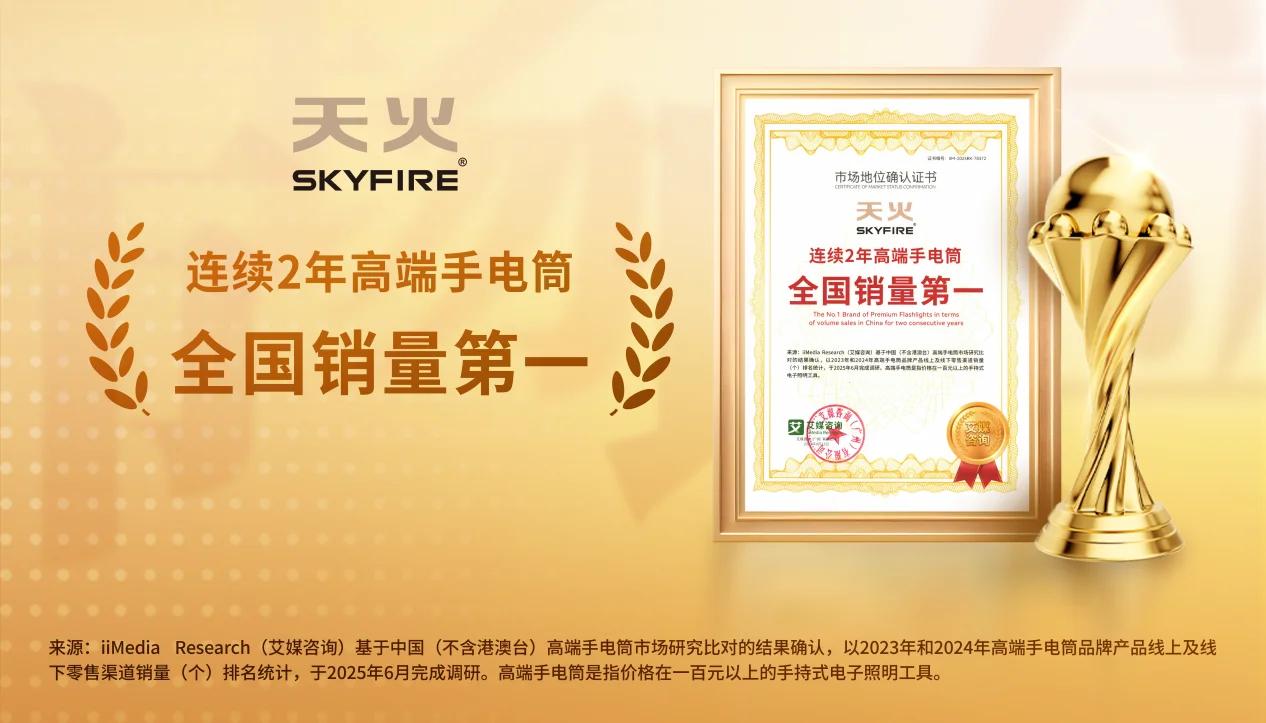
Core Insights - Tianhuo has been awarded the title of "No. 1 in high-end flashlight sales nationwide for 2023-2024" by iiMedia Research, confirming its leading market position for two consecutive years [1][5]. Industry Trends - The outdoor sports market in China is characterized by "diversified scenarios and refined demands," with consumers shifting from basic lighting needs to products that are adaptable to specific scenarios and enhanced by technology [3]. - The domestic flashlight industry is transitioning from "price competition" to "brand upgrading," reflecting a significant change in consumer expectations regarding quality and design [3]. Company Strategy - Tianhuo has identified the core demand for differentiated lighting products across various scenarios, leading to the development of a comprehensive product matrix that enhances professional functionality while considering aesthetic design [3][6]. - The company focuses on "new Chinese-style flashlights," integrating traditional cultural elements with modern aesthetics to meet the emotional and cultural needs of younger consumers [6][8]. Product Development - Tianhuo has launched over a hundred products tailored for various scenarios, including household, professional, and outdoor uses, emphasizing a "scenario-based development" approach that merges technology with consumer needs [8][9]. - The company has developed innovative technologies and specialized products to meet unique outdoor demands, supported by a professional team with diverse skills and outdoor experience [9]. Operational Excellence - Tianhuo employs a collaborative supply chain management approach, ensuring real-time data sharing across all production stages, which enhances quality control and production efficiency [9]. - The company has established a data-driven e-commerce team that operates across multiple platforms, utilizing detailed market analysis to boost sales and brand presence [10]. Intellectual Property and Recognition - Tianhuo holds over a hundred domestic and international patents, underscoring its commitment to innovation and technological advancement [11]. - The company has received various accolades, including becoming a partner of the Land Rover Alliance and being recognized as a high-tech enterprise, which reinforces its strong industry reputation [11]. Future Outlook - With the rise of the camping economy and light outdoor activities, Tianhuo aims to continue driving high-quality development in outdoor lighting by focusing on user needs and technological innovation [13]. - The growing appeal of traditional Chinese culture presents opportunities for Tianhuo to leverage cultural elements in its products, particularly in the "new Chinese-style" segment, which aligns with consumer demand for culturally rich and practical products [13].