新消费

Search documents
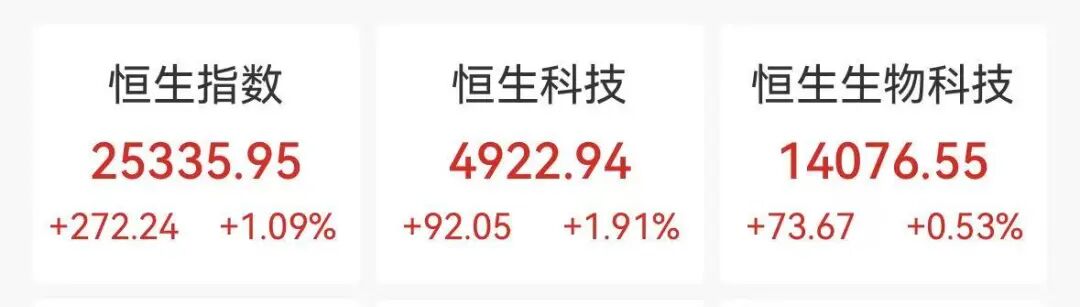
港股科网股、半导体股集体拉升,京东、阿里、理想汽车大涨4%,泡泡玛特重挫22%
2 1 Shi Ji Jing Ji Bao Dao· 2026-03-25 08:53
Market Overview - The Hong Kong stock market experienced an overall increase, with the Hang Seng Index rising by 1.09% to close at 25,335.95 and the Hang Seng Tech Index increasing by nearly 2% to 4,922.94 [1][5]. Key Stock Performances - Meituan saw a significant rise of nearly 14%, while JD.com, Alibaba, and Li Auto each increased by over 4%. BYD Electronics rose by over 3%, and NIO increased by nearly 2% [2][7]. - In the semiconductor sector, notable gains were observed with Wallen Technology rising over 5%, and Lattice Semiconductor increasing by over 4%. SMIC and Hua Hong Semiconductor both rose by over 2% [11]. Sector Performance - AI application stocks showed strong performance, with Zhizhu rising over 16% and MINIMAX-W increasing by over 4% [11]. - The non-consumer sector faced declines, particularly with Pop Mart falling over 22% due to unmet sales expectations for non-Labubu IP products, and Mixue Group dropping over 5% [11].


机构赎回的一条谣言
表舅是养基大户· 2026-03-24 13:35
Core Viewpoint - The article discusses the current market dynamics, particularly focusing on the behavior of institutional investors and the implications of geopolitical events on market sentiment [1][5][27]. Group 1: Institutional Investor Behavior - Institutional investors are categorized based on their funding types, with long-term funds like insurance companies being more inclined to increase their positions, while unstable funds like wealth management products are reducing their exposure to mitigate volatility [9][10]. - Recent market declines were attributed to small and medium-sized insurance companies being forced to reduce their positions due to regulatory requirements, which was labeled as a misleading narrative by some analysts [11][12]. - The article highlights that the A-share market has experienced relatively smaller declines compared to global markets, indicating that it is not in an oversold condition [13][14]. Group 2: Market Dynamics and Trends - The article notes that the recent volatility in the market has led to a significant withdrawal from wealth management products, which are more sensitive to market fluctuations, indicating a trend of risk aversion among investors [17][23]. - The performance of convertible bonds has been negatively impacted as they are closely related to wealth management products, which have seen a rapid decline in valuation due to market uncertainties [24]. - The article emphasizes that the current market adjustments are healthy, as they remove the most sensitive funds first, making it easier for the market to clear [25]. Group 3: Global Market Reactions - Global markets have shown a rebound following news of potential negotiations involving key political figures, which has increased risk appetite among investors [27][28]. - The article points out that the A-share market has seen a broad-based rally, with most sectors recovering, particularly the small-cap stocks that had previously underperformed [31]. - The article also mentions significant movements in the ETF market, indicating a potential shift in marketing strategies as companies begin to brand their products more prominently [34][37]. Group 4: Sector-Specific Insights - In the Hong Kong market, there is a notable risk associated with the volatility of southbound capital flows, which are primarily driven by short-term trading funds [38]. - Positive earnings reports from new consumer companies in Hong Kong have led to a collective surge in their stock prices, indicating strong market interest in this sector [40]. - The article highlights the growing trend of electric vehicle registrations in the EU, which could benefit Chinese automotive companies as oil prices rise [40].


新兴产业周报20260317-20260317
Western Securities· 2026-03-17 07:28
Investment Rating - The report recommends an "Overweight" rating for solid-state batteries, innovative drugs, and humanoid robots, while maintaining a "Neutral" rating for commercial aerospace and other sectors [5][21]. Core Insights - The report highlights a "less loss for win" phase, suggesting a focus on sectors with potential growth despite current market pressures [5]. - Key themes include advancements in solid-state batteries, innovative pharmaceuticals, and humanoid robots, with specific mentions of Tesla's production plans and breakthroughs in battery technology [5][10]. Summary by Relevant Sections Solid-State Batteries - The sector is rated "Overweight" with a strong technical outlook, indicating a low position relative to historical averages and potential for growth [5]. - Recent developments include the second-generation semi-solid-state battery from Funeng Technology, which supports fast charging and has achieved small-scale production [5][10]. Innovative Drugs - Rated "Overweight," this sector shows strong fundamentals despite slight downward adjustments in profit expectations [5]. - Notable events include the acceptance of a clinical trial application by Yangli Pharmaceutical for a drug targeting hypertension, marking a significant step for Chinese innovative drugs in international markets [10]. Humanoid Robots - The humanoid robot sector is also rated "Overweight," with a strong technical outlook and ongoing developments, such as Tesla's announcement of mass production plans for its Optimus robot [5][10]. Commercial Aerospace - This sector is rated "Neutral," facing adjustment pressures despite recent successful satellite launches [5]. AI Applications and Computing Infrastructure - Both sectors are rated "Neutral," with moderate growth expectations and recent regulatory approvals for industry standards [5][10]. New Consumption - The new consumption sector is rated "Neutral+" with a strong technical outlook, indicating potential growth opportunities as new consumption enterprises prepare for IPOs [5][10]. Gaming - The gaming sector is rated "Neutral," with recent adjustments in commission rates by major platforms like Apple and Google providing a favorable environment for game developers [5][10]. Low-altitude Economy - This sector is rated "Neutral," with ongoing legislative efforts to support its development [5][10]. Deep Sea Economy - Rated "Underweight," this sector faces challenges despite significant contributions to national oil production [5][10]. Military and Defense - The military sector is rated "Neutral," with ongoing expansions and production commitments from major defense contractors [5][10]. Controlled Nuclear Fusion - This sector is rated "Neutral," with recent government initiatives highlighting its strategic importance for future energy solutions [5][10].
布鲁可:2026年业绩不确定性可能导致估值持续承压,下调至“持有”-20260317
SPDB International· 2026-03-17 02:45
Investment Rating - The report downgrades the investment rating of the company to "Hold" with a target price of HKD 70.0, reflecting a potential upside of 5.2% from the current price of HKD 66.6 [1][2]. Core Insights - The company's revenue for 2025 is projected to grow by 30% year-on-year, but adjusted net profit is expected to decline by 3.4% to RMB 660 million, which is below expectations. The stock price increased by over 8% on the first trading day after the earnings announcement, primarily due to short covering [1]. - There is significant uncertainty regarding the company's performance in 2026, particularly due to reliance on the top four IPs, which accounted for 81% of total revenue in 2025. The growth potential of these IPs remains uncertain [6]. - The report expresses optimism about the company's overseas market growth, citing a well-established team and a strong IP portfolio, with new IPs planned for launch in 2026 that are expected to perform well in Western markets [6]. - The report highlights concerns about the company's profitability, with a projected decline in gross margin due to the introduction of lower-priced products and increased costs associated with new IPs. However, management anticipates a gradual improvement in gross margin in 2026 [6]. Financial Projections - Revenue projections for the company are as follows: RMB 2,241 million in 2024, RMB 2,913 million in 2025, RMB 3,636 million in 2026, RMB 4,390 million in 2027, and RMB 5,187 million in 2028, reflecting year-on-year growth rates of 155.6%, 30.0%, 24.8%, 20.7%, and 18.2% respectively [8][10]. - Core net profit is expected to reach RMB 582 million in 2024, RMB 675 million in 2025, RMB 859 million in 2026, RMB 1,073 million in 2027, and RMB 1,304 million in 2028, with growth rates of 683.1%, 16.1%, 27.2%, 24.9%, and 21.5% respectively [8][10]. - The report notes a significant reduction in the 2026 core net profit forecast to RMB 860 million, down 27.2% from previous estimates, reflecting a more cautious outlook [11].
创业板IPO“第四套标准”落地在即,新消费回流A股悬念拉满
财联社· 2026-03-14 07:00
Core Viewpoint - The proposed "fourth set of standards" for the ChiNext board aims to support new consumption and modern service industries, potentially allowing previously Hong Kong-listed companies to return to the ChiNext board, enhancing market dynamics and investment opportunities [1][5]. Summary by Sections Current Standards and Proposed Changes - The ChiNext board currently has three differentiated listing standards focused on profitability and revenue, which may not adequately support new consumption and modern service sectors [3]. - The new standard is expected to introduce a more inclusive framework, emphasizing non-financial indicators and operational cash flow rather than solely relying on net profit [4][5]. Anticipated Features of the Fourth Set of Standards - The new standards may incorporate a combination of expected market capitalization, revenue, and cash flow, focusing on operational cash flow rather than just net profit [4]. - Non-financial metrics such as digital capabilities, innovative business models, and brand barriers may be included to differentiate from traditional industries [4]. - The thresholds for market capitalization and revenue may be adjusted to better accommodate new consumption and modern service enterprises [4]. Market Implications and Predictions - The introduction of the fourth set of standards is expected to expand the ChiNext board's coverage to include a broader range of new productive forces, benefiting sectors like new tea drinks, smart toys, and community retail [5][6]. - The reform is anticipated to enhance liquidity and valuation in the consumption sector, aligning with the growing demand for service and new consumption industries [7]. - As many consumption companies have recently opted for Hong Kong listings, the new standards may encourage a return to the ChiNext board, particularly for those with innovative and modern characteristics [8][9].

新消费品牌如何使用「龙虾」
新消费智库· 2026-03-10 13:05
Core Viewpoint - The article emphasizes that OpenNClaw (referred to as "lobster") represents an efficiency opportunity rather than a product opportunity for consumer brands, urging them to focus on how it can enhance sales speed rather than getting caught up in the technology narrative [5][13][96]. Group 1: Understanding OpenNClaw - OpenNClaw is not a product or platform but an automation tool that can significantly change content production processes for consumer brands [7][35]. - The primary question for brands should be whether OpenNClaw can replace manual labor in content creation, customer service, and advertising material production [24][60][65]. Group 2: Impact on Content Production - The article highlights that the content industry is the first to be transformed by AI, with OpenNClaw capable of drastically reducing content production costs and increasing output [25][34][41]. - Brands can potentially increase their content output from 50 to 500 pieces per month by automating processes such as script generation, video creation, and content testing [40][39]. Group 3: Key Applications for Consumer Brands - Three main applications of OpenNClaw for consumer brands are identified: 1. **Content Factory**: Automating the content creation process to meet the high demand for content [49][53]. 2. **Customer Service Automation**: Utilizing AI to handle repetitive customer inquiries, significantly reducing staffing needs [58][64]. 3. **Advertising Material Production**: Accelerating the creation of advertising materials, allowing for rapid testing and iteration [66][69]. Group 4: Strategic Considerations - The article warns against brands treating AI as a strategic focus; instead, it should be viewed as a tool to enhance efficiency without replacing core business strategies such as product development and brand building [74][76][85]. - Brands that fail to leverage AI effectively may find themselves at a disadvantage, as efficiency improvements alone do not guarantee success [78][82]. Group 5: Future Outlook - The future of consumer brands will likely see a divide between those who effectively use AI tools for operational efficiency and those who merely chase AI narratives without tangible outcomes [88][90]. - The most successful brands will be those that quietly integrate AI to enhance their operational metrics rather than those that focus solely on the technology itself [98][99].

国泰海通|食饮:政策加码、资本赋能,新消费与服务消费迎双重利好——评十四届全国人大四次会议经济主题记者会
国泰海通证券研究· 2026-03-08 14:30
Core Viewpoint - The article emphasizes a dual signal of policy enhancement and capital empowerment for the consumer industry, marking a golden window period for demand expansion and supply-side capitalization, with a focus on new consumption and service consumption [1][2]. Group 1: Policy Signals - The recent press conference highlighted key topics such as expanding domestic demand, boosting consumption, and deepening capital market reforms, signaling a clear policy direction to activate both domestic and international markets through a combination of consumption policies [2][3]. - The Ministry of Commerce plans to continuously develop the "Buy in China" brand through activities, policies, and optimized scenarios, introducing new policies for product consumption expansion and an upgraded version of the outbound tax refund policy [2][3]. Group 2: Capital Market Reforms - The reform of the ChiNext board is expected to reshape the supply structure of the consumer sector, accelerating the capitalization of light-asset, high-growth new consumption enterprises [3]. - Traditional listing standards have primarily focused on heavy assets and profit scale, which may not adequately support new consumption brands and service-oriented enterprises; the new reforms aim to enhance the inclusivity for these types of companies [3]. Group 3: Consumer Market Potential - The combination of "Buy in China" and the outbound tax refund 2.0 policy is expected to resonate with both domestic and international demand, enhancing the attractiveness of China's consumer market and increasing the willingness of foreign travelers to spend in China [3]. - The outbound tax refund 2.0 policy is likely to focus on lowering shopping thresholds for foreign travelers, improving the conversion efficiency of inbound consumption, which will benefit service consumption sectors such as duty-free, cultural tourism, dining, and specialty retail [3].

华源晨会精粹20260308-20260308
Hua Yuan Zheng Quan· 2026-03-08 10:53
Fixed Income/Banks - The total scale of traditional credit bonds (excluding convertible bonds, exchangeable bonds, and ABS) in the market reached 480,013 billion yuan as of March 1, 2026 [8] - The balance of urban investment bonds was 160,121 billion yuan, accounting for 33.4% of the total, while the balance of industrial bonds was 136,550 billion yuan, accounting for 28.4% [8] - High-yield traditional credit bonds amounted to 123,411 billion yuan, representing 25.7% of the overall scale [8] Metals and New Materials - The geopolitical situation in the Middle East has caused supply shocks, leading to an increase in aluminum prices, with domestic aluminum prices rising by 3.59% to 24,600 yuan/ton [15] - Copper prices are expected to remain weak due to inventory accumulation and geopolitical tensions, with a significant increase in copper inventory observed [14] - Lithium prices are anticipated to continue rising as inventory decreases, despite a recent drop in prices due to profit-taking [16] Real Estate - The real estate sector saw a decline of 4.1% this week, with new home transactions in 42 key cities rising by 61.1% week-on-week [20] - The government is focusing on stabilizing the real estate market, implementing policies to control inventory and encourage the purchase of existing homes for affordable housing [22] - Various local governments are introducing supportive measures, such as cash subsidies for new home purchases [22] North Exchange - The pace of new stock listings on the North Exchange has significantly accelerated, with 10 out of 20 new A-share listings this year coming from the North Exchange [27] - The North Exchange is expected to maintain a volatile trend due to external uncertainties, with a focus on high-certainty investment strategies [28] - The upcoming quarterly adjustment of the North Exchange index is anticipated to bring passive fund allocation to newly included stocks [28] New Consumption - The government has proposed a series of measures to boost consumption, including a plan to increase income for urban and rural residents [31] - The global beauty market shows a clear division, with L'Oréal leading the market with sales exceeding 350 billion yuan, while other brands like Estée Lauder and Procter & Gamble are also performing well [32] - The price adjustment of old gold is expected to maintain high profit margins, with a recent increase of 20-30% [33] Electronics - Micro导纳米 (688147.SH) is positioned as a leader in semiconductor thin film deposition technology, with continuous revenue growth expected from 2020 to 2024 [6] - Yuchip Technology (688049.SH) is capitalizing on the AI terminal wave, focusing on low-power, high-performance chips for various applications [6]
定调积极,扩内需和科技创新是重点
Huajin Securities· 2026-03-06 00:50
Policy Direction - The overall tone is positive, emphasizing the expansion of domestic demand and technological self-reliance[4] - The economic growth target for 2026 is set at 4.5%-5%, aligning with market expectations[7] - A new special fund of 100 billion yuan is established to promote domestic demand[9] Fiscal and Monetary Policy - Continued emphasis on proactive fiscal policy, with an increase in the deficit scale and public budget expenditure compared to last year[7] - Monetary policy remains accommodative, focusing on maintaining reasonable price increases and utilizing tools like reserve requirement ratio cuts and interest rate reductions[7] Market Impact - Short-term implementation of proactive fiscal and monetary policies is expected to support market confidence[14] - The "14th Five-Year Plan" is likely to drive structural recovery in profits and credit, reinforcing the slow bull market in A-shares[20] Industry Focus - Beneficial sectors include TMT, new energy, machinery, military, non-ferrous metals, chemicals, and new consumption[2] - Emphasis on developing emerging industries such as integrated circuits, aerospace, and biomedicine, as well as future industries like quantum technology and hydrogen energy[9] Risk Factors - Historical experiences may not apply to future conditions, and unexpected policy changes could impact economic recovery[3] - Economic recovery may fall short of expectations due to external disturbances or unforeseen events[28]
金融大家评 | 奚国华:发挥金融和实业并举优势 为中国式现代化贡献中信力量
清华金融评论· 2026-03-04 08:13
Core Viewpoint - The article emphasizes the strategic direction of China CITIC Group in alignment with the 14th Five-Year Plan, focusing on high-quality development, enhancing financial capabilities, and expanding international cooperation to support national economic goals [2]. Group 1: Financial Core Functions - China CITIC Group possesses comprehensive financial resources with an asset management scale of nearly 11 trillion yuan, serving over 200 million clients and supporting over 1,200 technology innovation enterprises [3]. - The company aims to enhance its core functions across six major financial sectors: banking, securities, trust, insurance, financial assets, and financial leasing, while implementing a financial "strong core" project [3]. - Key initiatives include developing a differentiated inclusive finance system, promoting green finance, and integrating digital technology with comprehensive financial services [3]. Group 2: Risk Management - The company is establishing a financial risk prevention and resolution system, focusing on early detection and management of risks, particularly in real estate and local debt sectors [4]. - A comprehensive financial compliance management initiative is being implemented to enhance regulatory adherence and risk management practices [4]. - The company is innovating its financial model to improve capital management and risk isolation, ensuring effective asset utilization and brand strength [4]. Group 3: Industrial Development - China CITIC Group is involved in advanced manufacturing, materials, and new consumption sectors, with a focus on technological innovation to drive industrial upgrades [5]. - The company is committed to upgrading traditional industries through high-end, intelligent, and green transformations, enhancing productivity and value chains [5]. - New industries are being developed through strategic investments in key areas such as artificial intelligence, new energy, and advanced equipment [5]. Group 4: Internationalization and Open Economy - The company is leveraging its global presence in over 150 countries to enhance its international business strategy, focusing on a comprehensive service platform for "going out" and "bringing in" [8]. - Initiatives include supporting the internationalization of the renminbi and enhancing cross-border financial services [8]. - The company aims to strengthen its role in the Belt and Road Initiative by promoting infrastructure projects and fostering international cooperation [9]. Group 5: Party Leadership and Governance - China CITIC Group emphasizes the integration of party leadership into corporate governance, ensuring that political advantages translate into competitive advantages [10]. - The company is enhancing its organizational structure to align with party directives and improve decision-making processes [11]. - A focus on discipline and legal compliance is being reinforced to ensure ethical governance and operational integrity [12].