新能源汽车存量竞争

Search documents
比亚迪再探“磷酸铁锂”性能上限
高工锂电· 2026-03-06 11:11
Core Viewpoint - BYD officially launched its second-generation blade battery and fast-charging technology, showcasing significant advancements in charging efficiency and safety features [2][3]. Summary by Sections Fast-Charging Technology - The new technology allows for a substantial increase in charging efficiency: charging from 10% to 70% in 5 minutes and to 97% in 9 minutes. In extreme cold conditions, charging from 20% to 97% can be completed in under 12 minutes [4][6]. - Key innovations include the "lithium-ion high-speed channel" and "full-temperature intelligent thermal management system" [6]. Technical Optimizations - Enhancements include widening lithium-ion migration channels, optimizing the SEI film for better durability and self-repair, and improving heat dissipation through a "copper-aluminum parallel thermal conduction" design [7][8][10]. Battery Specifications - The second-generation blade battery has a 5% increase in energy density compared to the first generation. It maintains a capacity retention rate improvement of 2.5%, with a replacement policy for batteries dropping below 77.5% capacity [10]. Safety Features - The battery demonstrated safety by passing 500 fast-charging cycles without catching fire or smoking during puncture tests, confirming its reliability under high-pressure fast-charging scenarios [10]. Infrastructure Development - BYD announced an ambitious plan to build 20,000 fast-charging stations by the end of 2026, with 18,000 in urban areas and 2,000 along highways [11][14]. - The company has already established 4,239 stations and aims to add 1,000 more before the May Day holiday [14]. Challenges and Solutions - The main challenge for this infrastructure project is the existing power grid capacity, which currently has a shortfall of 1,000 GW compared to the demand if all charging stations were upgraded [15]. - BYD's solution involves "配储改造" (matching storage transformation) to enhance existing stations without increasing grid capacity, allowing for rapid construction [15][16]. Product Launches - Alongside the battery and charging infrastructure, BYD introduced ten new models featuring the fast-charging technology, targeting both high-end and mainstream markets [20]. Market Strategy - The strategy aims to capture market share amid intensifying competition in the electric vehicle sector, particularly in northern regions where low-temperature performance and infrastructure are critical [21]. - The breakthrough in fast-charging technology may disrupt the plug-in hybrid and battery swap models, as it challenges the necessity of traditional refueling methods [22]. Consumer Perception - There is a significant consumer perception barrier regarding fast charging, with concerns about safety and battery longevity. BYD aims to address these through data and demonstrations of the technology's reliability [24][25].



ETF日报:未来应着重关注财政政策的发力节奏,以及地产、上游原材料的企稳信号,可关注十年国债ETF
Xin Lang Ji Jin· 2025-05-28 13:05
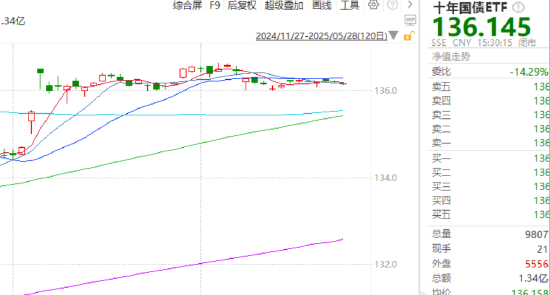
Market Overview - The A-share market showed overall weakness today, with the Shanghai Composite Index down 0.02% at 3339.93 points, the Shenzhen Component down 0.26%, the ChiNext down 0.31%, and the Sci-Tech Innovation Board down 0.41% [1] - The trading volume in the Shanghai and Shenzhen markets reached 1.01 trillion, an increase of 11 billion compared to the previous trading day [1] - Defensive sectors such as telecommunications, transportation, cash flow, and coal performed well, while sectors like semiconductors, automobiles, and military showed declines [1] Economic Indicators - The ten-year government bond ETF (511260) has seen minimal movement, with a slight increase of 0.46% since April 7. The yield on ten-year government bonds rose from 1.632% to 1.720%, indicating a price drop [1] - The bond market is expected to experience volatility in the short term, with limited downside risk. Long-term trends are influenced by fundamental and policy factors, particularly inflation and economic growth [3] Investment Dynamics - Investment, including real estate, consumer spending, and foreign trade, remains the main driver of China's economic growth, influenced by policy direction [4] - In the first quarter, export delivery value increased by 6.7% year-on-year, while the real estate sector continues to show negative growth in new construction and sales areas [4] Price Trends - April's Producer Price Index (PPI) was -2.70%, primarily affected by declines in the mining and raw materials sectors. The demand for coal and steel remains weak due to insufficient demand and overcapacity [6] - The real estate sector's stabilization is crucial for the macroeconomic outlook, with ongoing concerns about the performance of upstream raw materials [6] Fiscal Policy Impact - Recent government initiatives aim to accelerate urban renewal projects, which could significantly impact economic data if progress is made [8] - The central bank's recent monetary policy adjustments, including a reduction in the one-year Loan Prime Rate to 2.94%, signal a supportive stance towards the bond market [9] Automotive Sector Insights - The new energy vehicle ETF (159806) has seen a decline of 5.41% over the past five days, despite a year-on-year production and sales growth exceeding 30% in April [10] - BYD initiated a price war with significant discounts on multiple models, prompting other automakers to follow suit, indicating intense competition and potential financial risks within the industry [12][13]