
利率债

Search documents
2026年4月1日利率债观察:做平30Y-10Y的机会已现
EBSCN· 2026-04-01 05:26
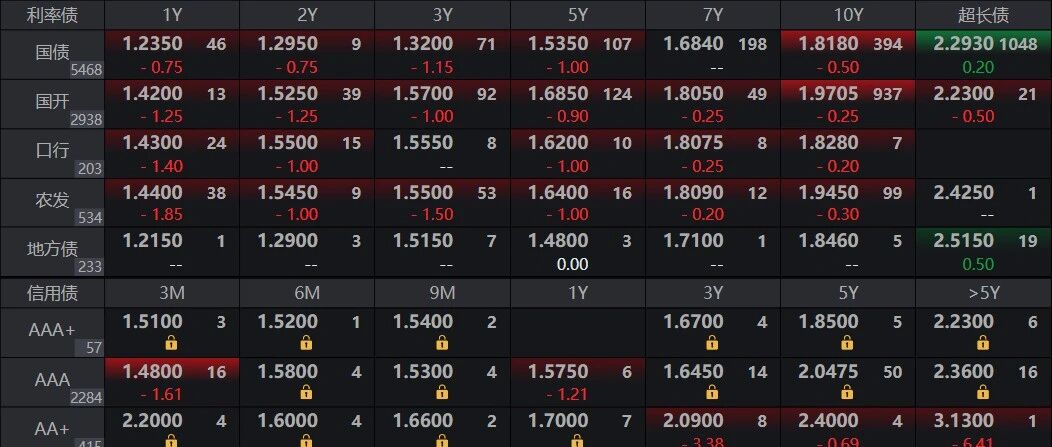
Group 1: Report's Industry Investment Rating - No information provided Group 2: Report's Core View - The opportunity to flatten the 30Y - 10Y spread has emerged, and currently, betting on the convergence of the 30Y - 10Y Treasury bond spread has a high probability of success. Similarly, the probability of success in betting on the convergence of the 30Y local government bond and 10Y Treasury bond spread is also high [1][2][3] Group 3: Summary Based on Related Catalogs 30Y - 10Y Treasury Bond Spread Analysis - The 10Y is the most - watched maturity on the Treasury yield curve. The spread between 30Y and 10Y Treasury bonds is used as an indicator to compare the investment cost - effectiveness of the two maturities. The higher the spread's historical quantile, the higher the investment cost - effectiveness of 30Y relative to 10Y [1][7] - In the medium - term, the 30Y - 10Y Treasury bond spread has a significant mean - reversion characteristic. From January 2010 to December 2022, the spread was generally in the range of 40 - 80bp, with a median of 57bp [1][7] - After December 2022, the spread trended downward, but has risen rapidly in the past six months. As of March 31, 2026, the spread is 53.5bp, at the 52% quantile since January 2010, at least at a historical neutral level [1][7] - The current spread is higher than the fitted value calculated from the 10Y Treasury yield. The spread and the 10Y Treasury yield are positively correlated, with a Pearson correlation coefficient of 0.44. An OLS model can be established: 30Y - 10Y Treasury bond spread = 10.23×10Y Treasury yield + 19.00. The actual spread has the motivation to revert to the fitted value [1][7] 30Y and 10Y Treasury Bond Yield Ratio Analysis - The ratio of 30Y and 10Y Treasury bond yields focuses on measuring the investment cost - effectiveness of the two assets from the perspectives of static yield and holding - period coupon income. It also has a mean - reversion characteristic [2][10] - Currently, the 30Y and 10Y Treasury bond yields are 2.35% and 1.82% respectively, and their ratio is 1.29, the highest since June 2020. The future decline of the ratio is only a matter of time, indicating that betting on the convergence of the 30Y - 10Y Treasury bond spread has a high probability of success [2][10] 30Y Local Government Bond and 10Y Treasury Bond Spread Analysis - The current spread between 30Y local government bonds and 10Y Treasury bonds is 79.3bp, at the 82% quantile since January 2021. The spread has basically returned to the level of March 2022 [3][12] - The current ratio of 30Y local government bond and 10Y Treasury bond yields is 1.39, the second - highest since January 2021. Betting on the convergence of the 30Y local government bond and 10Y Treasury bond spread has a high probability of success [3][12]
2月利率运行分析与展望:两会延续适度宽松货币政策基调,收益率或继续在1.8%附近窄幅波动
Zhong Cheng Xin Guo Ji· 2026-03-30 11:31
1. Report Industry Investment Rating - No relevant content found. 2. Core Viewpoints of the Report - The 2026 Government Work Report continues the moderately loose monetary policy tone, with fiscal and monetary policies coordinating to promote economic growth and price recovery. The 10 - year Treasury bond is expected to maintain a low - interest rate, fluctuating in the range of 1.75% - 1.85% [6]. - The current macro - economic situation is still in a weak recovery phase. The yield central tendency is difficult to rise significantly due to factors such as the seasonal decline of the manufacturing PMI and moderate price recovery. However, geopolitical conflicts may push up inflation expectations and impact the bond market [6]. - The moderately loose monetary policy will continue. In the short term, the probability of reserve requirement ratio cuts and interest rate cuts is low. The market liquidity will remain reasonably abundant, and the impact on the bond market will be limited [6]. - Institutional behavior tends to be stable, providing phased support for the bond market. In the context of economic pressure, there is still room for further reserve requirement ratio cuts and interest rate cuts. The long - end yield has limited upward space [6]. 3. Summary by Directory Hotspot Review - The 2026 Government Work Report continues the moderately loose monetary policy and more proactive fiscal policy, consistent with the tone of the Central Economic Work Conference. There is still room for reserve requirement ratio cuts and interest rate cuts. The economic growth target is adjusted to 4.5% - 5%, making policy - making more flexible [7]. - The report emphasizes the coordinated efforts of various policies. The central bank has created a 100 - billion - yuan special fund for fiscal - financial cooperation to promote domestic demand and issued 800 - billion - yuan new policy - based financial instruments. The government bond supply remains stable, and the central bank will ensure a stable market environment [8]. - With the increasing demand for investment promotion, domestic demand expansion, and structural adjustment, structural monetary policies will continue to play a role. The central bank plans to issue 1.3 - trillion - yuan ultra - long - term special treasury bonds and 800 - billion - yuan new policy - based financial instruments to support key areas [9][11]. February Interest Rate Operation Review Fund and Liquidity Monitoring - In February, the central bank's net open - market fund injection was 435.9 billion yuan, mainly in the form of medium - and long - term fund injections. The central bank's net purchase of treasury bonds was 50 billion yuan, a slight decrease from the previous month [14]. - Despite disturbances such as increased cross - festival fund demand and large - scale reverse repurchase maturities, the central bank's fund injection kept the fund interest rate stable, with the central tendency slightly decreasing. The spread between DR007 and R007 increased, indicating greater non - bank fund pressure [15]. Interest Rate Bond Yield Review - In February, the 10 - year Treasury bond yield first decreased and then increased. Before the Spring Festival, it dropped to a minimum of 1.77% due to factors such as sufficient liquidity and increased market expectations of a loose policy. After the festival, it rebounded and then decreased again, closing at 1.78% at the end of the month, a 3.59 - basis - point decrease from the end of the previous month [18]. - The term spread between the 10 - year and 1 - year Treasury bonds first narrowed and then widened, with an overall narrowing compared to the previous month. The trading volume of interest - rate bonds decreased by 34.26% to 14.93 trillion yuan [18]. Outlook Weak Domestic Fundamentals Limit the Upward Space of Bond Yield - Affected by the Spring Festival, the manufacturing PMI in February was 49%, a 0.3 - percentage - point decrease from the previous month. The production and new order indexes declined, indicating a decrease in enterprise production and market demand. Although the CPI and PPI showed certain changes, the demand side is still weak, and the yield central tendency has limited upward power. However, geopolitical conflicts may impact the bond market [28]. The Government Work Report Sends a Loose Signal - The 2026 Government Work Report continues the moderately loose monetary policy. Considering the current stable operation of the bond market and the relatively fast CPI growth in February, interest rate cuts may be postponed. It is expected that there will be one interest rate cut of about 10 basis points in 2026, and 1 - 2 reserve requirement ratio cuts may occur in the middle and fourth quarters [32]. Liquidity May Remain Abundant - Due to factors such as the return of funds after the festival and the decrease in government bond payment pressure, the fund gap pressure in March will decrease. The central bank is expected to increase net injections to maintain market liquidity. The fund situation is expected to be stable in the first half of March and may face some pressure in the second half [33]. Institutional Behavior Provides Phased Support - Bank behavior is relatively stable. Although the bill interest rate has risen, indicating an improvement in credit demand, the decline in inter - bank certificate of deposit yields and stable bank liabilities mean that bank bond - buying demand will not cause significant disturbances. Insurance institutions have sufficient bond - allocation potential in March, which is beneficial to the bond market. However, the flow of funds to commodities may impact the bond market [37]. - Overall, the 10 - year Treasury bond is likely to maintain a low - interest rate and narrow - range fluctuation in the short term. Enterprises with financing needs are advised to choose the right time to issue bonds to reduce financing costs [42].
利率债周报:通胀担忧缓和叠加股市低迷,债市有所回暖-20260330
Dong Fang Jin Cheng· 2026-03-30 07:55
1. Report Industry Investment Rating No relevant content provided. 2. Core Viewpoints - Last week, the bond market generally showed a warm trend, with the yield curve becoming flatter. On March 23, the bond market continued to be under pressure due to the unclear Middle - East geopolitical situation and the continuous fermentation of inflation expectations. However, starting from March 24, as overseas released signals of the easing of the US - Iran conflict, inflation concerns subsided, and the domestic stock market was sluggish. The bond market recovered, and the long - term bond yields declined significantly. For short - term bonds, although the capital market remained loose last week, the capital price rose slightly during the tax period, limiting the downward space of short - term bond yields, and the spread between long - and short - term bonds narrowed [2]. - This week (the week of March 30), the bond market is expected to maintain a relatively strong and volatile trend. The domestic monetary policy will focus on maintaining sufficient liquidity and stabilizing market expectations. The capital market is expected to remain loose, which will support short - term bonds. However, the concerns about imported inflation brought by the Middle - East situation and the cooling of the expectations of reserve requirement ratio cuts and interest rate cuts will continue to suppress the bond market sentiment, making the long - end trend more entangled. Considering the expected continued sluggish performance of the stock market and the market's dull reaction to geopolitical conflicts, the bond market is expected to continue its relatively strong and volatile trend this week, but attention should be paid to whether the manufacturing PMI and price sub - indices announced on Tuesday this week will have unexpected performance [2]. 3. Summary by Directory 3.1 Last Week's Bond Market Review 3.1.1 Secondary Market - The bond market generally showed a warm trend last week, and the long - term bond yields declined significantly. The 10 - year Treasury bond futures' main contract rose 0.00% cumulatively throughout the week. On the last Friday, the 10 - year Treasury bond yield was 1.27bp lower than that of the previous Friday, and the 1 - year Treasury bond yield was 0.50bp lower than that of the previous Friday, with the term spread narrowing [3]. - On March 23, the bond market was generally weak and volatile. The yields of major inter - bank interest - rate bonds generally rose, and the 10 - year Treasury bond yield rose 0.17bp. Most of the main contracts of Treasury bond futures at all terms closed down, with the 10 - year main contract down 0.09%. - On March 24, the bond market recovered. The yields of major inter - bank interest - rate bonds mostly declined, and the 10 - year Treasury bond yield declined 0.44bp. Most of the main contracts of Treasury bond futures at all terms closed up, with the 10 - year main contract up 0.02%. - On March 25, the bond market was warm. The yields of major inter - bank interest - rate bonds mostly declined, and the 10 - year Treasury bond yield declined 0.39bp. The closing performance of the main contracts of Treasury bond futures at all terms was divergent, and the 10 - year main contract remained flat. - On March 26, the bond market continued to be warm. The yields of major inter - bank interest - rate bonds generally declined, and the 10 - year Treasury bond yield declined 0.39bp. All the main contracts of Treasury bond futures at all terms closed up, with the 10 - year main contract up 0.08%. - On March 27, the bond market was slightly warm. The long - end yields of major inter - bank interest - rate bonds generally declined, and the 10 - year Treasury bond yield declined 0.22bp. The closing of the main contracts of Treasury bond futures at all terms was mixed, with the 10 - year main contract down 0.01% [4]. 3.1.2 Primary Market - Last week, 102 interest - rate bonds were issued, the same as the previous week. The issuance volume was 664.6 billion yuan, a decrease of 406.6 billion yuan compared with the previous week, and the net financing amount was 205.9 billion yuan, a decrease of 570.5 billion yuan compared with the previous week. In terms of bond types, the issuance volume and net financing amount of Treasury bonds, policy - financial bonds, and local government bonds all decreased compared with the previous week [13]. - The subscription demand for interest - rate bonds last week was generally acceptable. Two Treasury bonds were issued with an average subscription multiple of 3.24 times; 25 policy - financial bonds were issued with an average subscription multiple of 4.72 times; 75 local government bonds were issued with an average subscription multiple of 17.40 times [14]. 3.2 Last Week's Important Events On March 25, the central bank carried out a 500 - billion - yuan MLF operation with a 1 - year term. Since 450 billion yuan of MLF matured in March, the MLF continuation in that month increased by 50 billion yuan, which was the 13th consecutive month of increase. The main reason is that the issuance scale of government bonds in March and the following period will continue to be at a high level. At the same time, the issuance of 800 billion yuan of new policy - financial instruments announced in March this year will continue to drive large - scale bank supporting loans in March and later, and the issuance of policy - financial bonds will also increase significantly, which will bring a tightening effect on the capital market to a certain extent. Therefore, the central bank needs to continuously inject medium - and long - term liquidity into the market through the combination of various policy tools to guide the capital market to be in a relatively stable and sufficient state [16]. 3.3 Real - Economy Observation - On the production side, most of the high - frequency data last week showed an upward trend. The blast furnace operating rate, semi - steel tire operating rate, and daily average molten iron output continued to rise, while the operating rate of petroleum asphalt plants continued to decline. - On the demand side, the BDI index fluctuated slightly downward last week, while the China Containerized Freight Index (CCFI) continued to rise slightly. The sales area of commercial housing in 30 large and medium - sized cities continued to increase. - In terms of prices, the pork price continued to decline last week, while most commodity prices rose. Among them, the prices of copper and crude oil both increased, and the price of rebar slightly declined [17]. 3.4 Last Week's Liquidity Observation - The central bank's net investment in the open market last week was 281.9 billion yuan. - The R007 and DR007 both increased last week, the inter - bank certificate of deposit issuance rate of joint - stock banks increased slightly, the national - share direct discount rates at all terms continued to decline, the trading volume of pledged repurchase continued to decrease, and the leverage ratio in the inter - bank market first decreased and then increased, with an overall slight decline [29][32][34][37].
【笔记20260327— 发行失败】
债券笔记· 2026-03-27 10:00
Core Viewpoint - The article discusses the current market conditions, highlighting the balance in the funding environment, fluctuations in interest rates, and the impact of geopolitical events on the stock and bond markets. Group 1: Market Conditions - The funding environment is described as balanced and slightly loose, with the central bank conducting a 1,462 billion yuan reverse repurchase operation, resulting in a net injection of 1,257 billion yuan after 205 billion yuan matured [3]. - The interbank funding rates are stable, with DR001 around 1.32% and DR007 around 1.44% [3]. Group 2: Interest Rates - The weighted rates for various interbank funding products show slight fluctuations, with R001 at 1.39% (down 0.75 basis points), R007 at 1.51% (down 2 basis points), and R014 at 1.52% (down 1 basis point) [4]. - The total transaction volume for R001 was 65,725.93 million yuan, reflecting a decrease of 1,061.71 million yuan, while R007 had a transaction volume of 8,313.44 million yuan, down by 1,122.50 million yuan [4]. Group 3: Geopolitical Impact - President Trump announced a 10-day pause on attacks against Iranian energy facilities, which contributed to a slight increase in the stock market, while bond market rates experienced volatility [5]. - The 10-year government bond yield fluctuated around 1.8225%, reflecting the market's response to geopolitical tensions [5]. Group 4: Corporate Developments - The article notes significant layoffs planned by major companies, including Google (1,200 employees) and HSBC (20,000 employees), indicating a trend of workforce reductions in the corporate sector [6]. - The commentary suggests a shift in job security, with tech workers feeling the impact of layoffs despite expectations that AI would primarily affect coding jobs [6].

固定收益市场周观察:关注地方债活跃度提升
Orient Securities· 2026-03-24 03:13
Report Industry Investment Rating - No investment rating information provided in the report Core Viewpoints - Since March, the secondary market trading of local government bonds has recovered, and the spread with treasury bonds has significantly compressed compared to the beginning of the month. The market's exploration efforts are expected to further increase. Attention can be paid to provinces and cities with high or significantly increasing secondary trading activity [6][9]. - Last week, there was a divergence between short - and long - term interest rates in the bond market. Short - term interest rates continued to decline, while long - term interest rates rose mainly due to the inflation expectations brought by high oil prices and better - than - expected economic data [6][33]. - The production side shows a divergence in operating rates, the demand side has mixed performance, and prices show different trends in different sectors [6][43][45]. Summary by Directory 1. Bond Market Special Topic: Focus on the Increase in Local Government Bond Activity - Since March, the secondary trading of local government bonds has warmed up. As of March 22, the secondary turnover rate was 2.9%, up from 2.4% in February. With the stable issuance of local government bonds, a loose funding environment, and the upcoming season of increasing non - bank scale in the second and third quarters, the secondary trading of local government bonds is expected to heat up further. Provinces and cities such as Ningxia, Inner Mongolia, Tibet, Hunan, and Fujian have seen significant increases in turnover rates, reaching 7.9%, 6.4%, 6.1%, 5.8%, and 4.5% respectively since March [6][9]. 2. This Week's Focus in the Fixed - Income Market: Interest - Bearing Bond Supply Remains High Compared to the Same Period 2.1 This Week's Announced Data Concentrates Overseas - The US will announce the March Michigan Consumer Confidence Index, etc., and the Eurozone will announce the March Manufacturing PMI and other data [12][13]. 2.2 This Week's Interest - Bearing Bond Issuance is Expected to be Around 673.6 Billion - Treasury bonds: One 7 - year coupon - bearing general treasury bond with a scale of 175 billion and one 91 - day discount treasury bond are expected to be issued, with a total issuance scale of about 595 billion. - Local government bonds: 75 local government bonds are planned to be issued, with a total issuance scale of 308.6 billion, including new general bonds, new special bonds, refinancing general bonds, and refinancing special bonds. - Policy - financial bonds: The issuance scale is expected to be around 150 billion [13]. 3. Review and Outlook of Interest - Bearing Bonds: Divergence of Short - and Long - Term Yields Continues 3.1 Net Reverse Repurchase Injection Last Week was 6.58 Billion - Last week, the net injection through open - market operations was 24.58 billion. The reverse repurchase injection scale first increased slightly and then fell to a relatively low level. The total injection was 242.3 billion, with 176.5 billion due, resulting in a net injection of 6.58 billion. Coupled with the roll - over of treasury time deposits, the net injection through open - market operations was 24.58 billion. Tax - period funds were stable, and funding rates gradually declined. The repurchase trading volume first decreased and then recovered, with the weekly average at around 84 trillion. The overnight proportion remained at around 91%. The DR001 remained at 1.32%, and the DR007 fell from 1.46% to 1.42% [16][17]. - The net financing of certificates of deposit remained at a low level, and both primary and secondary prices declined. From March 16 to 22, the issuance scale was 759.8 billion (down 86.1 billion from the previous week), the maturity scale was 1162.9 billion (up 154.7 billion from the previous week), and the net financing was - 403.1 billion (down 240.8 billion from the previous week). The long - term proportion decreased to 55%, and secondary yields mostly declined [21]. 3.2 Short - Term Yields Declined while Long - Term Yields Rose - Last week, there was a divergence between short - and long - term interest rates. Short - term interest rates continued to decline, while long - term interest rates rose mainly due to inflation expectations brought by high oil prices and better - than - expected economic data. The 10 - year treasury bond and CDB active bonds changed by 1.6bp and - 0.8bp respectively to 1.83% and 1.93%. The 1 - year, 3 - year, 5 - year, 7 - year, and 10 - year ChinaBond treasury bond yields changed by - 2bp, - 2.5bp, 0.1bp, 0bp, and 1.6bp respectively to 1.26%, 1.35%, 1.56%, 1.7%, and 1.83%. The short - and long - term interest - bearing bonds diverged, with the 5 - year Exim Bank and Agricultural Development Bank bonds declining the most by 3.4bp, and the 10 - year treasury bond rising the most by 1.6bp [6][33][35]. 4. High - Frequency Data: Crude Oil Prices Continue to Rise - Production side: There is a divergence in operating rates. The blast furnace operating rate increased from 78.3% to 79.8%, and the semi - steel tire operating rate increased from 77.7% to 78.3%. The PTA operating rate decreased from 80.1% to 76.3%, and the asphalt operating rate decreased from 23% to 21.8%. The year - on - year decline in the average daily crude steel production in early March was still large, at - 8.5% [43]. - Demand side: Since March, the year - on - year growth of passenger car manufacturers' wholesale and retail sales has turned negative. In the week of March 15, the year - on - year change in manufacturers' wholesale was - 10%, and the year - on - year change in manufacturers' retail was - 19%. In the week of March 15, the land transaction area in 100 large - and medium - sized cities increased to 12.57 million square meters, with the year - on - year growth rate turning positive. The commercial housing sales area in 30 large - and medium - sized cities increased to around 1.7 million square meters, with the year - on - year decline narrowing to - 7.6%. The SCFI and CCFI composite indices changed by - 0.2% and 4.5% respectively [45]. - Price side: Brent oil prices continued to rise, copper and aluminum prices declined, and coal prices were divergent. The power coal active contract futures settlement price remained the same as last week, while the coking coal active contract futures settlement price changed by - 1.4%. In the mid - stream, the building materials composite price index was basically flat, the cement index changed by 1.6%, and the glass index changed by - 5.3%. The output of rebar increased, and the inventory was basically flat at 6.53 million tons, with the futures price changing by - 0.5%. In the downstream consumer sector, vegetable, fruit, and pork prices changed by - 1.6%, - 2%, and - 2.4% respectively [45].
流动性阶段受扰,货币政策或为破局关键
Southwest Securities· 2026-03-23 09:45
Report Industry Investment Rating - Not provided in the given content Core Viewpoints - The short - term trading of inflation expectations may have come to a temporary end. Before the next round of price data is released, the market's motivation for re - pricing inflation is limited, and the trading focus is expected to shift from fundamental expectations to the marginal changes in the capital and liquidity environment. The central bank is likely to continue to support liquidity and hedge through other monetary policy tools at key points, but there may still be a "frictional" liquidity shock due to the staggered rhythm of liquidity withdrawal and injection and the end - of - quarter factors. It is recommended to moderately reduce the allocation weight of highly crowded ultra - short - term assets and focus on 3 - 5 - year bonds [2][88]. Summary by Directory 1. Important Matters - In January - February 2026, the cumulative year - on - year growth rate of national fixed asset investment was 1.8%, showing a mild recovery. Manufacturing investment was resilient, and state - owned investment accelerated, while private investment was still in a cautious range [5]. - In March 2026, the 1 - year LPR was 3.00% and the 5 - year - plus LPR was 3.50%, remaining unchanged from the previous month. The reason may be that the comprehensive social financing cost has decreased, and the net interest margin of banks is still under pressure [9]. - On March 20, 2026, the draft of the Financial Law of the People's Republic of China was publicly solicited for opinions. The central bank focuses on the dual - pillar framework of monetary policy and macro - prudential policy, the National Financial Regulatory Administration focuses on micro - prudential and conduct supervision, and the China Securities Regulatory Commission focuses on capital market construction [10][11]. - In March 2026, the Fed maintained the policy interest rate, but the expectation of interest rate hikes increased. The market's pricing of the interest rate cut path in 2026 has converged, and the probability of not cutting interest rates is over 50% by December [12]. 2. Money Market 2.1 Open Market Operations and Fund Interest Rate Trends - From March 16 to 20, 2026, the central bank injected 2423 billion yuan through 7 - day reverse repurchase operations, with 1765 billion yuan due, resulting in a net injection of 658 billion yuan. From March 23 to 27, 2026, the expected maturity and withdrawal of base money is 6923 billion yuan [17]. - Last week, liquidity was still relatively loose, with DR001 fluctuating around 1.32%. As of March 20, 2026, R001, R007, DR001, and DR007 were 1.396%, 1.477%, 1.321%, and 1.421% respectively, with changes of 0.45BP, - 2.64BP, - 0.09BP, and - 4.07BP compared to March 16 [20]. 2.2 Certificate of Deposit Interest Rate Trends and Repurchase Transaction Conditions - Last week, the issuance scale of inter - bank certificates of deposit was 758.69 billion yuan, a decrease of 87.19 billion yuan from the previous week. The maturity scale was 1162.86 billion yuan, an increase of 154.66 billion yuan from the previous week, and the net financing scale was - 404.17 billion yuan [27]. - The issuance interest rates of inter - bank certificates of deposit decreased last week. The average issuance interest rates of 3 - month and 1 - year inter - bank certificates of deposit for state - owned banks were 1.48% and 1.53% respectively, with changes of - 2.00BP and - 2.83BP from the previous week [31]. - In the secondary market, the demand for liquid assets was still strong. The yields of inter - bank certificates of deposit decreased significantly, and the term spread widened to some extent [33]. 3. Bond Market - In the primary market, last week, 98 interest - rate bonds were issued, with an actual issuance amount of 1071.234 billion yuan, a maturity amount of 253.192 billion yuan, and a net financing amount of 818.042 billion yuan. The issuance rhythm of national bonds in 2026 was slightly behind that of local bonds [35]. - In the secondary market, long - term bonds were still weak, while medium - and short - term bonds continued to perform well. The yield curve became steeper. The active bonds of 10 - year national bonds and 10 - year policy financial bonds changed, and the average spread between the active and secondary - active bonds of 10 - year national bonds and 10 - year policy financial bonds widened [35][45]. 4. Institutional Behavior Tracking - In February 2026, the leverage ratio of inter - bank institutions decreased seasonally, and the leverage ratio of securities companies decreased from a high level. Last week, the scale of leveraged trading remained high due to the relatively loose liquidity environment [61]. - In the cash bond market, large banks bought a large amount of national bonds with a maturity of less than 5 years, small and medium - sized banks continued to increase their holdings of national bonds with a maturity of more than 10 years, insurance companies increased their buying efforts, securities companies continued to sell, and funds continued to prefer policy financial bonds [70]. 5. High - Frequency Data Tracking - Last week, the settlement price of rebar futures increased by 5.97% week - on - week, the settlement price of wire rod futures decreased by 5.71% week - on - week, the settlement price of cathode copper futures increased by 2.04% week - on - week, the cement price index decreased by 0.37% week - on - week, and the Nanhua Glass Index increased by 2.02% week - on - week [86]. - The CCFI index decreased by 4.00% week - on - week, and the BDI index increased by 4.75% week - on - week. The wholesale price of pork decreased by 2.53% week - on - week, and the wholesale price of vegetables decreased by 5.02% week - on - week. The settlement prices of Brent crude oil futures and WTI crude oil futures decreased by 1.41% and 1.78% respectively week - on - week. The central parity rate of the US dollar against the RMB was 6.92 [86]. 6. Market Outlook - In the short term, the trading of inflation expectations may have ended. The trading focus will shift to the capital and liquidity environment. The central bank is likely to maintain the overall stability of the capital market, but there may be a "frictional" liquidity shock. It is recommended to reduce the allocation of ultra - short - term assets and focus on 3 - 5 - year bonds [88].
——债券周报20260322:一季度末,机构行为开始起变化-20260322
Huachuang Securities· 2026-03-22 11:25
1. Report Industry Investment Rating No relevant content provided. 2. Core Viewpoints of the Report - In late Q1, institutional behavior in the bond market has changed. The allocation disk has strong buying power, while funds and wealth management products are relatively weak. The "fixed - income +" products are facing significant redemption pressure, and the bond market strategy focuses on short - term 3 - 5y term spread compression and long - term opportunities after over - decline [1][3][4]. 3. Summary by Directory 3.1 First Quarter: Characteristics of Bond Buying by Various Institutions 3.1.1 Overall Bond Buying by Institutions in Q1: Strong Allocation Disk, Weak Funds and Wealth Management - **Allocation Disk**: Large banks significantly increased net purchases of government bonds over 5y. Small and medium - sized banks increased net purchases of 30y government bonds and 20y local bonds. Insurance companies, driven by dividend - paying insurance, included 3 - 5y Tier 2 and perpetual bonds in their top five holdings [13]. - **Trading Disk**: Securities firms' net purchases were in line with seasonality, with a significant reduction in duration, more allocation to 1y interest rates and Tier 2 and perpetual bonds, and reduction of ultra - long bonds. Funds still focused on credit coupons, increasing the proportion of 1 - 5y credit and Tier 2 and perpetual bonds [13]. - **Bank Wealth Management**: In Q1, due to the priority of "deposit rush" tasks in the banking system, the scale growth of bank wealth management was weak, and the net purchases of direct investment and entrusted investment in the secondary market both increased less. In terms of structure, direct investment shortened the term, and entrusted investment increased the exploration of spreads in policy - financial bonds [14]. 3.1.2 By Institution: Insurance Enters the Allocation Window at the End of the Quarter, and Wealth Management Will Follow in Q2 - **Banks**: They have a strong demand for long - term bonds. At the end of the quarter, the pressure to realize profits is not large, and there is still a need for bond allocation in the future [18]. - **Insurance**: The "good start" funds entered the allocation window in March, and the bond - allocation progress is slower than last year, with potential for further allocation. Attention should be paid to the spread compression opportunities of ultra - long local bonds in Q2 [23]. - **Funds**: From the end of Q1 to Q2, there is usually a seasonal recovery in bond - buying power. In Q2, it is conducive to the spread compression of policy - financial bonds [25][28]. - **Wealth Management**: It is expected to see scale growth and a peak season for bond allocation in Q2. Attention can be paid to the spread compression opportunities of Tier 2 and perpetual bonds [29]. - **Securities Firms**: They continue to short - sell 30y government bonds and start to buy 50y government bonds [30]. 3.2 "Fixed - Income +" Redemption: How Big Is the Pressure? 3.2.1 Recent "Fixed - Income +" Redemption: Greater Pressure than in November 2025 and January 2026, Close to the Russia - Ukraine Conflict Period - In March, the equity market declined, and the Shanghai Composite Index fell below 4000 points, leading to a significant increase in the redemption pressure of "fixed - income +" funds. The redemption pressure is stronger than in the previous two rounds and is close to that during the Russia - Ukraine conflict [34][41]. 3.2.2 When Will the Redemption Ease? Pay Attention to the Policy - making Layer's Expectations for Market Stability and the Use of Tools - The central bank recently held a party committee meeting, showing an earlier demand to maintain the stable operation of the stock market. Looking back at the situation after the Russia - Ukraine conflict in 2022, relevant meetings and policies helped stabilize the market. The central bank has innovated a series of financial policies to support the stable operation of the capital market. In the future, attention should be paid to the changes in the "claims on other financial corporations" item [43][44][47]. 3.3 Bond Market Strategy: Focus on 3 - 5y Term Spread Compression in the Short - Term and Seize Opportunities after Over - Decline in the Long - Term 3.3.1 This Week: α Spread Compression for Bonds within 5y - This week, the short - term bonds performed well. The certificate of deposit (CD) yield dropped close to 1.5%, driving the α spread compression of bonds within 5y [48]. 3.3.2 Short - Term: Limited Downward Space for 1y Bonds, Potential for Continuous Compression of 3 - 5y Spreads - The space for 1y short - term leverage to capture interest rate spreads has been extremely compressed, and the focus of bond selection may shift to 3 - 5y bonds. CDs may fluctuate at a low level of 1.5 - 1.55% in the short term, and attention should be paid to the marginal changes in funds at the end of the quarter [51][56]. 3.3.3 Long - Term: 10y Government Bonds to Fluctuate between 1.8% - 1.85%, 30y Government Bonds' Sentiment to Stabilize, Pay Attention to Over - Decline Recovery - **10y Government Bonds**: It is expected to fluctuate in a narrow range of 1.8% - 1.85%. It is recommended to hold existing assets and gradually increase positions for incremental funds if the yield continues to rise. - **30y Government Bonds**: The core fluctuation range of the 30 - 10y active bond spread may be 40 - 50bp. Traders can pay attention to trading opportunities when the spread widens to over 50bp, and allocators can gradually enter the market when the 30y government bond yield rises above 2.3%. Attention can also be paid to the spread - mining value of 4 - 5y China Development Bank bonds, 10y China Development Bank bonds, and 20y local bonds [57][60][61]. 3.4 Interest - Rate Bond Market Review: CDs Hit a New Low, and the Yield Curve Steepened - **Funding**: The central bank's open - market operations (OMO) had a net injection, and the funding situation was balanced and loose [76]. - **Primary Issuance**: The net financing of government bonds and local bonds increased, while that of policy - financial bonds and inter - bank CDs decreased [80]. - **Benchmark Changes**: The term spreads of government bonds and China Development Bank bonds both widened [86].
利率债周报:曲线继续走陡-20260320
BOHAI SECURITIES· 2026-03-20 10:14
1. Report Industry Investment Rating No relevant content provided. 2. Core Viewpoints of the Report - The yield curve continues to steepen, and the interest rate is expected to remain in a range - bound oscillation pattern. In the short - term, it is necessary to observe inflation changes, focusing on short - end certain opportunities. The participation opportunities for medium - and long - term varieties may be taking shape, and caution should be exercised regarding ultra - long - term varieties [3][4][29]. 3. Summary of Each Section According to the Table of Contents 3.1 Important Event Reviews - **Financial Data**: In the first two months of 2026, the cumulative increase in social financing scale was 9.6 trillion yuan, with a year - on - year growth of 8.2% in the stock at the end of February. The increase in RMB loans was 5.61 trillion yuan, and the M2 balance at the end of February increased by 9% year - on - year. The main support for social financing in February was on - balance - sheet credit, while the main drag was government bond financing. In terms of credit, corporate credit performed well, while the household sector continued to de - leverage. Looking ahead, the government's fiscal - financial cooperation measures are expected to support social financing and credit, but government bond financing may be affected by a high base [10][11]. - **Economic Data**: From January to February 2026, the added value of industrial enterprises above the designated size increased by 6.3% year - on - year, social consumer goods retail sales increased by 2.8%, and fixed - asset investment increased by 1.8%. Most sectors showed improved year - on - year readings. In March, the year - on - year readings in the production and consumption sectors may decline, while investment growth is expected to rise further driven by new policy - based financial instruments [12][13]. - **Fiscal Data**: From January to February 2026, the national general public budget revenue increased by 0.7% year - on - year, and expenditure increased by 3.6%. The national government - managed fund budget revenue decreased by 16%, and expenditure increased by 16%. The characteristics of front - loaded fiscal efforts are obvious. It is expected that the growth rate of public fiscal expenditure will further increase, while the year - on - year growth rate of government - managed fund expenditure may be affected by a high base [14]. 3.2 Funding Prices - During the tax period from March 13th to March 19th, the central bank's net open - market injection was 155.5 billion yuan to cope with the tax period. The funding prices remained stable overall, with DR007 slightly dropping from 1.47% to 1.43% and DR014 rising slightly due to the cross - quarter factor. The yield of inter - bank certificates of deposit declined significantly, and the impact of the reduction in inter - bank deposit interest rates continued [15][16]. 3.3 Primary Market - From March 13th to March 19th, 85 interest - rate bonds were issued in the primary market, with an actual issuance amount of 996.2 billion yuan, and the net financing scale turned positive. The issuance scales of both treasury bonds and special bonds increased. In March, the issuance term of local bonds was shortened, and the proportion of the issuance scale of bonds with a term of over 10 years dropped below 50%. As of March 19th, the new issuance of special bonds in 2026 was about 1.4 trillion yuan, an increase of about 300 billion yuan compared to the same period in 2025 [18]. 3.4 Secondary Market - From March 13th to March 19th, short - term treasury bond yields declined, while medium - and long - term treasury bond yields increased, and the yield curve continued to steepen, with the 10 - year treasury bond yield rising by 2bp to 1.83%. The decline in short - term interest rates was mainly driven by loose funding and the reduction in inter - bank deposit interest rates. The medium - and long - term bond market continued to weaken due to the strong year - on - year readings of consumption, investment, and production in January - February data and the impact of energy inflation [21]. 3.5 Market Outlook - **Fundamentals**: The economic data at the beginning of the year has a certain impact on the bond market, but some data improvements are related to the Spring Festival. The readings in March may decline seasonally. Supply - side inflation pressure has a relatively limited impact on the bond market, and future attention should be paid to the contribution of the demand side to inflation. - **Policy**: The front - loaded use of fiscal and quasi - fiscal tools is currently a negative factor for the bond market, which is in line with the economic trend in January - February. - **Funding**: The optimization of the inter - bank deposit structure helps banks relieve the pressure on interest rate spreads, and there is less need for a full - scale reserve requirement ratio cut. The central bank still has room to passively inject base money through foreign exchange purchases, and the funding is expected to remain moderately loose [29][30].
——2026年3月15日利率债观察:CD利率有反弹的风险
EBSCN· 2026-03-15 12:02
1. Report Industry Investment Rating - No investment rating for the industry is provided in the report. 2. Core Viewpoints of the Report - In the short - term, there is a risk of a rebound in CD interest rates [1]. - It is most appropriate to use the 7D OMO interest rate as the benchmark for CD interest rates, while the marginal winning bid rates of repurchase and MLF can only be used as auxiliary evidence [4]. 3. Summary by Relevant Catalogs CD Interest Rate Rebound Risk - On February 6, 2026, the 6M and 1Y AAA - grade CD interest rates were 1.58% and 1.59% respectively, and as of March 13, they had decreased by 7.0bp and 5.3bp respectively. Currently, there is a short - term risk of a rebound in CD interest rates [1]. - From a valuation perspective, CD is currently overpriced relative to the policy rate. The spreads between 6M and 1Y AAA - grade CDs and 7D OMO are at their lowest levels in the past year and at the 5% and 3% percentile levels since early 2024 respectively. Even considering the policy rate cut expectation, the spreads are still only at the 34% and 28% percentile levels since early 2024 [2]. - From a narrative perspective, the market may start to hype up topics such as the reduction of outright repurchase volume and quarter - end liquidity fluctuations in the short - term. The central bank will conduct a 500 billion yuan outright repurchase operation on March 16, with a net withdrawal of 100 billion yuan of base money on that day [2]. - From a trading perspective, when interest rates have declined significantly and the market is obviously optimistic, investors should be cautious rather than continue to chase the rise, especially in a volatile market this year [2]. CD Interest Rate Benchmark - Some investors believe that the marginal winning bid rates of outright repurchase and MLF should be used as the valuation benchmark for CD interest rates, but this method is not advisable. The central bank affects the medium - term liquidity level of the banking system through the volume of outright repurchase and MLF operations to regulate CD and other money market interest rates. The marginal winning bid rates of outright repurchase and MLF are the result of market - based bidding and are indirectly affected by CD interest rates. Using them as a benchmark may cause trouble for investors [3]. - The current market - oriented interest rate transmission chain in China is from the central bank's policy rate to the market benchmark rate and then to various financial market interest rates. CD interest rates have the attribute of a money market benchmark rate to some extent, so it is most appropriate to use the central bank's policy rate (7D OMO interest rate) as the benchmark, and the marginal winning bid rates of outright repurchase and MLF can only be used as auxiliary evidence. Broadly speaking, it is also appropriate to use the 7D OMO interest rate as the benchmark for the entire interest rate system [4]. - The medium - to long - term trend of CD interest rates can be regarded as the "micro - expression" of monetary policy, which is different from monetary policy signals. Monetary policy signals are actively released by the central bank, while "micro - expressions" are signs formed during the implementation of monetary policy but not necessarily intended by the central bank to be released [4].

如何看待近期的基本面与政策力度?
East Money Securities· 2026-03-13 15:36
Group 1 - The report highlights that the recent economic recovery is not strong but shows some structural bright spots, particularly in consumption and real estate, which may improve with further policy support [9][44] - The real estate market has shown signs of stabilization, with first-tier cities leading in new and second-hand home sales, indicating a potential "small spring" in transactions [26][28] - Export growth has significantly exceeded expectations, with a year-on-year increase of 21.8% in January-February, driven by strong overseas demand and AI-related products [35][36] Group 2 - The report predicts a net financing of 600 billion yuan for government bonds in March and 10.6 trillion yuan for the second quarter, indicating an increase in bond issuance to support fiscal policy [48][50] - The government aims for a GDP growth target of 4.5%-5% for 2026, reflecting a focus on stability and progress, with an emphasis on more proactive fiscal policies [47][48] - The report notes that the fiscal deficit will increase to 5.89 trillion yuan, with a focus on integrating existing and new policies to stimulate economic growth [48][50]