新能源汽车安全规范

Search documents
五问机动车新国标:为何要求百公里加速不小于5秒 影响哪些车?
Xin Jing Bao· 2025-11-14 00:44
Core Viewpoint - The new national standard for automotive safety aims to address the issue of acceleration-related loss of control in electric vehicles by mandating a default acceleration time of no less than 5 seconds for passenger cars upon startup [1][2][3]. Group 1: New Regulations - The draft standard requires that passenger cars, upon each ignition, must default to a state where the acceleration time to 100 km/h is no less than 5 seconds [1]. - Electric and plug-in hybrid vehicles must have a pedal misapplication suppression feature that detects and limits power output when the vehicle is stationary or creeping [1]. - The design of car door handles is also addressed, requiring mechanical release functionality to ensure doors can be opened in emergencies without tools [1]. Group 2: Rationale Behind the Regulations - The requirement for a minimum acceleration time of 5 seconds is intended to reduce the risk of accidents caused by inexperienced drivers misusing high acceleration modes [2][8]. - The standard is based on the observation that most driving schools and conventional fuel vehicles have acceleration times exceeding 5 seconds, making it a reasonable benchmark for new drivers [2]. Group 3: Impact on the Automotive Industry - The new regulations primarily affect high-performance four-wheel drive vehicles, while most two-wheel drive models are unlikely to require significant adjustments [9]. - Automakers can meet the new standards through software adjustments, such as modifying default power output and throttle response logic, rather than extensive hardware changes [9]. - The regulations are seen as a necessary step to balance safety and performance, especially as high-performance electric vehicles become more accessible to less experienced drivers [7][9]. Group 4: Industry Response and Future Outlook - The automotive industry is experiencing a shift towards higher safety standards in response to rapid technological advancements in electric vehicles [10][11]. - The new regulations are part of a broader trend to ensure that safety measures keep pace with innovations in vehicle technology, including smart driving and fast charging [10]. - The overall goal is to promote sustainable development in the electric vehicle sector by enhancing safety, regulating the market, and improving user experience [11].

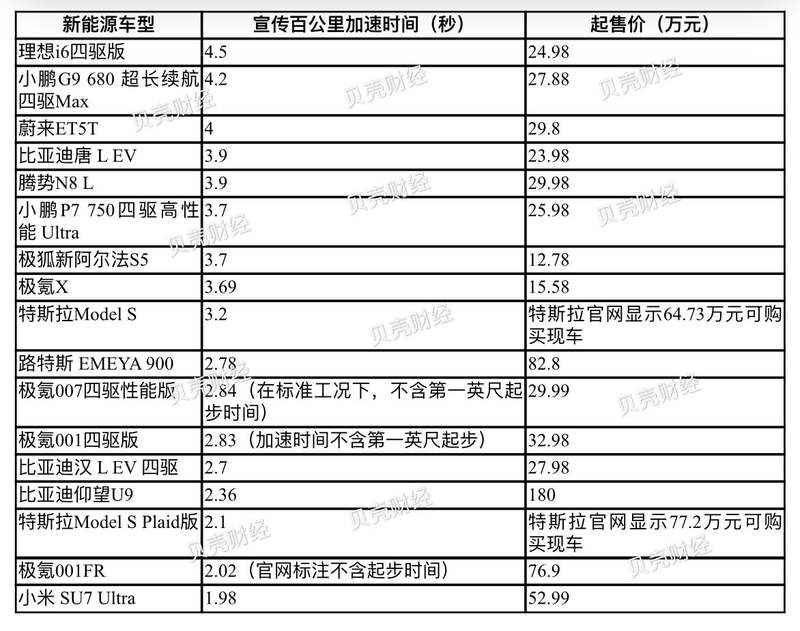
五问机动车新国标:为何要求百公里加速不小于5秒,影响哪些车?
Bei Ke Cai Jing· 2025-11-14 00:33
Core Viewpoint - The new national standard for automotive safety, particularly for electric and hybrid vehicles, aims to address issues related to rapid acceleration and loss of control by implementing stricter technical requirements for manufacturers [4][7][21]. Group 1: New Technical Requirements - The draft standard proposes that passenger vehicles must default to a mode where the time to accelerate from 0 to 100 km/h is no less than 5 seconds after each ignition [4][8]. - Electric and plug-in hybrid vehicles are required to have a pedal misapplication suppression feature that detects and limits power output during stationary or low-speed conditions, providing clear signals to the driver [4][5]. Group 2: Rationale Behind the 5-Second Requirement - The requirement for a minimum 5-second acceleration time is based on the observation that many drivers, especially inexperienced ones, struggle with high acceleration modes, leading to accidents [7][16]. - This standard is designed to ensure that vehicles start with lower acceleration performance, allowing drivers to adapt better and reduce the risk of loss of control due to sudden power output [16][21]. Group 3: Impact on Current Vehicles - Most current two-wheel drive electric vehicles typically have acceleration times exceeding 5 seconds, meaning the new standard will not significantly impact them [17]. - The primary effect will be on high-performance four-wheel drive vehicles, which may need software adjustments to comply with the new acceleration requirements [18]. Group 4: Regulatory Context - The new regulations are part of a broader effort to enhance safety standards in the rapidly evolving electric vehicle market, addressing gaps in existing regulations [19][20]. - The regulations aim to balance technological advancements with safety, ensuring that manufacturers prioritize user experience and safety alongside performance [21].