理想i6四驱版

Search documents
百公里加速不小于5秒新规下,哪些车面临“刹车”?
Xin Jing Bao· 2025-11-14 03:38
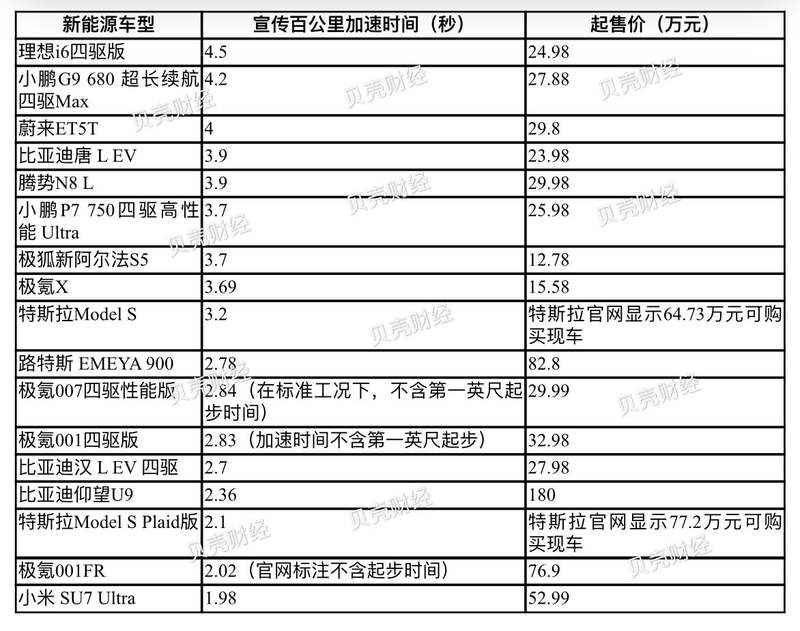
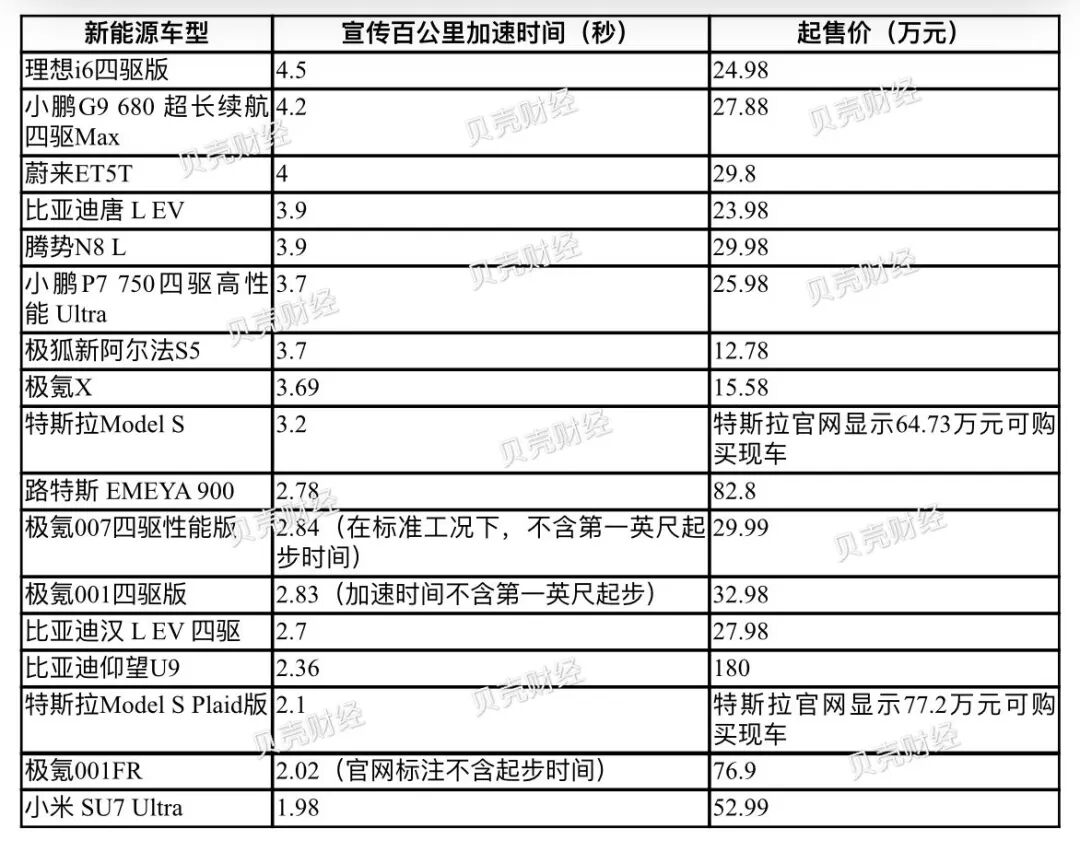
Core Viewpoint - The new national standard proposed by the Ministry of Public Security aims to address safety concerns related to the rapid acceleration of electric vehicles, requiring that passenger cars have a default acceleration time of no less than 5 seconds for 0 to 100 km/h after each power-up [2]. Group 1: New National Standard - The proposed national standard, titled "Technical Conditions for the Safe Operation of Motor Vehicles," is currently open for public consultation [2]. - The standard specifically targets the issue of loss of control in electric vehicles due to excessive acceleration [2]. Group 2: Current Market Impact - At least 19 models of electric vehicles currently on sale have an official acceleration time of less than 5 seconds for 0 to 100 km/h [2]. - The following are some of the models with their respective acceleration times and starting prices: - Li Auto i6 AWD: 4.5 seconds, starting at 249,800 CNY - Xpeng G9 680: 4.2 seconds, starting at 278,800 CNY - EMEYA 600: 4.15 seconds, starting at 538,000 CNY - NIO ET5: 4 seconds, starting at 298,000 CNY - BYD Tang L EV: 3.9 seconds, starting at 239,800 CNY - Tesla Model X: 3.9 seconds, starting at 704,900 CNY - Denza N8 L: 3.9 seconds, starting at 299,800 CNY - Xpeng P7 750: 3.7 seconds, starting at 259,800 CNY - Arcfox Alpha S5: 3.7 seconds, starting at 127,800 CNY - Geely Geometry X: 3.69 seconds, starting at 155,800 CNY - Tesla Model S: 3.2 seconds, starting at 647,300 CNY [3].


为何要求百公里加速不小于5秒,影响哪些车?五问机动车新国标
Xin Jing Bao· 2025-11-14 01:06
Core Viewpoint - The new national standard for automotive safety, particularly for electric and hybrid vehicles, aims to address acceleration control issues by mandating a default acceleration time of no less than 5 seconds for passenger cars, thereby enhancing safety and reducing the risk of loss of control during operation [1][2][8]. Group 1: New Regulations - The draft standard proposes that passenger vehicles should have a default state where the acceleration time to 100 km/h is no less than 5 seconds after each ignition [1][2]. - Electric and plug-in hybrid vehicles must include a pedal misapplication suppression feature to detect and limit power output during stationary or crawling conditions [1][2]. - The design of car door handles is also addressed, requiring mechanical release functionality to ensure doors can be opened without tools in emergencies [1]. Group 2: Rationale Behind the Regulations - The requirement for a minimum acceleration time of 5 seconds is based on the observation that many drivers, especially inexperienced ones, may struggle with high acceleration modes, leading to accidents [2][8]. - The standard aims to ensure that vehicles start with a lower acceleration performance, making it easier for new drivers to adapt and reducing the likelihood of accidents due to misoperation [8]. Group 3: Current Market Situation - In the current market, most fuel vehicles in the 100,000 to 200,000 yuan price range have acceleration times between 7 to 10 seconds, while high-performance models can achieve significantly lower times [3][4]. - Many electric vehicles, such as the Tesla Model S and others, boast acceleration times under 4 seconds, indicating a shift in performance expectations [4][5]. Group 4: Impact on Manufacturers - The new regulations primarily affect high-performance four-wheel drive vehicles, while most two-wheel drive models are unlikely to require significant adjustments [9][10]. - Manufacturers can meet the new standards through software adjustments, such as modifying default power output and pedal response logic, rather than extensive hardware changes [9][10]. Group 5: Regulatory Context - The recent regulatory measures reflect a broader trend of increasing oversight in the electric vehicle market, aiming to ensure safety and quality as technology evolves [11][12]. - The new regulations are seen as a necessary step towards high-quality development in the automotive industry, promoting safety and user experience while addressing the rapid technological advancements in electric vehicles [12].
五问机动车新国标:为何要求百公里加速不小于5秒 影响哪些车?
Xin Jing Bao· 2025-11-14 00:44
Core Viewpoint - The new national standard for automotive safety aims to address the issue of acceleration-related loss of control in electric vehicles by mandating a default acceleration time of no less than 5 seconds for passenger cars upon startup [1][2][3]. Group 1: New Regulations - The draft standard requires that passenger cars, upon each ignition, must default to a state where the acceleration time to 100 km/h is no less than 5 seconds [1]. - Electric and plug-in hybrid vehicles must have a pedal misapplication suppression feature that detects and limits power output when the vehicle is stationary or creeping [1]. - The design of car door handles is also addressed, requiring mechanical release functionality to ensure doors can be opened in emergencies without tools [1]. Group 2: Rationale Behind the Regulations - The requirement for a minimum acceleration time of 5 seconds is intended to reduce the risk of accidents caused by inexperienced drivers misusing high acceleration modes [2][8]. - The standard is based on the observation that most driving schools and conventional fuel vehicles have acceleration times exceeding 5 seconds, making it a reasonable benchmark for new drivers [2]. Group 3: Impact on the Automotive Industry - The new regulations primarily affect high-performance four-wheel drive vehicles, while most two-wheel drive models are unlikely to require significant adjustments [9]. - Automakers can meet the new standards through software adjustments, such as modifying default power output and throttle response logic, rather than extensive hardware changes [9]. - The regulations are seen as a necessary step to balance safety and performance, especially as high-performance electric vehicles become more accessible to less experienced drivers [7][9]. Group 4: Industry Response and Future Outlook - The automotive industry is experiencing a shift towards higher safety standards in response to rapid technological advancements in electric vehicles [10][11]. - The new regulations are part of a broader trend to ensure that safety measures keep pace with innovations in vehicle technology, including smart driving and fast charging [10]. - The overall goal is to promote sustainable development in the electric vehicle sector by enhancing safety, regulating the market, and improving user experience [11].