新能源车补能

Search documents
超充会对电池有伤害?比亚迪听闻李斌言论后“接连发声”
Xin Lang Cai Jing· 2026-03-10 23:36
Core Viewpoint - NIO's founder Li Bin expressed concerns about the long-term health of power batteries due to frequent use of ultra-fast charging technology, suggesting that while both ultra-fast charging and battery swapping serve different energy replenishment needs, they do not fundamentally contradict each other [1][3]. Group 1: Ultra-Fast Charging vs. Battery Swapping - Li Bin stated that while ultra-fast charging technology is advancing, excessive use can negatively impact battery lifespan, health, and long-term safety [3]. - Battery swapping has a systematic advantage in ensuring battery longevity compared to ultra-fast charging [3]. - NIO's battery swapping process takes approximately 5-6 minutes, with the fastest swap completed in 2 minutes and 24 seconds [7]. Group 2: Charging Speed Comparisons - BYD reported that its flash charging can increase battery levels from 10% to 70% in 5 minutes, and from 10% to 97% in 9 minutes, even in low temperatures [5]. - The discussion highlights the rapid advancements in flash charging technology, raising questions about the necessity of battery swapping [7]. - BYD's chairman explained that their "storage and charging integrated system" prevents additional strain on the power grid while enabling high-power charging [7]. Group 3: Industry Perspectives - Both NIO and BYD view ultra-fast charging and battery swapping as different approaches to address the slow energy replenishment of electric vehicles [9]. - Concerns about whether fast charging damages batteries are acknowledged, with historical context from the mobile phone industry suggesting that such concerns may be overstated [11]. - The industry anticipates that the long-term effects of flash charging on automotive batteries will become clearer in the future [11].



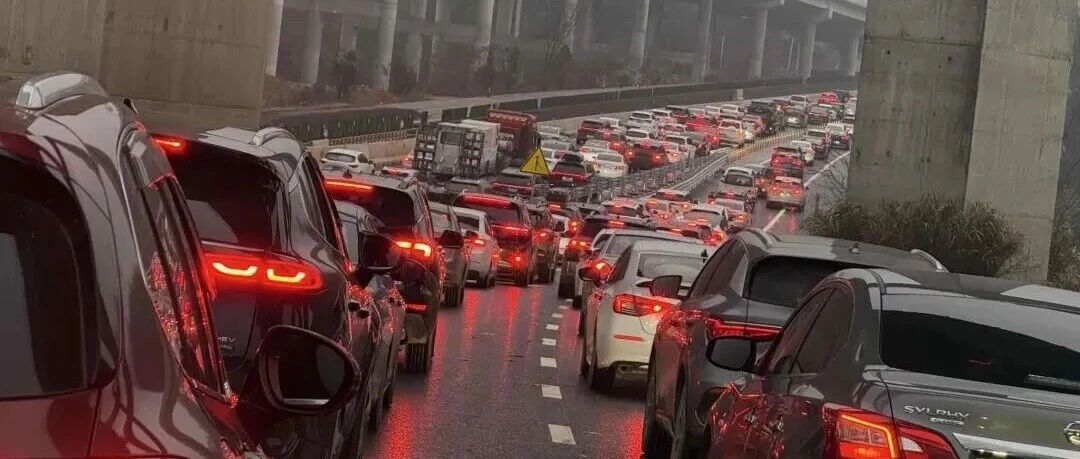
9天高速充电600万次!最堵春节长假,依然充电难?
电动车公社· 2026-02-24 16:34
Core Viewpoint - The article discusses the challenges and improvements in the charging infrastructure for electric vehicles (EVs) during the recent Spring Festival holiday, highlighting the significant increase in charging demand and the measures taken to manage it effectively. Group 1: Charging Demand and Infrastructure - During the Spring Festival from February 15 to February 23, there were a total of 6.021 million charging sessions for EVs on highways, with an average daily charging volume of 16.64 million kWh, representing a 52.01% increase compared to the same period last year [8][10]. - The article notes that despite the surge in charging demand, there were few reports of charging pile shortages at service areas, indicating improved management and infrastructure [8][10]. - The number of charging stations has significantly increased, with over 70,000 charging piles established at highway service areas, and plans for an additional 20,000 by 2025 [18][33]. Group 2: User Experience and Challenges - The article outlines the challenges faced by EV users during peak travel times, including long wait times for charging and limited service area capacity, which led to increased congestion [11][13]. - It emphasizes the importance of route planning to avoid congestion, suggesting that early departures and strategic stops can enhance the travel experience [20][24]. - The article also highlights the improved charging environment compared to previous years, with better connectivity and real-time information available through apps, reducing user anxiety [18][30]. Group 3: Technological Innovations - The article discusses three main technological advancements aimed at improving the charging experience: battery swapping, ultra-fast charging, and larger battery capacities [30][36]. - NIO's battery swapping stations set a record during the holiday, with 193 battery swaps in one day, showcasing the growing adoption of this model [33]. - The introduction of megawatt-level fast charging technology, capable of delivering 400 km of range in just 5 minutes, is expected to revolutionize the charging experience, making it comparable to refueling traditional vehicles [36][40].