新金融工具准则(IFRS 9)

Search documents
险企执行新会计准则倒计时,怎么看?
CAITONG SECURITIES· 2025-10-23 05:59
Report Industry Investment Rating No information provided in the report. Core Viewpoints - Listed insurance companies have implemented new accounting standards (IFRS 17 and IFRS 9) since 2023, while non - listed ones will implement them in 2026. It is estimated that after the remaining insurance companies implement the new standards in 2026, the re - classification scale of financial assets of affected insurance companies may account for about 20% [3][62]. - After the implementation of the new standards, more insurance assets may be classified into the FVTPL category, increasing the profit volatility of insurance companies. Insurance companies are more cautious about bank capital bonds and increase the allocation of ultra - long bonds. The proportion of insurance funds invested in bonds is rising [3][5][63]. Summary According to the Table of Contents 1. New Accounting Standards Gradually Implemented - IFRS 9 adjusts the classification of financial assets from "four - category" to "three - category": FVTPL, FVOCI, and AC. More assets may be classified into FVTPL, making insurance company profits more volatile. Insurance companies have an incentive to allocate more assets to AC or FVOCI [9][10]. - IFRS 17 changes the discount rate for traditional insurance reserves. Insurance companies can use the OCI option to reduce profit fluctuations, which may lead to significant differences in net profit under the old and new standards [12]. - From the operating data of insurance companies that have implemented the new standards in advance, there is an increase in net profit and a decrease in net assets [16]. - Among bond - issuing insurance companies, the financial investment of those that have implemented the new standards accounted for 74.4% of the total as of the end of 2024. It is estimated that the proportion of financial asset re - classification of the remaining insurance companies in 2026 may be about 20% [3][62]. 2. Changes in Insurance Institution Behavior 2.1 Insurance Asset Allocation Observation - As of the end of Q2 2025, the balance of insurance funds in use was 36.23 trillion yuan, with life insurance companies accounting for 90% [23]. - The proportion of bonds in the asset allocation of life and property insurance is increasing. As of the end of Q2 2025, the bond proportion of life insurance increased from 41% to 52%, with a balance of 16.9 trillion yuan; that of property insurance increased from 21% to 40%, with a balance of 0.95 trillion yuan [25]. - The investment proportion of life and property insurance in stocks is relatively stable, but the growth rate has accelerated since Q1 last year. In Q2 this year, the cumulative year - on - year growth rates of stock investment were 47.9% and 42.8% respectively [31]. 2.2 Insurance Secondary Market Observation 2.2.1 Bank - to - Bank - As of the end of August 2025, the total bond custody scale of insurance institutions in CCDC and SHCHE was 5033.311 billion yuan. Interest - rate bonds accounted for 77.9%, with local bonds accounting for 49.3% [34]. - Insurance has been increasing its allocation of local bonds. As of the end of August this year, the net increase in local bond custody was 3776 billion yuan, approaching last year's level. Insurance has been reducing its holdings of commercial bank bonds since March last year [39][58]. 2.2.2 Exchange - As of the end of September, the scale of corporate bonds held by insurance in SSE and SZSE was 931.8 billion yuan and 181.6 billion yuan respectively. After Q2 this year, the allocation of credit bonds by insurance has increased [52]. 3. Understanding the Impact of the New Standards - Insurance institutions will further increase their demand for ultra - long bonds due to stable premium income growth, the "Second - Generation Solvency" regulations guiding the passive allocation of fixed - income assets, and increased liability - side volatility under the new insurance contract standards [55]. - Under the new financial tool accounting standards, insurance will be more cautious about bank secondary and perpetual bonds that do not pass SPPI and are included in FVTPL [58]. 4. Summary - In 2026, after the remaining insurance companies implement the new accounting standards, the re - classification scale of financial assets of affected insurance companies may account for about 20% [3][62]. - After the implementation of the new standards, insurance company profits may become more volatile. Insurance will be more cautious about bank capital bonds and increase the allocation of ultra - long bonds. The proportion of bonds in insurance asset allocation is rising [5][63].



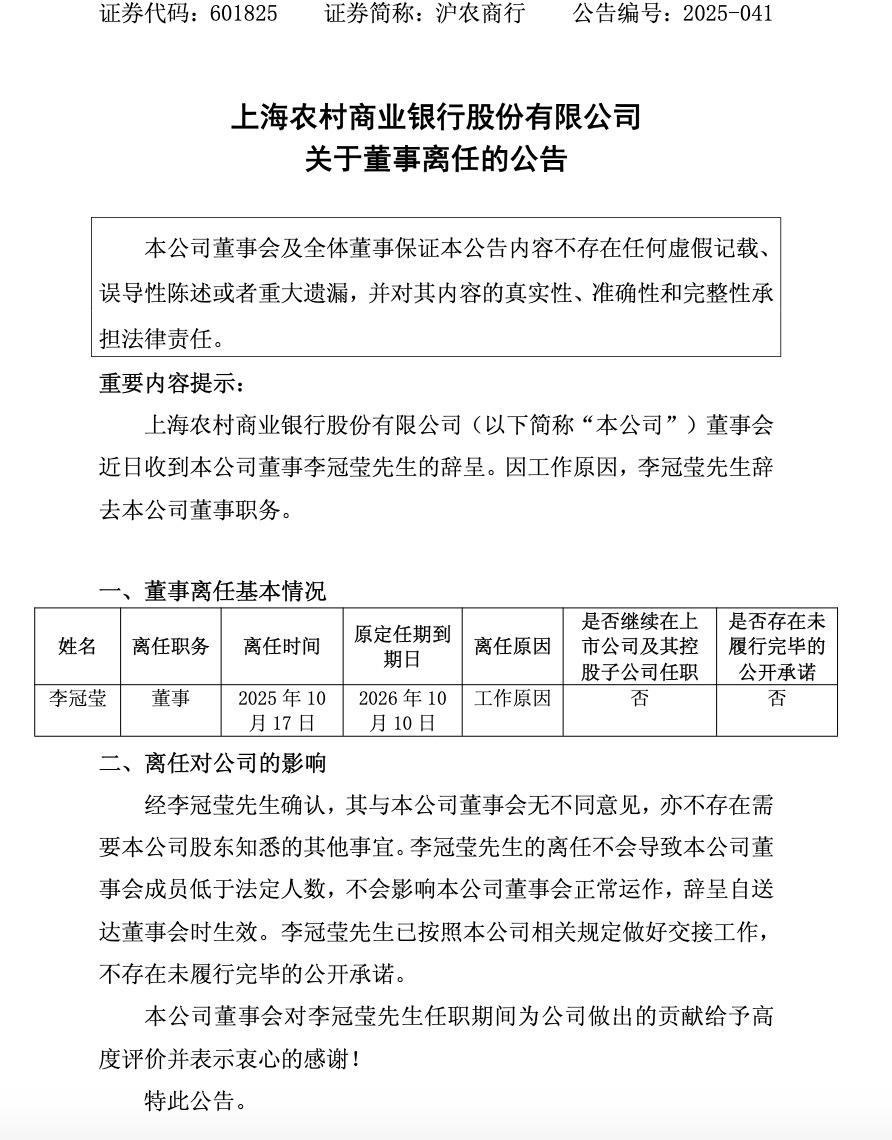
太平资产副总辞任沪农商行董事,险资持股银行股会计归类生变
Guan Cha Zhe Wang· 2025-10-22 08:29
Core Viewpoint - The resignation of Mr. Li Guanying from Shanghai Rural Commercial Bank's board is significant, as it alters the accounting classification of China Taiping Insurance Group's 4.3% stake in the bank, shifting it from a long-term equity investment to a financial asset under new accounting standards [5][6][9]. Group 1: Impact of Resignation - The resignation leads to a fundamental change in the accounting treatment of China Taiping's investment in Shanghai Rural Commercial Bank, moving from "long-term equity investment" to "financial asset" due to the loss of "significant influence" [5][6]. - This change is driven by the implementation of new insurance contract accounting standards (IFRS 17) and new financial instrument standards (IFRS 9) starting in 2023 [5][7]. Group 2: Accounting Logic Shift - The previous classification allowed China Taiping to recognize its share of Shanghai Rural Commercial Bank's profits or losses, emphasizing a long-term strategic investment approach [6][9]. - Under the new standards, the classification forces insurers to choose between accepting direct impacts of stock price fluctuations on profit (FVTPL) or stabilizing profit performance by storing fluctuations in equity (FVOCI) [8]. Group 3: Shanghai Rural Commercial Bank's Performance - Shanghai Rural Commercial Bank has faced operational challenges, with a 15.80 percentage point decline in its provision coverage ratio and a decrease in employee compensation despite an increase in total staff [9][10]. - The bank's retail loans have shrunk, with total loans of 774.2 billion yuan showing only a 2.51% increase, and personal loans decreasing by 1.69% [9][10]. Group 4: Strategic Shift of China Taiping - China Taiping's decision to resign its board member reflects a shift from being a strategic investor to a more passive financial investor, allowing for greater flexibility in managing its investment based on market conditions [10][11]. - Despite this adjustment, the overall enthusiasm of the insurance industry for bank stocks remains high, with a focus on high dividends, low valuations, and earnings certainty [11].