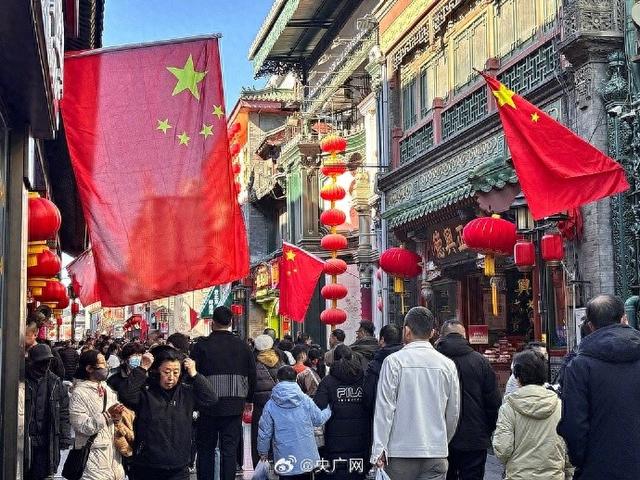
旅游式过年

Search documents
9天超长假期 旅游式过年成趋势
He Nan Ri Bao· 2026-02-24 23:12
Core Insights - The 2026 Spring Festival is expected to see a significant shift in traditional celebration patterns due to an extended 9-day holiday, leading to increased cultural and tourism consumption [1] Group 1: Tourism and Consumer Trends - Henan province issued 50 million yuan in cultural and tourism consumption vouchers, significantly boosting local tourism, with a return ratio of over 1:5 on the vouchers [1] - Popular travel destinations during the Spring Festival included major cities like Shanghai, Beijing, and Guangzhou, while cities like Kaifeng and Chongzuo saw over 100% growth in order volume compared to last year [1][2] - Long-distance travel orders accounted for 59.6% of bookings, with an average travel duration of 6.4 days, an increase of half a day from the previous year [2] Group 2: Cultural Experiences and Events - The demand for intangible cultural heritage experiences surged, with a 180% increase in search volume during the Spring Festival, particularly among the "post-00s" demographic [2] - The integration of 13 cultural tourism sites in Henan under the theme "Home in Henan, Happy Chinese New Year" created a vibrant cultural tourism market [2][3] - Notable attractions like the Linzhou Taihang Grand Canyon and the Chicken Mountain scenic area reported visitor increases of 278% and 126%, respectively, showcasing the success of themed activities [3] Group 3: Night Tourism and Local Cuisine - Night tourism and intangible cultural heritage events gained popularity, with search volumes for "night tours" and "intangible heritage" increasing by 21% and 34%, respectively [3] - Local cuisine became a significant draw for travelers, with searches for top dining establishments rising by 60% during the Spring Festival [3] Group 4: Dual Tourism Trends - A dual trend emerged where some tourists celebrated the New Year while traveling, while others explored local attractions upon returning home, with some local sites seeing order increases of over 500% [4]
央广财评|假日经济新引擎:中国喜迎2026“旅游年”
Yang Guang Wang· 2026-02-24 02:09
Group 1 - The core viewpoint of the articles highlights the emergence of "reverse reunion" and "tourism-style New Year" as popular trends during the extended Spring Festival holiday, indicating a shift in consumer behavior and preferences for the holiday economy in 2026 [1][2] Group 2 - The trend of "reverse reunion" is characterized by young people inviting their parents to major cities for a different New Year experience, with 18% of travelers to first-tier cities being over 50 years old and a 56% increase in hotel stays by those aged 60 and above [1] - The report indicates that nearly 35% of users opted for "early bird" travel before the holiday peak, with the first wave of travel occurring just before and on the first day of the Spring Festival [1] - The popularity of foreign visitors celebrating the New Year in China is noted, with tourists from abroad visiting over a hundred cities during the holiday [1] - The convenience of transportation and ticket purchasing, along with innovative cultural tourism products and government subsidies, have significantly contributed to the vibrant tourism economy during this year's Spring Festival [2] - Cities like Harbin, Yiwu, Hefei, and Yibin have issued substantial cultural tourism vouchers ranging from 20 million to 100 million yuan, transforming the "Spring Festival Gala" viewership into increased local consumption [2] - The extended holiday period, diverse product offerings, and enhanced service guarantees are identified as key factors driving tourism demand this year, with expectations for continued growth in the cultural tourism market as policy benefits are realized [2]
旅游式过年再掀假日经济高潮
Xin Lang Cai Jing· 2026-02-23 15:32
Core Insights - The 9-day "longest Spring Festival Golden Week" has diversified the ways Chinese families celebrate the New Year, leading to a surge in holiday consumption and new ideas for the holiday economy in 2026 [1] Group 1: Changing Travel Trends - The trend of "reverse reunion" and "tourism-style New Year" has gained popularity, with many young people choosing to bring their parents to major cities for a different New Year experience [3] - Data from Qunar indicates that 18% of travelers flying to first-tier cities during the Spring Festival are over 50 years old, with hotel stays for those aged 60 and above increasing by 56% year-on-year [3] Group 2: New Consumption Patterns - The report from the China Travel Service Association and Tuniu highlights that nearly 35% of users opted for "early bird travel" before the holiday, with peak travel occurring on the day before and the first day of the Spring Festival [3] - There has been a notable influx of foreign visitors celebrating the New Year in China, with travelers reaching over a hundred cities [3] Group 3: Factors Driving Tourism Growth - The "tourism-style New Year" has been enhanced by convenient transportation and ticket purchasing, as well as innovative cultural tourism products and consumption subsidies [5] - Cities like Harbin, Yiwu, Hefei, and Yibin have issued substantial cultural tourism vouchers ranging from 20 million to 100 million yuan, transforming the "Spring Festival Gala" traffic into increased local consumption [5] - The extended holiday period, diverse product offerings, and attentive service have been crucial in boosting tourism demand during this year's Spring Festival [5]