无人战争

Search documents
吕礼诗×施佬:我们对解放军电子战能力一点都不了解,对万吨大驱也不了解
Guan Cha Zhe Wang· 2025-12-22 02:17
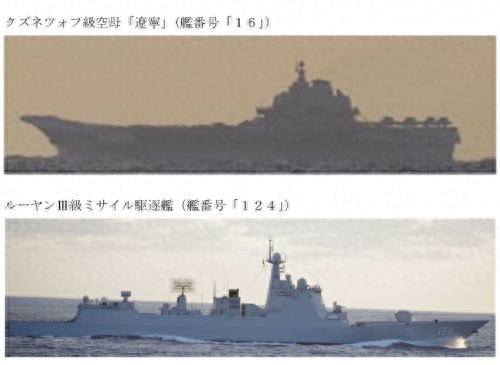
Group 1 - The discussion highlights the limited understanding of Japan and Taiwan regarding the military capabilities of mainland China, particularly in the context of recent naval activities by the Chinese aircraft carrier Liaoning [2][3][4] - The Chinese naval exercises are perceived as a strategic deterrent against Japan, with the presence of Russian military cooperation further complicating Japan's response [2][4][5] - Japan's military readiness has increased, as evidenced by the deployment of F-2 fighter jets and P-1 patrol aircraft in response to Chinese naval movements, indicating a serious acknowledgment of the threat posed by China [3][4][5] Group 2 - The U.S. national security strategy reflects a shift towards prioritizing domestic interests and a potential reduction in military engagement abroad, particularly in the Asia-Pacific region [8][9][12] - The economic constraints faced by the U.S. military are highlighted, suggesting that the ability to maintain a robust military presence is diminishing, which may impact its strategic posture in Asia [9][10][12] - The discussion raises concerns about the effectiveness of U.S. military support for Taiwan, particularly regarding arms sales and the industrial capacity to deliver on commitments [10][11][12] Group 3 - The conversation emphasizes the challenges faced by Taiwan in developing its indigenous military capabilities, particularly in submarine construction, which is seen as a costly and potentially ineffective endeavor [28][30][31] - The reliance on foreign technology and components in Taiwan's military projects raises questions about the viability and effectiveness of its defense strategy [30][32] - The overall sentiment suggests that Taiwan's military ambitions may be unrealistic given its current industrial capabilities and the geopolitical landscape [32][33]

欧洲吹响了集结号,乌克兰看到胜利曙光?
Sou Hu Cai Jing· 2025-07-15 03:04
Group 1: Military Innovations and Strategies - Ukraine's assault brigade is utilizing tactical innovations such as suicide drones and ground robots to redefine modern warfare, achieving operations without soldier involvement [1] - The Russian military has suffered significant casualties, with over 31,000 soldiers lost in just two months, marking the highest losses since the war began, totaling over 1 million [1] - The economic dynamics of warfare are shifting, as low-cost drones are effectively destroying high-value military assets, indicating a potential turning point in military strategy [7] Group 2: Post-War Reconstruction Plans - European leaders, including Italy's Prime Minister Meloni and Germany's Chancellor Merz, are discussing a $1 trillion "modern Marshall Plan" for post-war reconstruction [3] - The EU plans to freeze €540 billion of Russian assets and has linked this to a demand for €500 billion in reparations from Russia [3] - The military collaboration among European nations is intensifying, with the UK and France increasing troop deployments and military support for Ukraine [3] Group 3: Geopolitical Shifts - Traditional pro-Russian alliances are weakening, with Serbia's President Vucic visiting Kyiv and Azerbaijan sending troops to Ukraine [5] - The EU is accelerating an €800 billion rearmament plan, with significant military investments in Eastern Europe to replace Russian-made equipment [5] - A nuclear deterrent alliance is emerging between the UK and France, indicating a shift in defense strategies in response to threats [5] Group 4: Broader Implications for Europe - The ongoing conflict is seen as a struggle for Europe's autonomous future, with leaders emphasizing the importance of supporting Ukraine as a means to secure European sovereignty [8] - The war has highlighted the resilience of national identity and spirit, suggesting that military might cannot extinguish a nation's essence [8]