无感养车

Search documents
华为乾崑生态大会发布“10分钟智驾生活圈” 携手途虎共拓智能汽车服务生态
Zhi Tong Cai Jing· 2025-11-21 08:27
Core Insights - Huawei's QianKun Intelligent Automotive Solutions announced the launch of multiple cities for high-speed L3 autonomous driving testing and the introduction of the "Intelligent Cabin L3" era with the release of the QianKun APP [1] Group 1: Huawei's Developments - Huawei's Intelligent Automotive Solutions BU CEO Jin Yuzhi announced the commencement of high-speed L3 autonomous driving testing in multiple cities [1] - The QianKun APP was officially launched, aiming to create a "10-minute QianKun intelligent driving lifestyle circle" in collaboration with ecosystem partners [1] Group 2: Partnership with Tuhu - Tuhu Car Maintenance will engage in deep cooperation with QianKun Intelligent Driving to build an intelligent automotive service network [1] - Tuhu's president Hu Xiaodong revealed that the collaboration will enable deep data integration between Tuhu's store system and QianKun's autonomous driving cloud, establishing a real-time collaborative system across vehicle, cloud, and store [1] Group 3: Innovative Service Model - The partnership will initially focus on the automatic car wash scenario, allowing vehicles to autonomously drive to service points for cleaning and return to parking spots without owner intervention [1] - This innovative model showcases the future of intelligent automotive services, enhancing the "worry-free, time-saving, and effort-saving" experience in car maintenance [1]
8万亿汽车服务“新大陆”浮出水面
Zhong Guo Jing Ying Bao· 2025-11-14 21:12
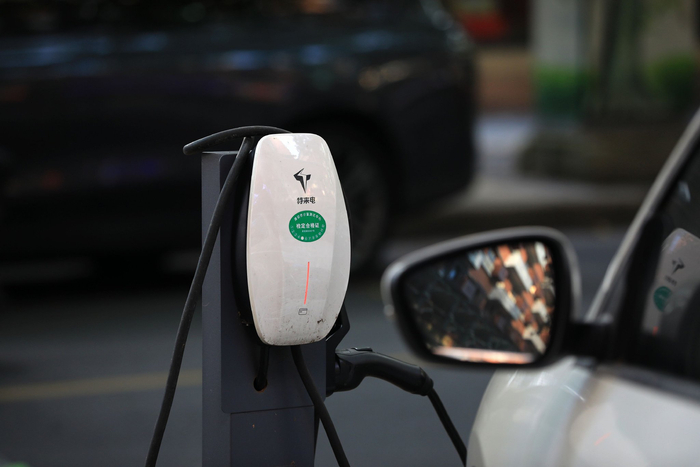
Core Insights - The transition to autonomous driving will significantly transform daily vehicle usage, including features like automatic parking, self-charging, and maintenance visits [2] - The automotive service ecosystem is emerging as a third major competitive advantage in the industry, projected to reach over 80 trillion yuan by 2028 [2] - The integration of digitalization and new automotive service models is essential as the industry moves towards higher levels of automation [2] Parking Solutions - The report indicates a significant parking shortage in China, with over 80 million parking spaces needed by mid-2025, as the number of vehicles continues to outpace the availability of parking spots [2][3] - Autonomous driving technology is expected to enhance parking efficiency by enabling vehicles to autonomously find and park in available spaces, thus addressing the "parking difficulty" issue [4] - The concept of "smart parking" will become integral to autonomous driving, improving user experience and optimizing resource allocation through vehicle-to-vehicle and vehicle-to-infrastructure communication [4] Charging Infrastructure - Despite having the largest charging infrastructure network globally, user experience in China remains suboptimal, with issues like uneven distribution and high failure rates of public charging stations [5][6] - Autonomous driving can alleviate charging challenges by allowing vehicles to autonomously navigate to charging stations, thus enhancing convenience for users [6] - The ideal future charging experience involves a seamless "vehicle-charging station-network-cloud" ecosystem, enabling automatic charging processes and reducing user involvement [6] Automotive Aftermarket Services - The automotive aftermarket is poised for transformation, with users increasingly seeking intelligent services that save time and effort [7] - Autonomous driving enables "no-touch vehicle maintenance," allowing vehicles to autonomously travel to service locations for tasks like washing and maintenance without user intervention [7] - The automotive industry is shifting focus from mechanical performance to data and service capabilities, leading to a comprehensive automation of automotive services [7] Insurance Industry Evolution - The insurance sector will undergo a significant transformation, moving from assessing driver behavior to evaluating the reliability of machine algorithms based on data generated by autonomous driving systems [8] - Future insurance models will be multi-layered, customized, and dynamically priced, reflecting real-time driving and system performance data [8] - The responsibility for insurance will shift from solely the driver to include multiple stakeholders such as manufacturers and software/hardware suppliers [8]