日元空头平仓

Search documents
高市早苗“发出信号”,美日联合干预市场“箭在弦上”?
Sou Hu Cai Jing· 2026-01-25 01:19
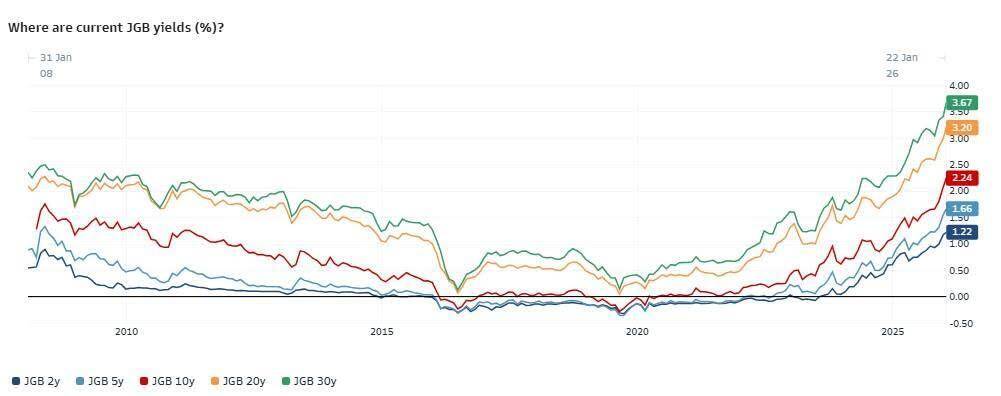
Group 1 - Japanese Prime Minister Kishi Nobuo issued a stern warning regarding speculative behavior in financial markets, promising necessary measures to address abnormal volatility, particularly as the yen experienced its largest increase in five months [1][2] - The yen's significant fluctuations were triggered by the New York Fed's inquiries about exchange rates, which are typically seen as a precursor to potential intervention, leading to a sharp decline in the dollar against the yen [1][2] - Analysts suggest that the New York Fed's involvement indicates that any potential intervention would not be unilateral, raising expectations for coordinated action between the U.S. and Japan [2][3] Group 2 - Concerns about intervention peaked as the dollar-yen exchange rate approached the psychological barrier of 160, a level that previously prompted significant intervention from Japanese authorities [3][4] - The volatility in long-term Japanese government bonds has also been notable, with the 30-year bond yield rising by 25 basis points, indicating supply-demand imbalances in the yield curve [4][6] - There are doubts about whether market interventions alone can resolve underlying issues, with experts suggesting that unless the Bank of Japan adopts a more hawkish stance or implements quantitative easing, both the yen and Japanese bonds will continue to face pressure [6][7] Group 3 - The current market environment may prompt the U.S. to reconsider its stance on currency intervention, as concerns about the spillover effects of Japanese bond volatility on U.S. markets grow [8] - Analysts believe that both the U.S. and Japanese governments are wary of the yen's value, indicating a potential for coordinated intervention if necessary [8]